ITAT Dismisses Revenue Appeal in Section 153C Limitation Dispute:
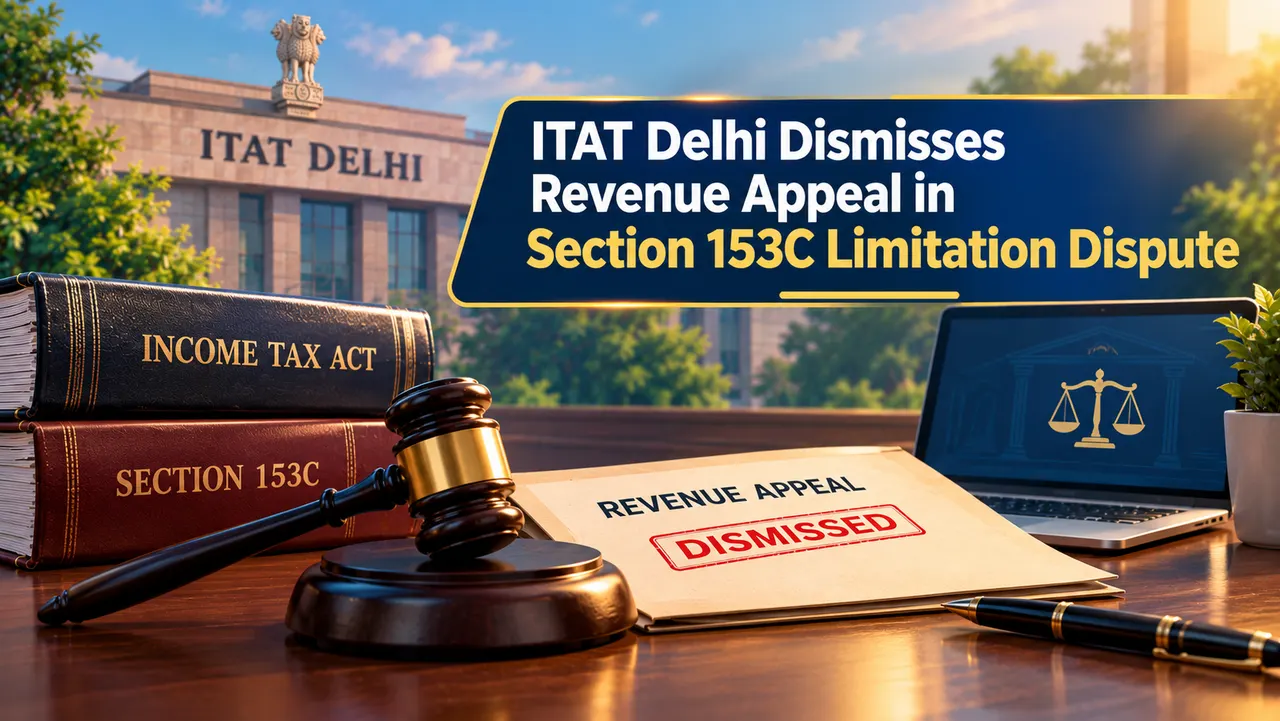
The ITAT holds Assessment Year 2011-12 beyond permissible Ten-Year block period under Section 153C.
ITAT Followed Delhi High Court Judgement
 Saima
Saima Sep 29, 2026
The Revenue filed an appeal before the Tribunal against the order of the CIT(A), which had granted relief to Anshu Infotech LLP on the jurisdictional issue concerning the limitation prescribed under Section 153C of the Income Tax Act, 1961. The assessee had originally filed its return declaring income of Rs. 60,900. A search and seizure operation under Section 132 was conducted on the Alankit Group on October 18, 2019. During the search, certain incriminating documents relating to the assessee were found and seized. Proceedings under Section 153C were subsequently initiated against the assessee.
The AO passed an assessment order dated March 23, 2024 under Section 153C for AY 2011-12 and made additions of Rs. 50 lakh under Section 68 and Rs. 1.50 lakh under Section 69C, aggregating to Rs. 51.50 lakh. Before the CIT(A), the assessee challenged the assessment on legal as well as merits grounds. The CIT(A), relied on Delhi High Court's case in PCIT Vs Ojjus Medicare Pvt. Ltd., held that AY 2011-12 fell beyond the permissible ten assessment years for initiating proceedings under Section 153C.

The Tribunal noted that the Department could not place on record any order of the Supreme Court or the Delhi High Court staying the operation of the Ojjus Medicare judgment. It further observed that the Tribunal, being subordinate to the jurisdictional High Court, was bound to follow its judgment.
The Tribunal noted that Section 153C provides for assessment of a person other than the person searched and operates in conjunction with Section 153A. After the Finance Act, 2017 amendment, Section 153C covers six assessment years immediately preceding the assessment year relevant to the previous year in which the search is conducted, along with the relevant assessment years falling within the extended ten-year period prescribed under Explanation 1 to Section 153A(1). However, the first proviso to Section 153C(1) provides that, in the case of such other person, the reference to the date of initiation of search in the second proviso to Section 153A is to be construed as the date of receiving the books of account, documents or assets seized or requisitioned by the AO having jurisdiction over such other person.

Following Ojjus Medicare, the Tribunal held that this date of receiving or handing over the seized material is relevant for determining the six/ten assessment-year period in proceedings under Section 153C against the non-searched person. Accordingly, following the binding precedent of the Delhi High Court in Ojjus Medicare and maintaining judicial discipline, the Tribunal dismissed the Revenue's appeal.
The Tribunal held that the assessment for AY 2011-12 was outside the permissible ten-year period under Section 153C and therefore the Revenue's appeal stood dismissed.
About Author


Saima
Content Writer
 StudyCafe
 Delhi, Delhi, India
 569
569My Recent Articles
- ITAT Deletes Penalty for Misreporting Income on Political Donation Deduction Under Section 80GGC
- ITAT Restores Ex-Parte Assessment for Fresh Adjudication After Condoning 1,131-Day Delay
- ITAT Upholds Disallowance of Rs 8.50 Lakh Political Donation Deduction Under Section 80GGC
- ITAT Remands Assessment for Fresh Verification of Property Investment and Section 80C Deduction
- ITAT Quashes Assessment for Non-Service of Section 143(2) Notice
Loading suggestions…


Recent Posts

All Posts


Recent Posts
All Posts