HC Deletes 153A Additions Without Incriminating Material in Search:
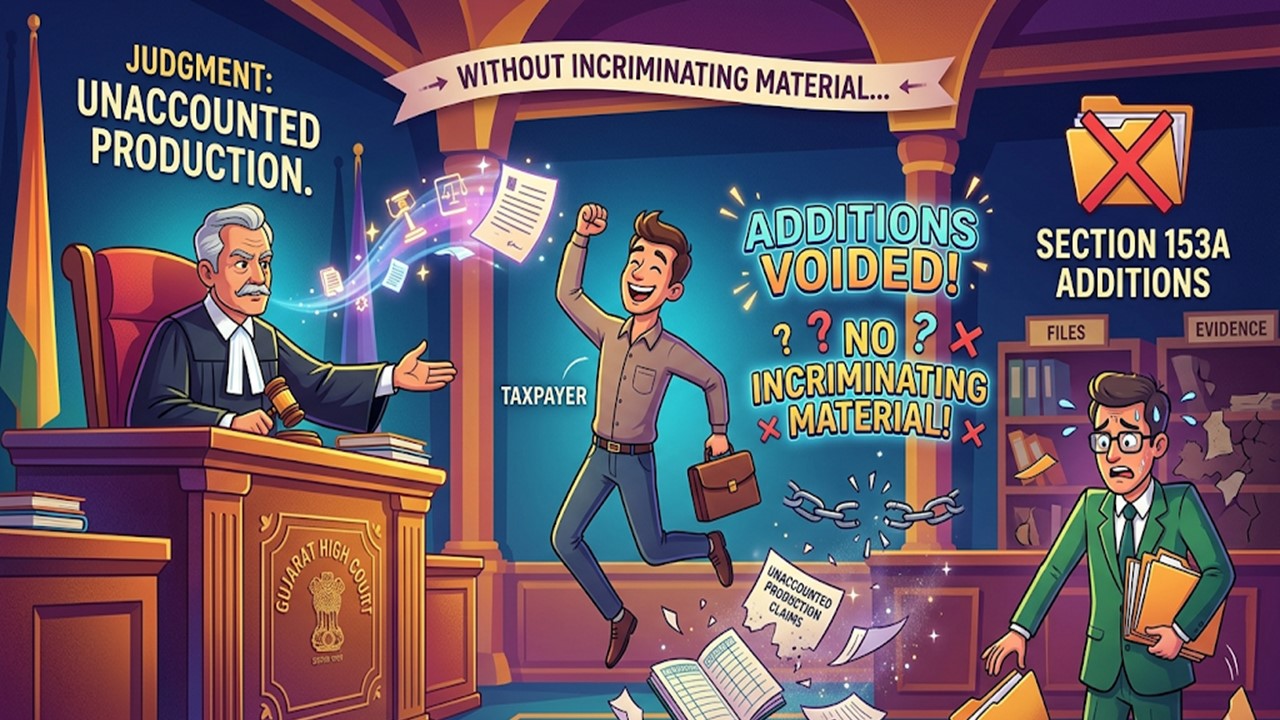
Gujarat HC rules that additions for unaccounted production cannot be made under Section 153A without incriminating material.
Additions Fail Where No Evidence Supports Alleged Unaccounted Production in Search
 Meetu Kumari
 Apr 24, 2026
HC Deletes 153A Additions Without Incriminating Material in Search
The Revenue Department launched an appeal after its attempt to tax alleged "unaccounted production" was struck down by both the CIT(A) and the Tribunal. The case began following a search operation where the department compared production logs from a manager's files with the company’s official Tally records. Based on this comparison, the Assessing Officer (AO) claimed the company had been manufacturing and selling products off the books.
However, the High Court found a glaring "unit of measurement" error in the department's math. The AO had compared production data measured in individual tablets and capsules against sales data recorded in strips. This fundamental mismatch led the department to falsely conclude that a massive amount of stock was missing, when in reality, it was just a case of comparing apples to oranges.
Issue Raised: Can the tax department make additions for alleged "unaccounted production" under Section 153A if the original assessment was already finished and no actual incriminating evidence of hidden sales was found?
HC Held: The High Court dismissed the Revenue's appeal, making it clear that tax additions in search cases aren't just about finding discrepancies; they require "incriminating material". The Court noted that the department hadn't found any proof of the typical signs of secret manufacturing. Relying on the landmark Supreme Court ruling in Abhisar Buildwell, the Court reiterated that if an assessment for a particular year is already "concluded" (meaning the time for a regular audit has passed), the department cannot reopen it during a search unless they find new, incriminating evidence. Since the AO's case was built on a computational error rather than actual proof of fraud, the Court ruled that the additions were based on pure "conjecture and guesswork". The company’s original tax filings were left undisturbed, and the Revenue's attempt to tax the alleged surplus was quashed.
To Read Full Judgment, Download PDF Given Below
About Author


Meetu Kumari
Content Manager
Meetu Kumari is an Experienced Advocate and Content Writer with 4+ years of demonstrated history of working in the law practice industry. Skilled in Developing Content, Researching, and Drafting. Strong professional with a Bachelor of Science (B.Sc.) focused on Law from Gujarat National Law University.
Meetu Kumari is an Experienced Advocate and Content Writer with 4+ years of demonstrated history of working in the law practice industry. Skilled in Developing Content, Researching, and Drafting. Strong professional with a Bachelor of Science (B.Sc.) focused on Law from Gujarat National Law University.
 Studycafe
 Jodhpur, Rajasthan, India
 2264
2264My Recent Articles
- ITAT Condones 302-Day Delay, Restores Salary Assessment for Fresh VerificationPremium
- ITAT Condones Delay After Tax Consultant's Death, Restores Appeals for Fresh HearingPremium
- ITAT Remands Salary Addition, Says Taxability Depends on Salary Becoming Due, Not Mere ReceiptPremium
- ITAT Deletes TP Royalty Adjustment, Orders Fresh Review of Commission BenchmarkingPremium
- ITAT Quashes Reassessment Over Unsigned Section 148 Notice Issued to AssesseePremium
Up Next
Loading suggestions…


Recent Posts



All Posts


Recent Posts
All Posts