ITAT Holds Estimated Disallowance Under Rule 8D Cannot Justify Penalty; Deletes 6.23 Lakhs Section 270A Penalty:
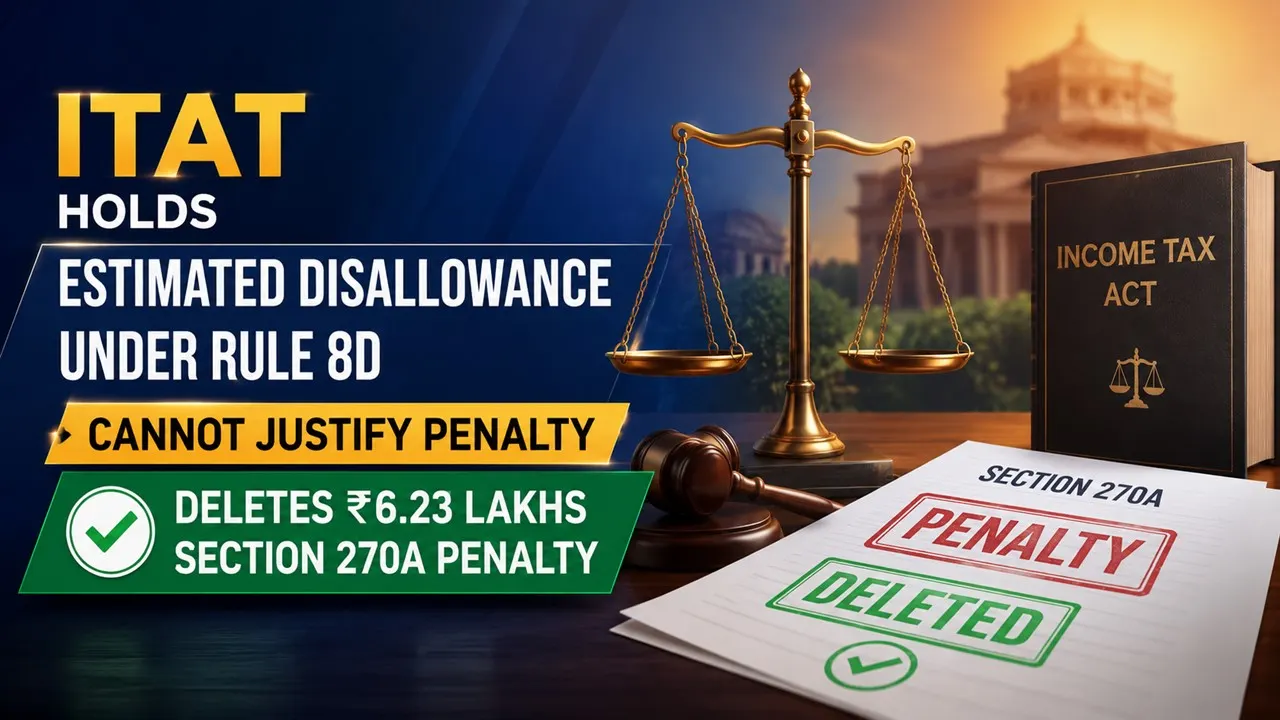
ITAT Holds Estimated Disallowance Under Rule 8D Cannot Justify Penalty; Deletes 6.23 Lakhs Section 270A Penalty The ITAT Delhi has allowed a
Application of Formula in Rule 8D Does Not Give Rise to Misreporting of Income
 Saloni Kumari
 May 26, 2026
ITAT Holds Estimated Disallowance Under Rule 8D Cannot Justify Penalty; Deletes 6.23 Lakhs Section 270A Penalty
The ITAT Delhi has allowed an appeal by deleting the penalty of Rs. 6.23 lakh imposed on Inox Infrastructure Limited under Section 270A of the Income Tax Act and observed that a disallowance calculated as per Section 14A read with Rule 8D, which is based on estimation and a prescribed formula, cannot itself lead to a case of misreporting of income.

About Author


Saloni Kumari
Content Writer
Saloni is a Content Writer with 2+ years of experience at studycafe.in. She writes legal, taxation, and finance related content including GST, Income Tax etc. Skilled in translating complex judicial pronouncements and regulatory developments into clear, and reader-friendly articles. Experienced in covering judgements of ITAT, High Court, GSTAT, and news related to Income Tax, GST, and corporate law. She can be reached at [email protected].
Saloni is a Content Writer with 2+ years of experience at studycafe.in. She writes legal, taxation, and finance related content including GST, Income Tax etc. Skilled in translating complex judicial pronouncements and regulatory developments into clear, and reader-friendly articles. Experienced in covering judgements of ITAT, High Court, GSTAT, and news related to Income Tax, GST, and corporate law. She can be reached at [email protected].
 StudyCafe
 Delhi, Delhi, India
 2931
2931My Recent Articles
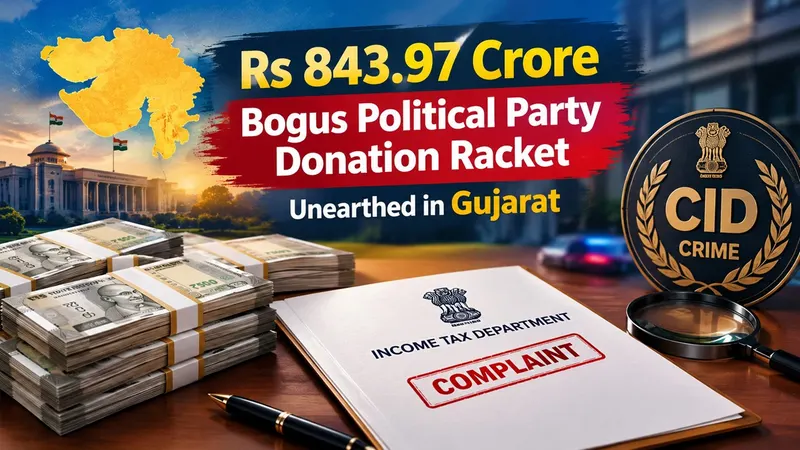
- Rs 843.97 Crore Bogus Political Party Donation Racket Unearthed in Gujarat, Income Tax Dept Files Complaint With CID (Crime)
- Retired Central GST Commissioner Kidnapped by Unknown Persons, Assailants Nabbed Within Hours
- Madhya Pradesh HC Quashes Section 74 GST Show Cause Notice Passed Against G R Infraprojects
- GSTAT Introduces SOP for Branch Officer-to-Branch Officer (BO-to-BO) Case Transfer Ensuring Seamless Reassignment of Cases
- GSTAT: E-Way Bills Cannot Be Invalidated Merely Because They Were Not Generated by Original Supplier
Up Next
Loading suggestions…


Recent Posts

All Posts
Recent Posts
All Posts