ITAT Upholds Rs 6.58 Crore Addition Under Section 68 for Failure to Prove Loan Creditworthiness:
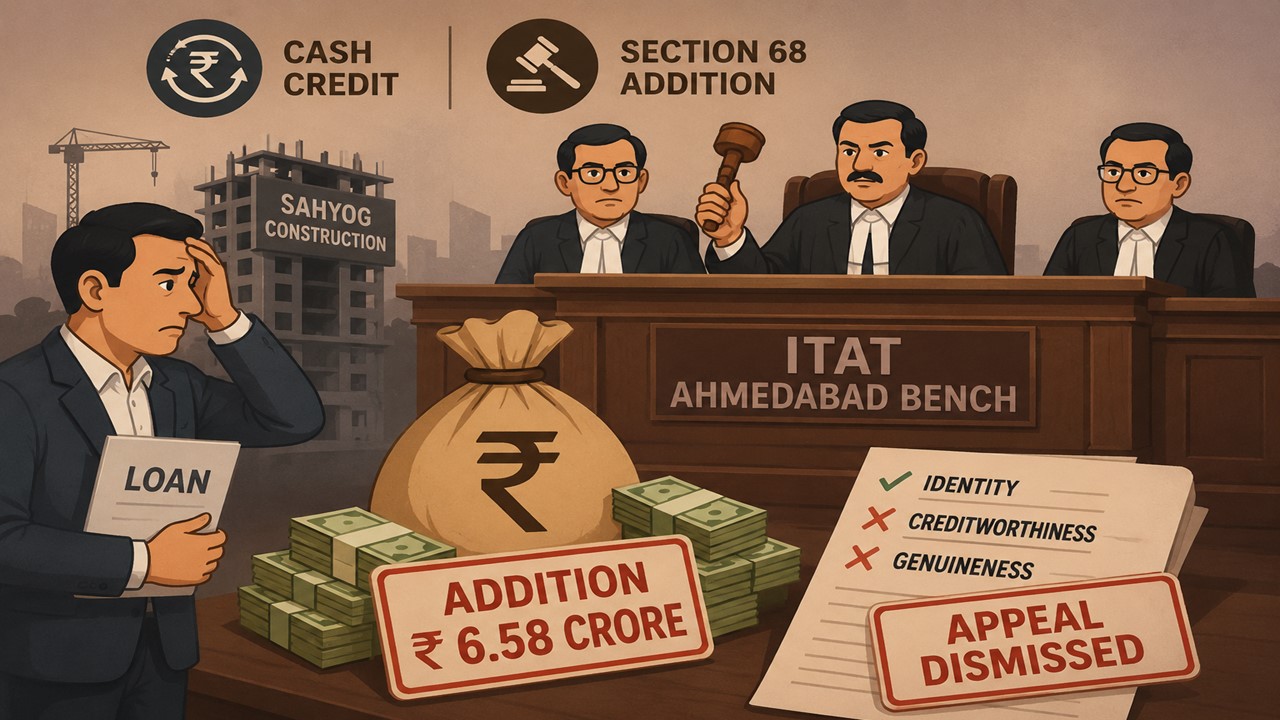
ITAT upheld a Rs 6.58 crore addition under Section 68 after finding that the assessee failed to establish the lenders’ creditworthiness and the genuineness of the loan transactions.
ITAT Upholds Addition for Failure to Prove Genuineness of Loans
 Vanshika verma
 Jun 25, 2026
ITAT Upholds Rs 6.58 Crore Addition Under Section 68 for Failure to Prove Loan Creditworthiness
The Ahmedabad Bench of the Income Tax Appellate Tribunal (ITAT) has dismissed the appeal filed by M/s Sahyog Construction for Assessment Year 2017-18, thereby upholding an addition of Rs. 6,58,43,000 made under Section 68 of the Income Tax Act on account of unexplained cash credits. The assessee, engaged in the business of land development and construction of residential and commercial projects, had challenged the addition before the Tribunal after failing to obtain relief from the CIT(A).
During the course of scrutiny proceedings, the AO noticed that the assessee has taken loans amounting to Rs.6,58,43,000 from five persons and entities. The assessee was to produce supporting documents to prove the identity, creditworthiness and genuineness of the lenders. However, the Revenue authorities have observed that no sufficient evidence was produced before them during the assessment proceedings and therefore they made addition under Section 68.
The assessee submitted before the Tribunal that it had filed the confirmations, copies of income tax returns, financial statements and bank statements of the lenders subsequently. It was also contended that the loans had been repaid during the same year and, therefore, the transactions were genuine. The assessee maintained that once the source of the loans and the repayments had been demonstrated, no addition under Section 68 could be sustained.
The Tribunal perused the material on record and found that the bank statements disclosed a pattern of immediate transfer of funds. In a number of cases, the lenders’ bank accounts had negligible balances before receipt of funds from other sources and transfer of similar amounts to the assessee. The Tribunal noted that this reflected only the circulation or rotation of funds, rather than actual lending transactions backed by independent financial capacity.
The Tribunal further found that some lenders had disclosed very small incomes despite advancing substantial loans to the assessee. In certain cases, the lenders had either not filed returns of income or had been subjected to best judgment assessments. The Revenue had also pointed out that some of the entities were linked to additions relating to unexplained cash deposits during the demonetisation period, which had later been settled under the Vivad Se Vishwas Scheme.
Agreeing with the findings of the Assessing Officer and the Commissioner (Appeals), the Tribunal held that merely producing bank statements, confirmations, and income tax returns does not automatically establish the genuineness of a loan transaction. The assessee is required to prove all three essential ingredients under Section 68, namely, the identity of the creditor, the creditor’s creditworthiness, and the genuineness of the transaction. In the present case, the Tribunal concluded that the assessee had failed to satisfactorily establish the lenders’ financial capacity and the real source of the funds advanced.
Accordingly, the Tribunal upheld the addition of Rs. 6,58,43,000 as unexplained cash credits under Section 68 and dismissed the appeal of Sahyog Construction. The Bench held that there was no reason to interfere with the concurrent findings of the Assessing Officer and the Commissioner (Appeals), and therefore the addition was rightly sustained.
About Author


Vanshika verma
Content Writer
Vanshika Verma is a Content Writer with 1+ year of experience at Studycafe.in. A B.Com graduate from Delhi University, She writes articles on Finance, Tax, ICAI, GST, and the latest financial news, with a focus on making complex topics easy for readers and professionals.
Vanshika Verma is a Content Writer with 1+ year of experience at Studycafe.in. A B.Com graduate from Delhi University, She writes articles on Finance, Tax, ICAI, GST, and the latest financial news, with a focus on making complex topics easy for readers and professionals.
 Studycafe
 Delhi, Delhi, India
 2027
2027My Recent Articles
- CBI Court Jails Ex-Bank Manager 7 Years in Rs 3.61 Crore Loan Fraud Case
- Income Tax Department Imposes Rs 57.74 Crore Penalties on Emcure Pharmaceuticals for Seven Financial Years
- ICAI Releases Revised Handbook on E-Way Bill Under GST, Covering Latest Legal Changes, Portal Updates and Key Judicial Decisions
- CBI Arrests 5 in Mumbai Bribery Case After CPWD Engineer Allegedly Demanded Rs 70 Lakh for Wadala Land NOC
- CBI Registers Rs 93.44 Crore PNB Bank Fraud Case, Searches Mumbai Premises Linked to Company Directors
Up Next
Loading suggestions…


Recent Posts


All Posts


Tags
Recent Posts
All Posts