ITR Filing: Why You Shouldn't Rely on a July 31 Deadline Extension:
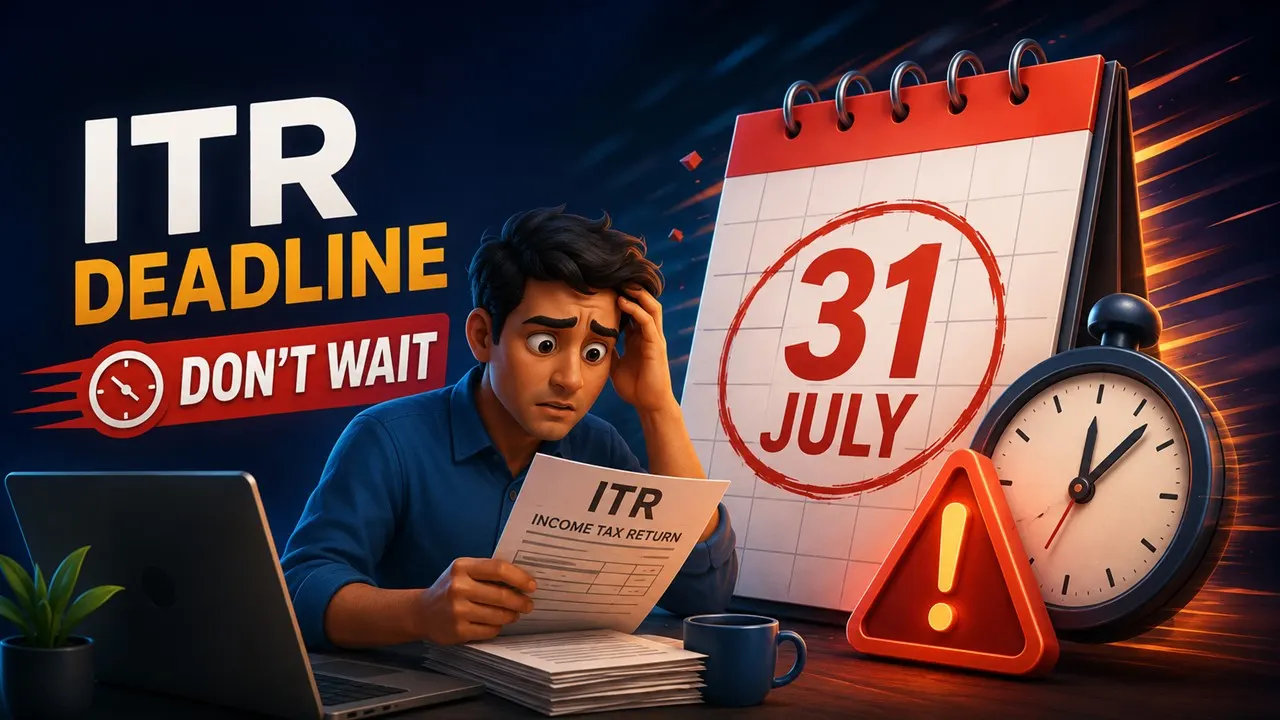
Don't rely on an ITR deadline extension. File early to avoid errors, penalties, and refund delays.
File Your ITR Before It's Too Late
 Jasmine
 Jul 24, 2026
Every year, there are numerous taxpayers who prefer to file their Income Tax Return (ITR) at the very last moment because they believe that the government will issue a deadline extension from July 31. However, this may prove to be risky for the taxpayer, leading to fines and delayed refunds of money.
In some instances, the government has granted an extension of the deadline; however, in such scenarios, there were either technical problems related to the online portal or exceptional circumstances. Taxpayers should not assume that an extension will be announced every year.

Check Your Tax Details Early
One of the biggest advantages of filing your ITR early is that you get enough time to check your tax details.
Many people discover mistakes in their Form 26AS or Annual Information Statement (AIS) only a few days before the deadline. Fixing these errors often requires contacting your bank, employer, or other financial institutions, which can take several days.

Suppose you have earned Rs 45,000 as fixed deposit interest; then it should be correctly reflected in your AIS and Form 26AS with the TDS deducted by the bank. Similarly, salary income, dividends from mutual funds and capital gains should also be reconciled with your books. You want to file early enough that you have time to fix any mismatches and not delay your refund.
Review Your Tax Regime Before Filing
Salaried employees often choose a tax regime at the beginning of the financial year based on their estimated income. Your financial situation might change during the year.
If you have taken a home loan, paid health insurance premiums or made investments under Section 80C, the tax regime selected earlier may no longer be the best.
For example, a person earning Rs 15 lakh may pay lower tax under the new tax regime if they have very few deductions. But if they claim deductions like Rs 2 lakh home loan interest, Rs 1.5 lakh under Section 80C, and Rs 25,000 under Section 80D, then the old tax regime could result in lower tax.
File Early and Avoid Last-Minute Problems
Experts recommend comparing both tax regimes using your final income and deductions before filing your return. Filing your return early will ensure that you have sufficient time to deal with any inconsistencies in data, avail yourself of the right tax rebates, get your refund quickly, and escape penalties.
It is always preferable to submit your ITR well in advance of the due date rather than wait till there is an extension.
About Author


Jasmine
Digital Marketing Excutive
 Studycafe
 dwarka, Delhi, India
 108
108My Recent Articles
- ITAT Rules BSNL VRS Compensation Exempt from Tax Under Section 10(10B), Grants Leave Encashment ReliefPremium
- Kerala Headload Workers Welfare Board Granted Income Tax Exemption for Three Tax YearsPremium
- Meerut Accountant Accused in Rs 65.5 Crore Income Tax Refund Scam
- Professional’s Viral Post on Rs 1 Crore Tax Sparks Debate on India’s Social Security
- ITAT Sets Aside CIT(A) Order Passed After Taxpayer's DeathPremium
Loading suggestions…


Recent Posts



All Posts


Tags
Recent Posts
All Posts