Journal Entries Are Not a Substitute for Banking Channels: ITAT Upholds Penalties for violating Sections 269SS and 269T:
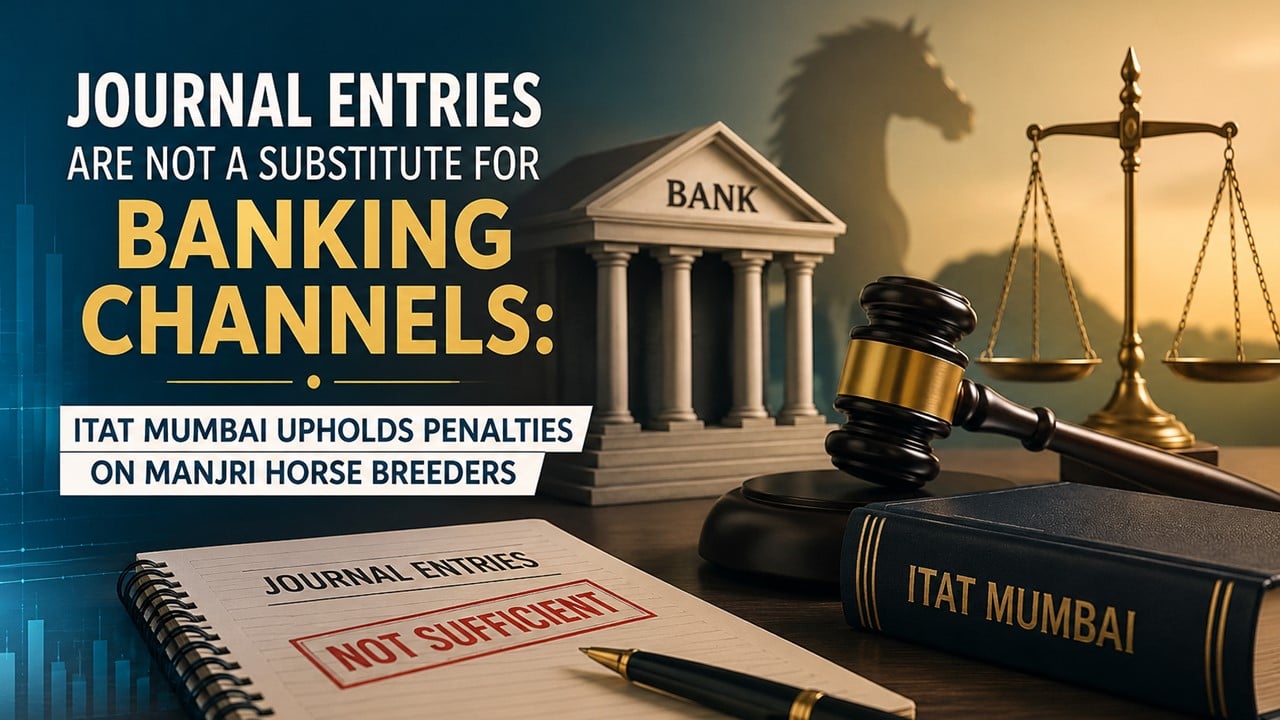
ITAT upholds penalties for loan transactions routed through journal entries instead of banking channels.
Mere Accounting Adjustments Cannot Override Statutory Payment Mode Requirements
 Meetu Kumari
 Jun 13, 2026
Journal Entries Are Not a Substitute for Banking Channels: ITAT Upholds Penalties for violating Sections 269SS and 269T
The Mumbai Bench of the Income Tax Appellate Tribunal (ITAT) has upheld penalties imposed on M/s Manjri Horse Breeders Farm Pvt. Ltd. for violating Sections 269SS and 269T of the Income Tax Act, holding that large financial transactions routed through journal entries cannot automatically escape the statutory requirement of using prescribed banking channels.

The dispute arose during scrutiny proceedings for Assessment Year 2020-21 when the tax department noticed that substantial financial liabilities involving an entity named Joyville had been accepted and repaid through book adjustment entries rather than through account-payee cheques, bank drafts, or electronic banking modes. According to the Revenue, these transactions effectively amounted to acceptance and repayment of loans or deposits in a manner prohibited under Sections 269SS and 269T.
Based on this finding, the department levied penalties under Sections 271D and 271E, equal to the amount of the transactions. The assessee challenged the action, contending that the transactions were merely accounting adjustments recorded through journal entries and therefore did not attract the penal provisions.

The matter ultimately reached the ITAT Mumbai Bench comprising Shri Om Prakash Kant (Accountant Member) and Shri Anikesh Banerjee (Judicial Member). The Tribunal observed that the assessee had routed multi-crore liabilities through journal entries without establishing any compelling business necessity or commercial exigency that prevented the use of normal banking channels. It noted that the legislative objective behind Sections 269SS and 269T is to ensure transparency and maintain a verifiable trail of loan and deposit transactions. Permitting large-scale liability transfers through unsupported book entries would defeat that purpose.
The Tribunal further held that the assessee failed to demonstrate any “reasonable cause” within the meaning of Section 273B that could justify relief from penalty. Since no convincing explanation was offered for bypassing banking modes, the Bench found no infirmity in the orders passed by the lower authorities.
Thus, the ITAT dismissed both appeals and confirmed the penalties imposed under Sections 271D and 271E, reiterating that mere journal entries in the books of account do not automatically shield taxpayers from the consequences of violating the statutory provisions governing acceptance and repayment of loans and deposits.
To Read Full Order, Download PDF Given Below.
About Author


Meetu Kumari
Content Manager
 Studycafe
 Jodhpur, Rajasthan, India
 2264
2264My Recent Articles
- ITAT Condones 302-Day Delay, Restores Salary Assessment for Fresh VerificationPremium
- ITAT Condones Delay After Tax Consultant's Death, Restores Appeals for Fresh HearingPremium
- ITAT Remands Salary Addition, Says Taxability Depends on Salary Becoming Due, Not Mere ReceiptPremium
- ITAT Deletes TP Royalty Adjustment, Orders Fresh Review of Commission BenchmarkingPremium
- ITAT Quashes Reassessment Over Unsigned Section 148 Notice Issued to AssesseePremium
Loading suggestions…


Recent Posts


All Posts


Recent Posts
All Posts