Major Financial & Tax Amendments in May: Know More:
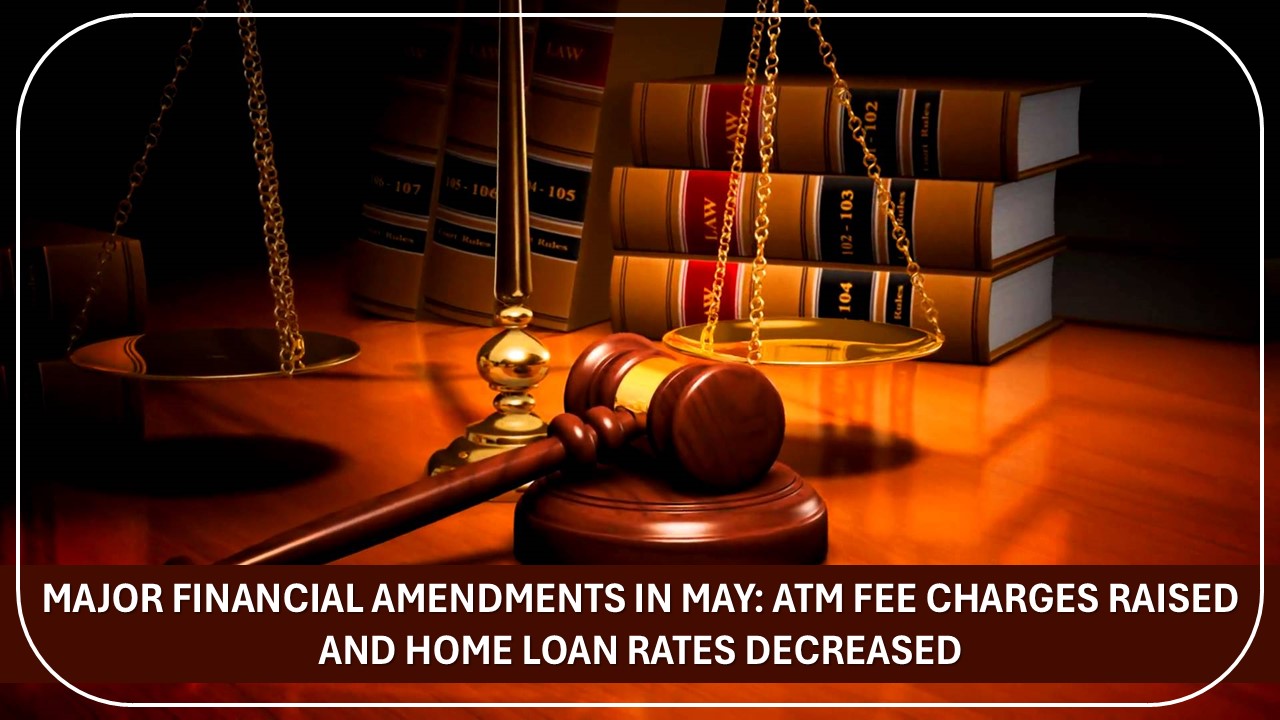
May brings higher ATM fees, lower home loan rates, and a reminder to organise your tax documents for a hassle-free ITR filing.
Know Financial Changes Introduced from May 2025
 Saloni Kumari
 May 1, 2025
Table of Contents

April brought major amendments in the money world. May is not quite as busy, but it still has some surprises in store. Individuals will be required to repay a bit more when they use an ATM beyond their free monthly limit, but homeowners should see some relief as home loan rates are likely to fall. Plus, with tax season coming up, keep all your papers ready so that filing your ITR goes smoothly.
ATM Fees Go Up in May
Starting May 1, the RBI has allowed banks to charge up to Rs. 23 (plus taxes) per transaction after you exceed your free withdrawals. This is applicable at both regular ATMs and Cash Recycler Machines. Banks such as HDFC, PNB, and IndusInd have already updated customers: HDFC Bank: From May 1, extra withdrawals cost Rs. 23 + tax. You still get five free HDFC ATM transactions and three free non-HDFC ATM transactions per month in metros (five free at other ATMs in non-metros). Balance checks and mini-statements stay free on HDFC machines, but non-HDFC machines will charge after your free limit. Punjab and National Bank: From May 9, extra withdrawals at other banks’ ATMs cost Rs. 23 + GST, and non-cash services (like balance checks) cost Rs. 11 + GST.Home Loan Rates Should Ease
On April 9, the RBI cut its repo rate by 0.25% to 6%. Many banks tie home loans to that rate, so lenders may lower their lending rates (RLLR) in May. That means existing and new borrowers could see lower EMI payments. All floating-rate home loans given after October 1, 2019, follow an external benchmark, usually the RBI’s repo rate, so rate cuts should flow through to your loan.Get Your Tax Papers Ready
Before you file your income tax return (ITR), gather all important papers: bank statements for savings interest, your home loan’s interest certificate, records of any profits from selling stocks, mutual funds, or property, and invoices or receipts if you did freelance work. Keep these documents together, either in a folder or on your computer, so they’re easy to find. Check that all the details are correct and up to date. If you’re unsure about anything, ask a tax expert. Once you receive your Form 16 from your employer in June, you’ll have everything you need for a smooth filing.About Author


Saloni Kumari
Content Writer
Saloni is a Content Writer with 2+ years of experience at studycafe.in. She writes legal, taxation, and finance related content including GST, Income Tax etc. Skilled in translating complex judicial pronouncements and regulatory developments into clear, and reader-friendly articles. Experienced in covering judgements of ITAT, High Court, GSTAT, and news related to Income Tax, GST, and corporate law. She can be reached at [email protected].
Saloni is a Content Writer with 2+ years of experience at studycafe.in. She writes legal, taxation, and finance related content including GST, Income Tax etc. Skilled in translating complex judicial pronouncements and regulatory developments into clear, and reader-friendly articles. Experienced in covering judgements of ITAT, High Court, GSTAT, and news related to Income Tax, GST, and corporate law. She can be reached at [email protected].
 StudyCafe
 Delhi, Delhi, India
 2919
2919My Recent Articles
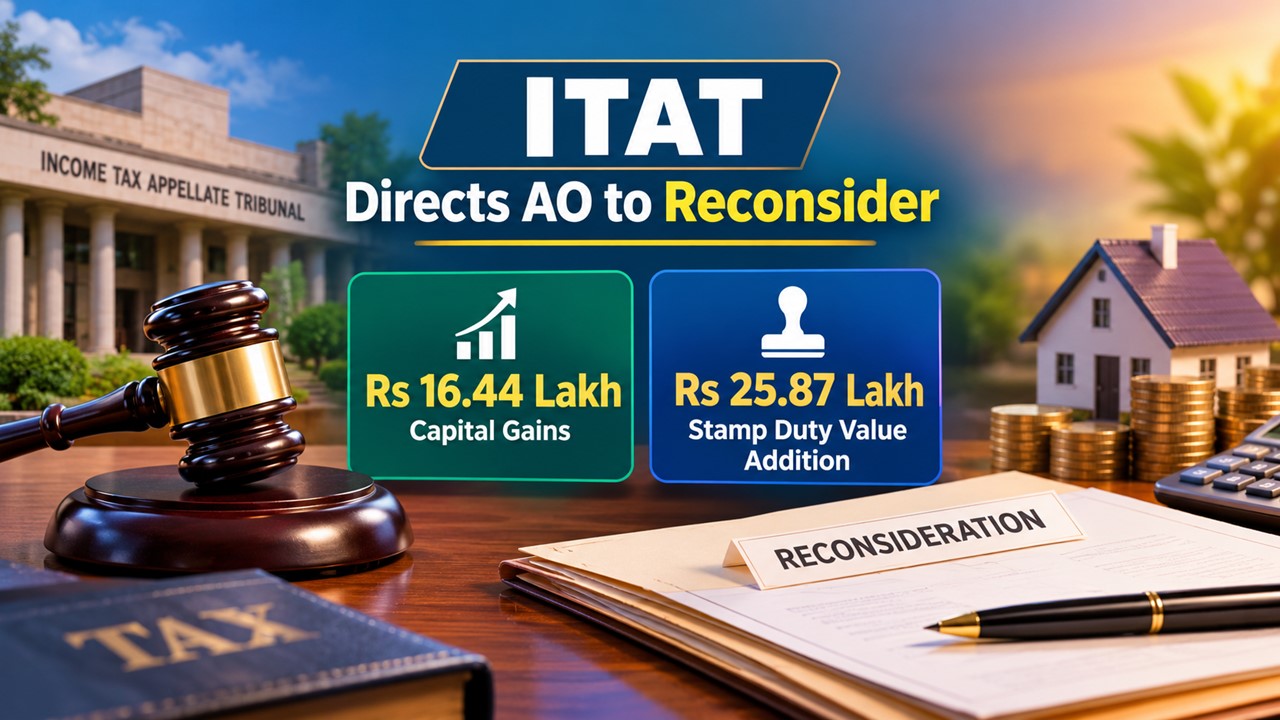
- ITAT Directs AO to Reconsider Rs 16.44 Lakh Capital Gains and Rs 25.87 Lakh Stamp Duty Value Addition
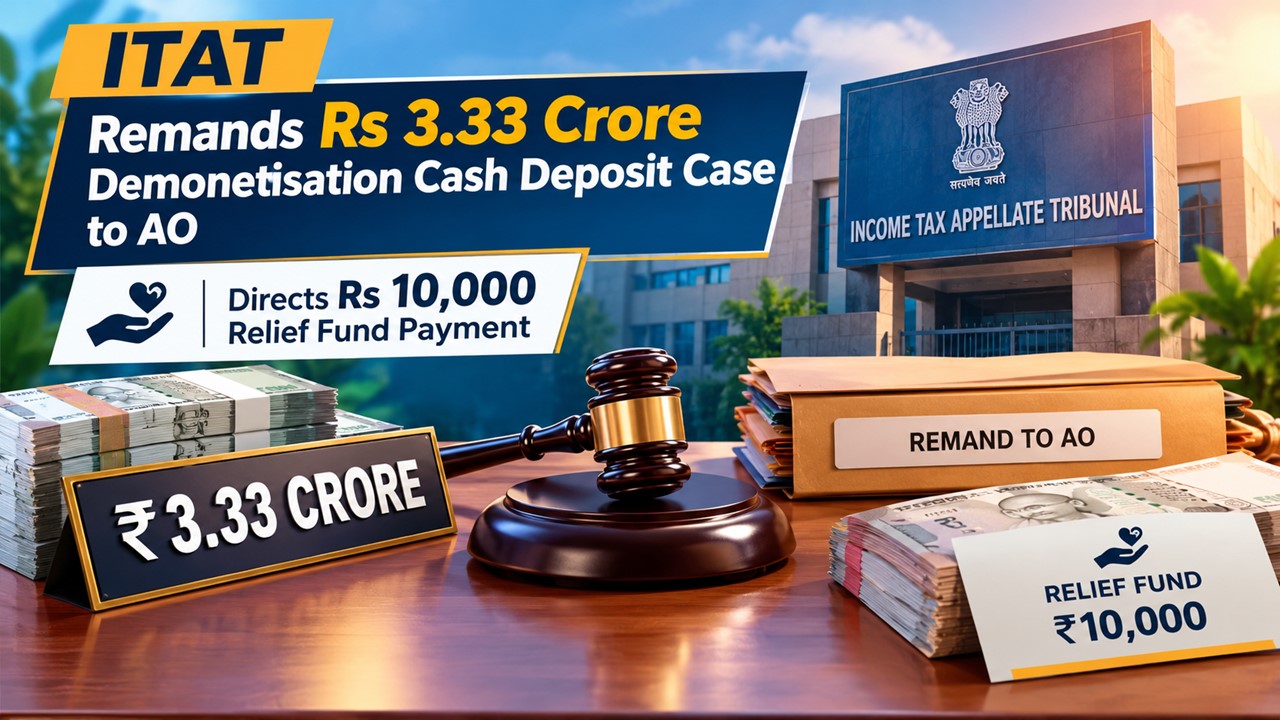
- ITAT Remands Rs 3.33 Crore Demonetisation Cash Deposit Case to AO, Directs Rs 10,000 Relief Fund Payment
- Income Tax Dept Increases Scope for Saksham Nudge Initiative to Further Include Professional Insuring Timely Compliance
- Vedanta Subsidiary ESL Steel Receives GST SCN for Rs. 2.76 Lakh IGST Demand Over Alleged RCM Short Payment
- Good News! ICAI Opens One-Day Window for Submission of MEF Form 2026-27 at meficai.org
Up Next
Loading suggestions…


Recent Posts

All Posts

Tags
No tags yet.
Recent Posts
All Posts
Tags
No tags yet.