New Banking and Tax Rules: What You Need to Know:
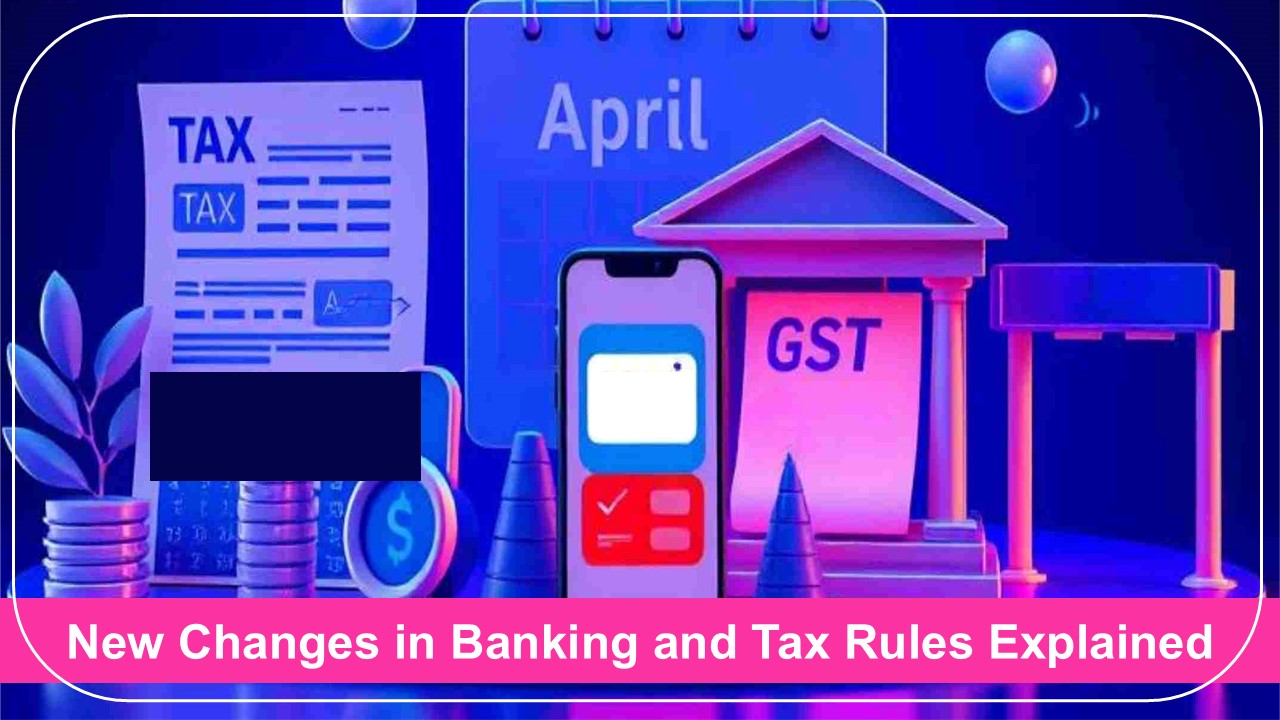
From May 1, 2025, there are stricter regulations regarding banking transactions and fixed deposits (FDs).
New Changes in Banking and Tax Rules Explained
 Janvi Koli
 May 1, 2025
Table of Contents

New Banking and Tax Rules: What You Need to Know
From May 1, 2025, there are stricter regulations regarding banking transactions and fixed deposits (FDs). The regulations enable the government to trace money and curb tax evasion. One needs to be aware of these regulations to avoid receiving notices from the Income Tax Department.
Bank Deposits and Withdrawals
It is important for every citizen to know the details regarding the Income Tax rules related to depositing and withdrawing money in the bank and FD. With the help of this, you can avoid unnecessary tax notices and penalties:
| Information | Description |
| Cash Deposit/Withdrawal Limit (Savings A/c) | Rs.10 lakh (in a financial year) |
| TDS Deduction Limit on FD (Normal Citizens) | Rs. 50,000 (in a financial year) |
| TDS Deduction Limit on FD (Senior Citizens) | Rs. 100,000 (in a financial year) |
| TDS Rate on FD (With PAN) | 10% |
| TDS Rate on FD (Without PAN) | 20% |
| SFT Reporting Limit in Bank | Deposits above Rs. 10 lakh (in a financial year) |
| TDS on Cash Withdrawal (ITR Not Filed) | 2% above Rs. 20 lakh, 5% above Rs. 1 crore |
| TDS on Cash Withdrawal (ITR Filed) | 2% above Rs. 1 crore |
| Tax Saver FD Exemption (Section 80C) | Up to Rs. 1.5 lakh |
What This Means For You:
- This Rs. 10 lakh cap is on all your bank accounts put together
- These large transactions are called "High Value Transactions."
- If the Income Tax Department asks how this money has been earned, you'll have to explain
- If you can't account for the money's source, you may be forced to pay additional tax and penalties
Fixed Deposits (FDs)
TDS on Interest From FDs:- Regular citizens: TDS (Tax Deducted at Source) applies if your yearly interest exceeds Rs. 50,000
- Senior citizens: TDS applies if your yearly interest exceeds Rs. 100,000
- TDS rate: 10% if you provide your PAN card number, 20% if you don't
- If your total FD amount is more than Rs. 10 lakh, the bank will report this to the Income Tax Department
- You must file an Income Tax Return (ITR) if your interest income is more than the tax-free limit
- Tax saver FDs can give you tax benefits up to Rs. 1.5 lakh under section 80C
- Your interest income is above the exempt limit, and you have not filed your ITR
- You deposit a huge sum in an F,D but are unable to account for where the funds came from
- The Income Tax Department believes you're concealing income
Cash Withdrawal Rules
TDS on Cash Withdrawals (2025): If you haven't filed ITR for the last 3 years:- 2% TDS on cash withdrawals above Rs. 20 lakh 5% TDS on withdrawals above Rs. 1 crore
- 2% TDS on withdrawals above Rs. 1 crore
Why These Rules Matter
The government wants to:- Make money transactions more transparent
- Reduce tax evasion and black money
- Ensure everyone pays their fair share of taxes
About Author


Janvi Koli
Digital Marketing Executive
Janvi is an expert content writer focused on taxation and compliance. She writes insightful articles on income tax, GST, company law, and government policies. Known for her practical approach, she simplifies complex regulations to help readers stay informed and compliant. She can be reached at [email protected]
Janvi is an expert content writer focused on taxation and compliance. She writes insightful articles on income tax, GST, company law, and government policies. Known for her practical approach, she simplifies complex regulations to help readers stay informed and compliant. She can be reached at [email protected]
 Studycafe
 Delhi, Delhi, India
 325
325My Recent Articles
- Ethereum Fundamentals for Finance Students through Understanding Blockchain Beyond Bitcoin
- Major Financial Changes Effective from November 1, Every Indian Should Aware Of
- Top 20 CA Firms in Mumbai for Articleship
- Know How to Setup EV Charging Stations: Step by Step Guide
- Unlock business growth this Independence Day with Bajaj Finserv Business Loan
Up Next
Loading suggestions…


Recent Posts

All Posts

Tags
No tags yet.
Recent Posts
All Posts
Tags
No tags yet.