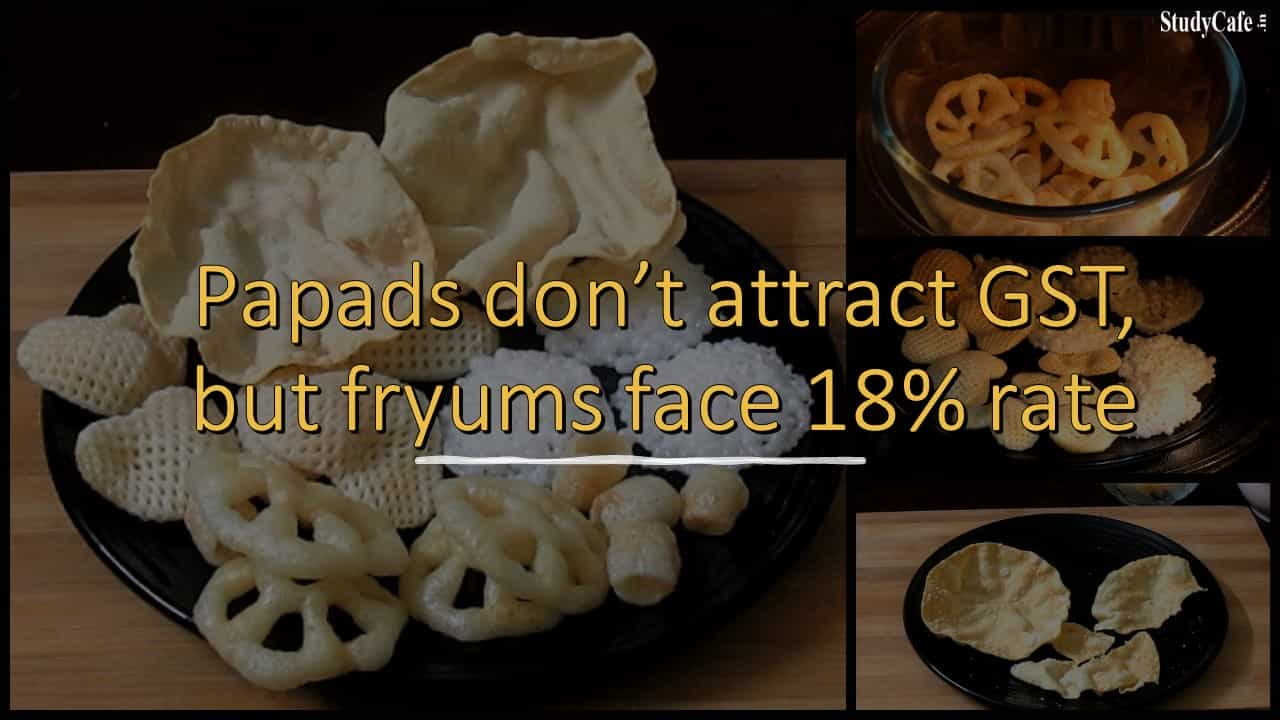
Papads don’t attract GST, but fryums face 18% rate
Papads don’t attract GST, but fryums face 18% rate MUMBAI: No Gujarati thali is complete without a papad , be it fried or roasted. Fortunately for co…
 Sonali Maity
 Aug 26, 2021
Papads don’t attract GST, but fryums face 18% rate
MUMBAI: No Gujarati thali is complete without a papad, be it fried or roasted. Fortunately for consumers, as the GST burden is ultimately borne by them, the Gujarat bench of the Authority for Advance Ruling (AAR) has held that Papads will attract nil GST. Interestingly, the AAR bench observed that Papads were handmade once. Hence, it was easier to roll them into a round shape. Today, with the advancement of technology, the old traditional round papad has given way to different shapes and sizes. But — as long as the goods are similar in respect of the ingredients, manufacturing process and use — it will be a papad classified at HSN 19059040. Currently, the GST rate against this classification is nil. The manufacturer, Global Gruh Udyog, which produced puri papad and unfried papad (in such varieties as jeera, red chilli, green chilli, rice & mung dal) sought a ruling on the classification for its products. Papad is an Indian food prepared mainly with ingredients like flour, spices, salt and oil. This product is unfried and it is not a cooked food. Further, it is not an instant food that is ready for human consumption. Consumers need to fry or roast the product to make it ready for consumption, the applicant explained. It is pertinent to point out that several months ago in the case of Sonal Products, the Gujarat AAR bench had held fryums to be “not papad” and subject to GST at 18%. The ingredients for fryums were maida flour mixed with other additives “In the past, a few high court decisions have treated fryums to be papad. Even if we focus only on the recent AAR ruling, it is clear that as fryums are also flour mixed with spices and come in different shapes and sizes, these should also be classified as papad subject to nil rate. While AAR rulings do not set a precedent, they do have a persuasive impact in assessment. If the manufacturer has taken a different view, it typically results in litigation,” said a chartered accountant. Source: THE TIMES OF INDIAAbout Author


Sonali Maity
article
 studycafe
 New delhi, Delhi, India
 152
152My Recent Articles
- CBIC exempts Import of COVID-19 Vaccine from Customs Duty
- Government approves Rs. 4,400 crore investment in ECGC Ltd. in 5 years to provide support to exporters as well as banks
- Regulatory Impact Assessment (RIA) for revision of existing Accounting Standards
- SEBI: Electronic Gold Receipt to have Trading, clearing and settlement features akin to any Other ‘Securities’
- SEBI has enlisted the help of CMA to conduct a Share Capital Reconciliation Audit
Up Next
Loading suggestions…


Recent Posts

All Posts


Tags
Recent Posts
All Posts