SC Refuses to Revive Reopened Assessments: No Tax Escapement Under MAT, 330-Day Delay Proves Fatal:
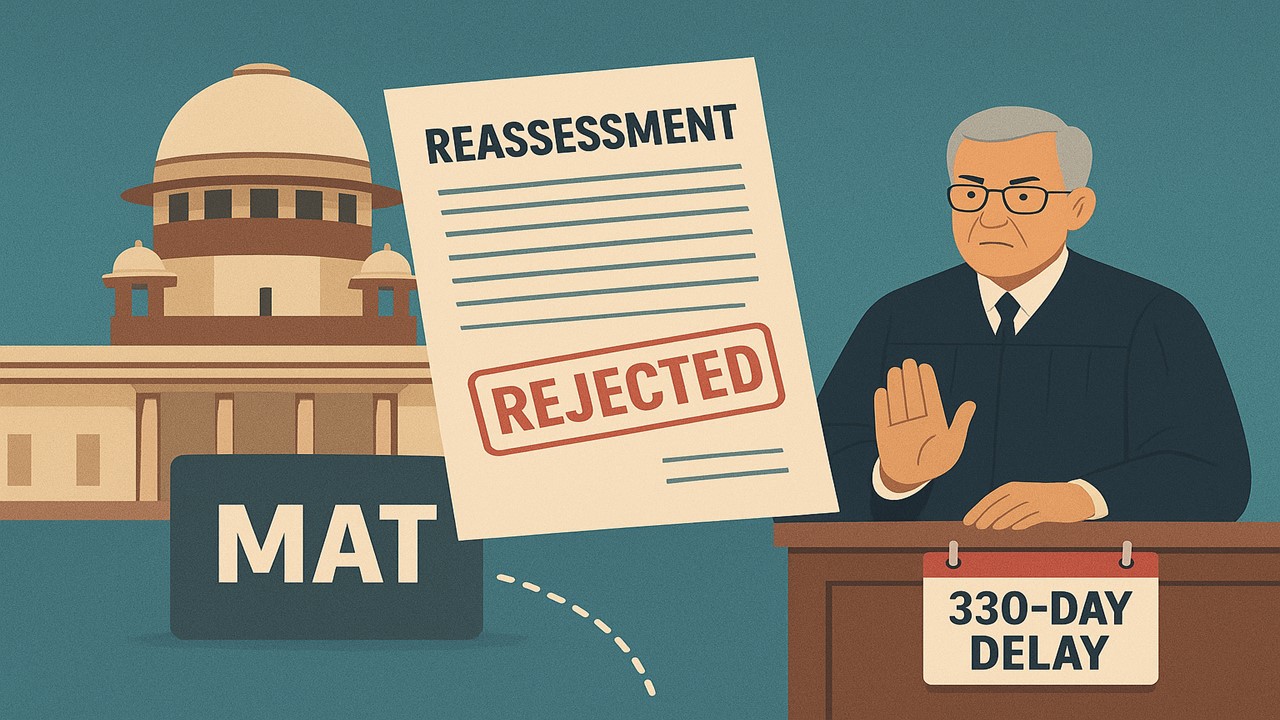
SC declines to condone nearly one-year delay by Income-Tax Department; upholding HC’s quashing of Section 148 notices issued despite MAT tax neutrality
SC Rejects 330 Days Delayed SLP; Gujarat HC’s Quashing of Section 148 Notices Stands
 Meetu Kumari
 Dec 12, 2025
SC Refuses to Revive Reopened Assessments: No Tax Escapement Under MAT, 330-Day Delay Proves Fatal
The assessee challenged three reassessment notices dated 30 and 31 March 2021 issued under Section 148 for AYs 2014-15, 2015-16 and 2016-17. These notices were triggered by a search on one Hitesh Jain, allegedly involved in accommodation entries through shell concerns, with the department linking certain transactions to the company.
Before issuing the notices, the company had already undergone scrutiny assessments under Section 143(3), paid tax under the MAT provisions, and had even succeeded partly in an appeal for AY 2016-17. The company objected that the reopening was mechanical and lacked tangible material, and that even if the alleged escaped income were added, its tax liability remained unchanged under Section 115JB.
HC's Order: The High Court examined the recorded reasons and found that the company had paid tax only under Section 115JB, and even after including the alleged escaped income, the assessed tax would remain lower than the MAT liability already discharged. Therefore, the High Court quashed the Section 148 notices for all three years. The Revenue carried the matter to the Supreme Court with a delay of 330 days.
Issue Before Apex Court: Whether reassessment proceedings under Section 148 could be sustained when the assessee was assessed under MAT, and no real tax escapement arose; and whether the Supreme Court should condone the Revenue’s 330-day delay in challenging the High Court’s quashing of the notices.
SC's Judgment: The Court observed that the fundamental requirement for reopening an assessment under Section 147 of the Income Tax Act, which is that the Assessing Officer must possess a “reason to believe” that income has escaped assessment, is not fulfilled. Thus, the AO lacked the jurisdiction to issue the impugned notices under Section 148.
The Supreme Court further refused to condone the “gross delay” of 330 days in filing the special leave petition. The Bench noted that the reasons furnished by the department were neither satisfactory nor sufficient in law to justify such an extraordinary delay. Since the application for condonation of delay failed, the special leave petition was therefore dismissed.
To Read Full Judgment, Download PDF Given Below
About Author


Meetu Kumari
Content Manager
Meetu Kumari is an Experienced Advocate and Content Writer with 4+ years of demonstrated history of working in the law practice industry. Skilled in Developing Content, Researching, and Drafting. Strong professional with a Bachelor of Science (B.Sc.) focused on Law from Gujarat National Law University.
Meetu Kumari is an Experienced Advocate and Content Writer with 4+ years of demonstrated history of working in the law practice industry. Skilled in Developing Content, Researching, and Drafting. Strong professional with a Bachelor of Science (B.Sc.) focused on Law from Gujarat National Law University.
 Studycafe
 Jodhpur, Rajasthan, India
 2264
2264My Recent Articles
- ITAT Condones 302-Day Delay, Restores Salary Assessment for Fresh VerificationPremium
- ITAT Condones Delay After Tax Consultant's Death, Restores Appeals for Fresh HearingPremium
- ITAT Remands Salary Addition, Says Taxability Depends on Salary Becoming Due, Not Mere ReceiptPremium
- ITAT Deletes TP Royalty Adjustment, Orders Fresh Review of Commission BenchmarkingPremium
- ITAT Quashes Reassessment Over Unsigned Section 148 Notice Issued to AssesseePremium
Up Next
Loading suggestions…


Recent Posts


All Posts


Recent Posts
All Posts