SC to Government: Keep the taxation structure straight forward & user-friendly
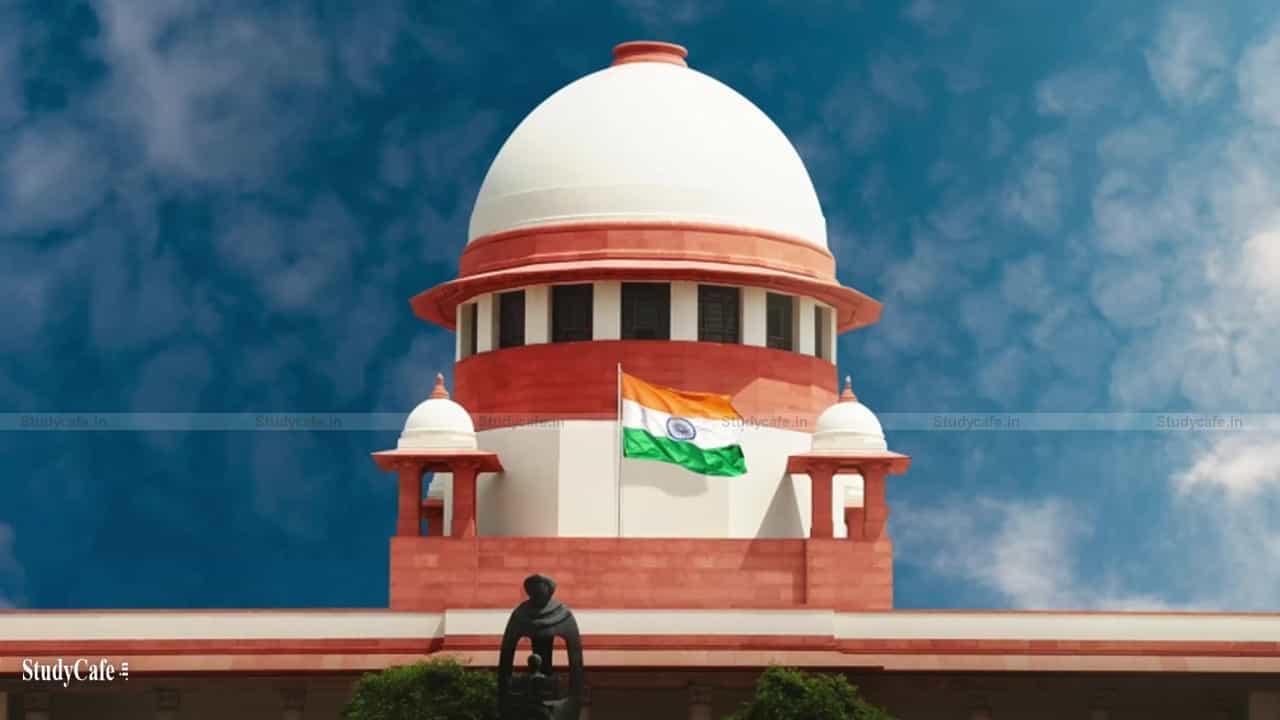
SC to Government: Keep the taxation structure straight forward & user-friendly In South Indian Bank Ltd. v. Commissioner of Income Tax [Civil App…
 A2ZBimal Jain
 Sep 11, 2021
SC to Government: Keep the taxation structure straight forward & user-friendly
In South Indian Bank Ltd. v. Commissioner of Income Tax [Civil Appeal No. 9606 of 2011 (with several other analogous appeals) dated September 09, 2021], South Indian Bank ("the Appellant") along with several other banks ("the Appellants") filed a civil appeal in the Supreme Court challenging the judgment of the Honorable Madras High Court and seeking clarity on the interpretation of Section 14 A of the Income Tax Act, 1961 (“the IT Act”). The Appellant sought lucidity on account of why the expenditure incurred, by them, in bonds and shares is not tax deductible under Section 14 A of the IT Act.
In this case, the Appellants contended that the investments made in bonds and shares should be considered to have been made out of interest-free funds which were essentially more than the investment made and therefore the interest paid by the assesse on its deposits and other borrowings should not be considered to be expenditure incurred in relation to tax free income on bonds and shares and as an analogy, there should be no disallowance under Section 14 A of the IT Act.
As opposed to the Appellants, the Respondents quoted the erstwhile given reasoning of the Honorable Madras High Court; wherein it was stated that none of the Appellants maintained separate accounts for the investments made in bonds, securities and shares wherefrom the tax-free income is earned so that disallowances could be limited to the actual expenditure incurred by the Appellants.
At the perusal of all the facts and evidences, the Apex Court opined that the proportionate disallowance is not warranted, under Section 14A of the IT Act. The Court gave the aforementioned ratio because there was a lack of consonance established between expenditure disallowed and the earning of exempt income.
Furthermore, the Court observed that it is the moral obligation of the Central Government to set up a taxation system that is user-friendly and easily accessible. If such convenience is achieved, unnecessary litigation can be avoided without compromising on generation of revenue.
DISCLAIMER: The views expressed are strictly of the author and A2Z Taxcorp LLP. The contents of this article are solely for informational purpose and for the reader’s personal non-commercial use. It does not constitute professional advice or recommendation of firm. Neither the author nor firm and its affiliates accepts any liabilities for any loss or damage of any kind arising out of any information in this article nor for any actions taken in reliance thereon. Further, no portion of our article or newsletter should be used for any purpose(s) unless authorized in writing and we reserve a legal right for any infringement on usage of our article or newsletter without
prior permission.
About Author


A2ZBimal Jain
Chartered Accountant
CA Bimal Jain is a Member of Institute of Chartered Accountants of India since May 1994 and Member of Institute of Company Secretaries of India since December 2006 along with a Bachelors degree in Law. Also, he is a Qualified SAP - FI/CO Consultant and has more than 21 years of experience in Indirect Taxation and specializes in all aspects of Service Tax, Value Added Tax (VAT)/ Central Sales Tax (CST), Central Excise, Customs, Foreign Trade Policy (FTP), Special Economic Zone (SEZ), Export Oriented Unit (EOU), Export-Import Laws and well acquainted with the concept and impact of way forward Goods and Services tax (GST).
CA Bimal Jain is a Member of Institute of Chartered Accountants of India since May 1994 and Member of Institute of Company Secretaries of India since December 2006 along with a Bachelors degree in Law. Also, he is a Qualified SAP - FI/CO Consultant and has more than 21 years of experience in Indirect Taxation and specializes in all aspects of Service Tax, Value Added Tax (VAT)/ Central Sales Tax (CST), Central Excise, Customs, Foreign Trade Policy (FTP), Special Economic Zone (SEZ), Export Oriented Unit (EOU), Export-Import Laws and well acquainted with the concept and impact of way forward Goods and Services tax (GST).
 A2Z Taxcorp LLP
 Delhi, Delhi, India
 468
468My Recent Articles
- Actions taken by the department during enquiry need not necessarily be termed as harassment
- Who are liable to generate e-invoice w.e.f October 1, 2022
- Personal penalty cannot be imposed on the Chairman of the Company for failure in ensuring proper accounting of the goods
- Stayed the order of cancellation of GST Registration of the assessee for continuing the trading activities
- Can CA be arrested- Section 69 vs Section 132 of the CGST Act
Up Next
Loading suggestions…


Recent Posts
All Posts
Recent Posts
All Posts