SEBI’s Major Request Confuses Credit Rating Agencies:
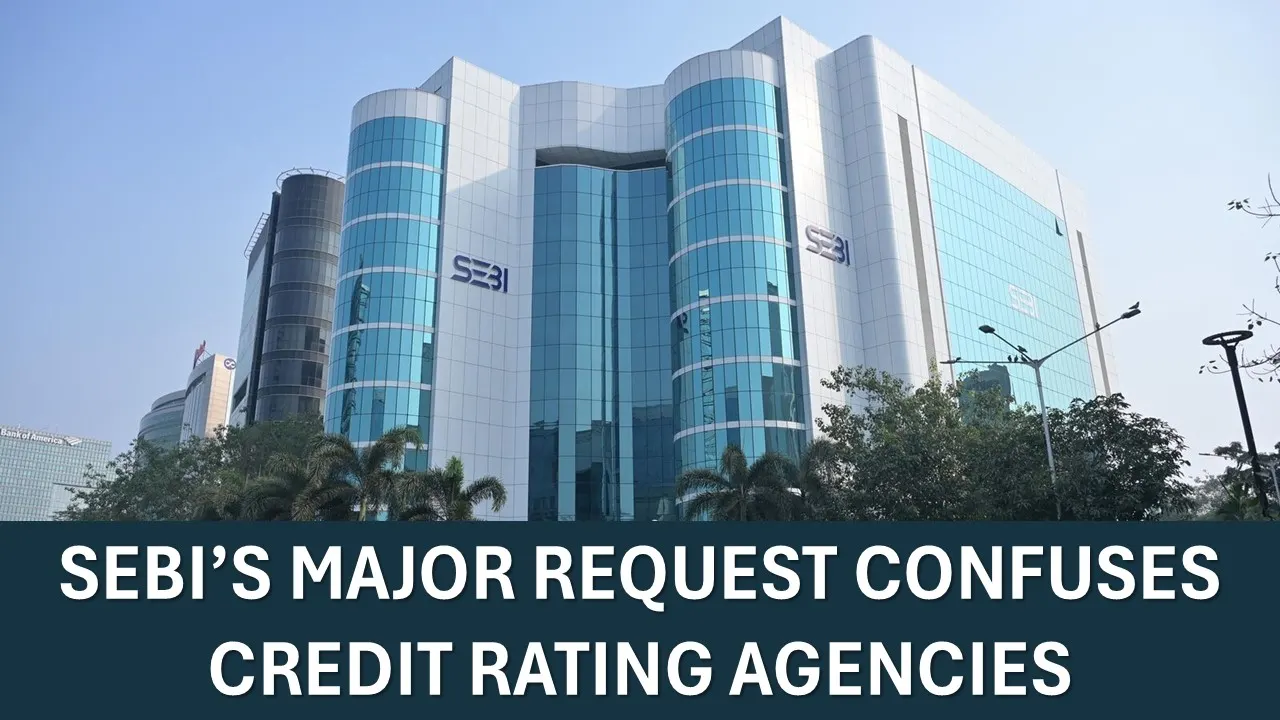
SEBI urges credit rating agencies to take on a bigger role in monitoring equity fundraising, raising concerns over access to information and regulatory clarity.
SEBI Pushes CRAs for Greater Oversight in Equity Fundraising
 Saloni Kumari
 May 2, 2025
SEBI’s Major Request Confuses Credit Rating Agencies
The credit rating agencies (CRAs) are being asked by India's capital markets regulator, Securities and Exchange Board of India (SEBI), to play a vital role in preventing dishonest firms from raising money in the stock market.
While rating agencies are willing to use their experience from the debt market (where they rate bonds and loans) to help protect stock market investors, the proposals discussed recently have left many in the industry confused and concerned, according to two people familiar with the talks.
At a recent meeting between SEBI officials and CRA representatives, the regulator shared its expectations. SEBI wants CRAs to more closely check how companies use the funds they raise from investors. They even want the agencies to comment on whether a company really needs to raise money, and whether the amount it is trying to raise matches its business size and performance.
CRAs Feel Unequipped for the Job
Many CRA officials are puzzled by this idea. They say they often don’t have enough access to company information to dig so deep. Also, deciding whether a company should raise funds is usually up to the company's board and SEBI, not the rating agencies.
Currently, CRAs monitor how companies use funds raised through large equity issues (over Rs. 100 crore). This includes initial public offerings (IPOs), rights issues, and other equity sales. The company hires a CRA after the issue is complete. For smaller fundraisers, monitoring is optional.
CRAs usually check audit reports, bank statements, and company invoices, and they sometimes carry out their own investigations. But SEBI now seems to want them to go beyond just checking documents. This becomes especially difficult when the CRA has not previously rated the company’s debt, meaning they have even less information.
The CRA's monitoring continues until all the raised funds are used. In the past, SEBI and CRAs had agreed on a Standard Operating Procedure (SOP) for this process. But with SEBI’s new expectations, it’s unclear if the SOP needs to be updated. If that happens, companies might need to share more data, and CRAs may need to spend more resources, adding to their costs.
So far, there is no official written instruction from SEBI, but the message was clearly delivered during the meeting.
It’s also not clear why SEBI is pushing for this change. One guess is that recent cases of shell companies with little real business activity trying to raise funds may have alarmed SEBI.
SEBI has not yet responded to media queries on this issue.
About Author


Saloni Kumari
Content Writer
Saloni is a Content Writer with 2+ years of experience at studycafe.in. She writes legal, taxation, and finance related content including GST, Income Tax etc. Skilled in translating complex judicial pronouncements and regulatory developments into clear, and reader-friendly articles. Experienced in covering judgements of ITAT, High Court, GSTAT, and news related to Income Tax, GST, and corporate law. She can be reached at [email protected].
Saloni is a Content Writer with 2+ years of experience at studycafe.in. She writes legal, taxation, and finance related content including GST, Income Tax etc. Skilled in translating complex judicial pronouncements and regulatory developments into clear, and reader-friendly articles. Experienced in covering judgements of ITAT, High Court, GSTAT, and news related to Income Tax, GST, and corporate law. She can be reached at [email protected].
 StudyCafe
 Delhi, Delhi, India
 2937
2937My Recent Articles
- ITAT Upholds Rs 2.76 Lakh Addition, Holds Stock Exchange and Banking Records Alone Cannot Prove Genuine LTCG
- ITAT Deletes Rs 1.80 Crore Addition, Holds Asset Revaluation Does Not Mean Fresh Investment
- ITAT Denies Rs 1.90 Lakh Section 80GGC Deduction Over Donation to Apna Desh Party, Relies on Supreme Court Judgement
- ITAT Deletes Rs 10.76 Lakh Expense Disallowance, Remands Rs 17.66 Lakh Cash Payment Issue
- ITAT Quashes Bogus LTCG Assessment for Non-Service of Mandatory Section 143(2) Notice
Up Next
Loading suggestions…


Recent Posts
All Posts
Tags
No tags yet.
Recent Posts
All Posts
Tags
No tags yet.