Section 54F exemption cannot be denied merely because registration of Property is pending:
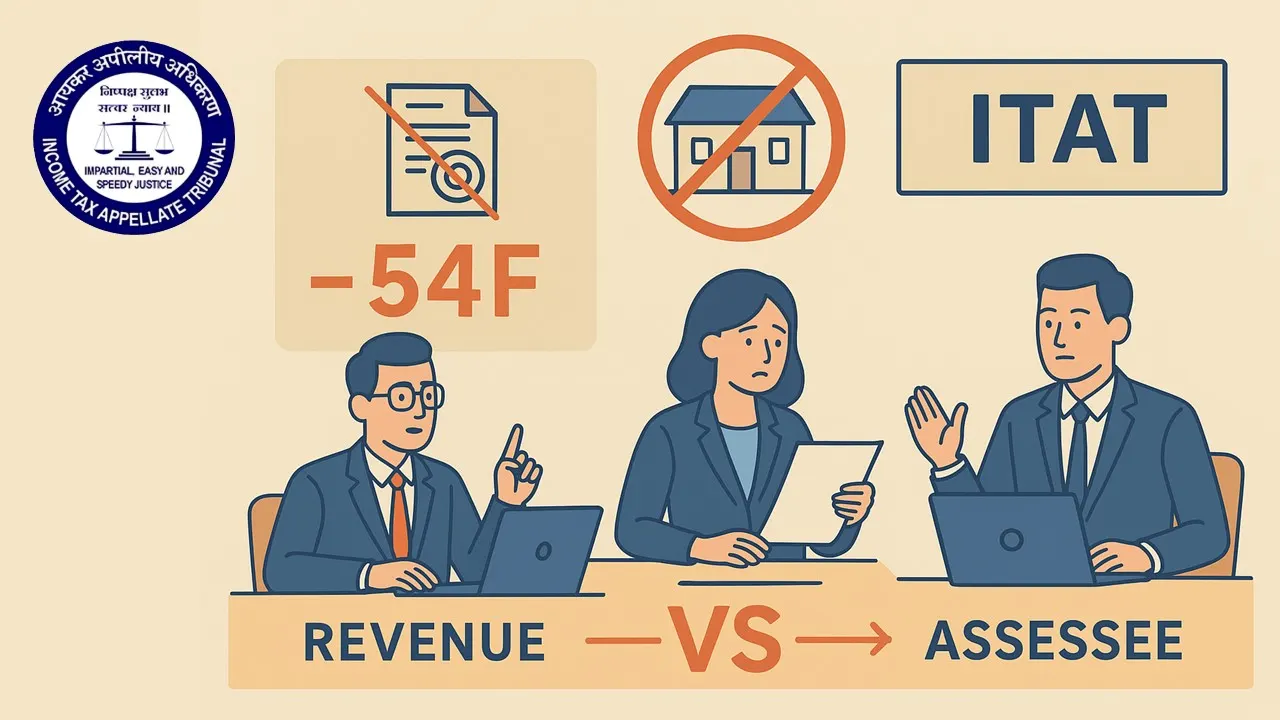
ITAT Mumbai holds that a taxpayer can claim Section 54F exemption even if the new property is not yet registered, as long as the investment is genuine.
Tribunal Rejects Revenue’s Objection on Non-Registration of New House
 Saloni Kumari
 Nov 14, 2025

Section 54F exemption cannot be denied merely because registration of Property is pending
The present appeal has been filed by the ITO-19 (3)(1), Mumbai (Appellant), against a taxpayer named Sangeeta (Respondent), in the Income Tax Appellate Tribunal (ITAT) “G” Bench, Mumbai, before Shri Pawan Singh (Judicial Member) and Smt Renu Jauhri (Accountant Member). The case is related to the assessment year 2018-2019 and was decided on November 13, 2025. The appeal has been filed challenging an order dated August 17, 2023, passed by the CIT(A).
The assessee claimed exemption under Section 54F after selling a property and investing in another residential house. However, the Assessing Officer (AO) did not accept his claim because the new house was not registered in her name, and the assessee failed to produce a registered sale deed/title document for the new house before the AO.
The aggrieved assessee, with the action of the AO, then approached the CIT(A). The CIT(A), after hearing the arguments of both sides, allowed the exemption under section 54F. The Revenue, dissatisfied with the action of CIT(A), then filed an appeal before ITAT.
Revenue's Arguments:
The taxpayer bought a new house but did not have a registered sale deed. According to the tax department, without a registered document, ownership is not legally valid, and hence the assessee is not eligible to claim exemption under Section 54F.
To support this point, the authorised representative of Revenue also cited legal rules like the Transfer of Property Act, the Registration Act, etc., and also an earlier Supreme Court judgement in Suraj Lamp & Industries Pvt. Ltd. vs State of Haryana (2012) 340 ITR 1 (SC) case. In this case, SC ruled that immovable property can be lawfully transferred only by way of a registered deed of conveyance.
Assessee's Arguments:
Assessee claimed that Section 54F only requires the purchase of another property using money received after selling the previous property; it does not discuss any necessary registration. As long as money is invested in a residential property within the allowed time, an exemption should be allowed under Section 54F. To support her point, she also cited CBDT's Circular 471 and earlier decisions of the Court, which say registration is not compulsory for claiming exemption under 54F.
ITAT's Observation
The AO did not dispute that the taxpayer invested money in buying the new house. The only issue was the lack of a registered purchase deed. Section 54F does not mandate that the newly bought property must be registered in the name of the purchaser.
Courts have repeatedly held that if the payment is made toward the purchase of a new house, the exemption cannot be denied only because registration is pending. To announce its final decision, the tribunal cited some earlier judgements titled Balraj v. CIT (Delhi HC) and Sambandam Udai Kumar (Karnataka HC).
Final Decision
In conclusion to the aforesaid observations, the ITAT agreed with the ruling of CIT(A). They held that non-registration alone cannot be a reason to deny the Section 54F exemption. Since the investment in the new property was genuine, the assessee is eligible for the exemption. Revenue’s appeal was dismissed.

About Author


Saloni Kumari
Content Writer
Saloni is a Content Writer with 2+ years of experience at studycafe.in. She writes legal, taxation, and finance related content including GST, Income Tax etc. Skilled in translating complex judicial pronouncements and regulatory developments into clear, and reader-friendly articles. Experienced in covering judgements of ITAT, High Court, GSTAT, and news related to Income Tax, GST, and corporate law. She can be reached at [email protected].
Saloni is a Content Writer with 2+ years of experience at studycafe.in. She writes legal, taxation, and finance related content including GST, Income Tax etc. Skilled in translating complex judicial pronouncements and regulatory developments into clear, and reader-friendly articles. Experienced in covering judgements of ITAT, High Court, GSTAT, and news related to Income Tax, GST, and corporate law. She can be reached at [email protected].
 StudyCafe
 Delhi, Delhi, India
 3054
My Recent Articles
- ITAT Deletes Rs 1.70 Crore Additions, Says Purchases Cannot Be Disallowed Without Rejecting Book
- RBI Imposes Rs 9 Lakh Penalty on MobiKwik for Violating PPI and Fraud Reporting Norms
- ITAT Quashes Assessment Order as ACIT Lacked Jurisdiction Without Transfer Order under Section 127
- ITAT Deletes Rs 12.57 Lakh Section 14A Disallowance as Cooperative Bank Earned No Exempt Income
- Credit Cardholders Beware! Eight Settings Every Cardholder Should Review to Curb Fraud Risk
Up Next
Loading suggestions…


Recent Posts
All Posts

Tags
Recent Posts
All Posts