Delhi HC Upholds NMC’s Rejection of MBBS Seat Increase for Faculty Shortfall at Kushwah Institute:
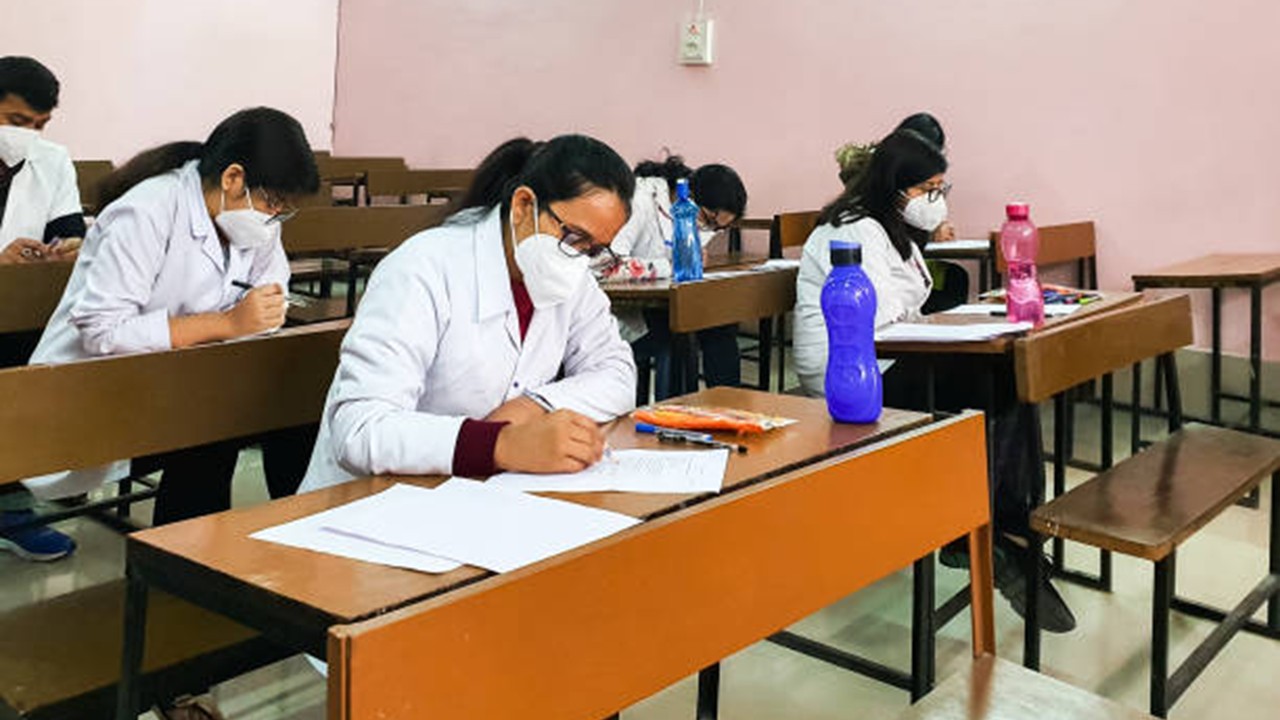
Court holds that the Medical Assessment and Rating Board’s (MARB) disapproval for additional MBBS seats was justified
High Court Upholds NMC’s Denial of 100 Additional MBBS Seats to Kushwah Institute
 Meetu Kumari
 Nov 14, 2025
Delhi HC Upholds NMC’s Rejection of MBBS Seat Increase for Faculty Shortfall at Kushwah Institute
Dr. B.S. Kushwah Institute of Medical Sciences, Kanpur, applied to the National Medical Commission (NMC) for increasing its MBBS intake from 150 to 250 seats for the academic year 2025-26. The Medical Assessment and Rating Board (MARB) conducted an inspection and thereafter it issued two show-cause notices in June and July 2025. A physical inspection was also conducted on 26 June 2025, that showed only a 2.97% faculty deficiency. However, NMC eventually issued a Letter of Disapproval (LoD) on 24 September 2025, based on Aadhaar Enabled Biometric Attendance System (AEBAS) data, which showed that only 49 faculty members had regular attendance, resulting in a 70.83% deficiency.
The institute argued that the disapproval was arbitrary and unsupported by the earlier inspection report, stating that the AEBAS-based irregularities were not shown to them through the show-cause notices. NMC maintained that continuous biometric data reflected the true level of compliance and that physical inspections cannot outweigh persistent AEBAS irregularities.
Issue Before HC: Whether NMC was justified in rejecting the institute’s request to increase MBBS seats from 150 to 250 based on AEBAS-recorded faculty shortages, despite a favourable physical inspection report.
HC Ruled: The Hon'ble High Court upheld the NMC’s decision to reject the institute’s request for increasing its MBBS intake, finding that the authority had acted well within its statutory powers. The Court observed that faculty shortages based on AEBAS data had been repeatedly communicated to the institute, which had even paid a Rs. 10 lakh penalty earlier for the same persistent deficiencies while seeking renewal for 150 seats. In this backdrop, the institute could not claim that reliance on biometric data came as a surprise or that it had been denied an opportunity to explain. The Court emphasised that the biometric system is a continuous, tamper-proof mechanism prescribed under the 2023 NMC Regulations and therefore carries far greater evidentiary value than a one-time physical inspection that might not reflect the actual day-to-day availability of faculty.
The Court further held that MARB was empowered under Section 28(7) of the NMC Act to assess institutions at any time, including through digital records, without prior notice. Since the faculty deficiency recorded through AEBAS stood at a steep 70.83%, far beyond the permissible 5% limit, the Court found no basis to interfere with NMC’s expert determination. The Court reiterated that judicial review does not extend to re-evaluating academic assessments made by expert bodies unless they are shown to be arbitrary or mala fide.
As no such irregularity was established, the writ petition was dismissed.
To Read Full Judgment, Download PDF Given Below
About Author


Meetu Kumari
Content Manager
Meetu Kumari is an Experienced Advocate and Content Writer with 4+ years of demonstrated history of working in the law practice industry. Skilled in Developing Content, Researching, and Drafting. Strong professional with a Bachelor of Science (B.Sc.) focused on Law from Gujarat National Law University.
Meetu Kumari is an Experienced Advocate and Content Writer with 4+ years of demonstrated history of working in the law practice industry. Skilled in Developing Content, Researching, and Drafting. Strong professional with a Bachelor of Science (B.Sc.) focused on Law from Gujarat National Law University.
 Studycafe
 Jodhpur, Rajasthan, India
 2264
2264My Recent Articles
- ITAT Condones 302-Day Delay, Restores Salary Assessment for Fresh VerificationPremium
- ITAT Condones Delay After Tax Consultant's Death, Restores Appeals for Fresh HearingPremium
- ITAT Remands Salary Addition, Says Taxability Depends on Salary Becoming Due, Not Mere ReceiptPremium
- ITAT Deletes TP Royalty Adjustment, Orders Fresh Review of Commission BenchmarkingPremium
- ITAT Quashes Reassessment Over Unsigned Section 148 Notice Issued to AssesseePremium
Up Next
Loading suggestions…


Recent Posts

All Posts


Tags
Recent Posts
All Posts