Setback for Taxpayers: 90000 Tax reassessment notices issued under old regime upheld by SC:
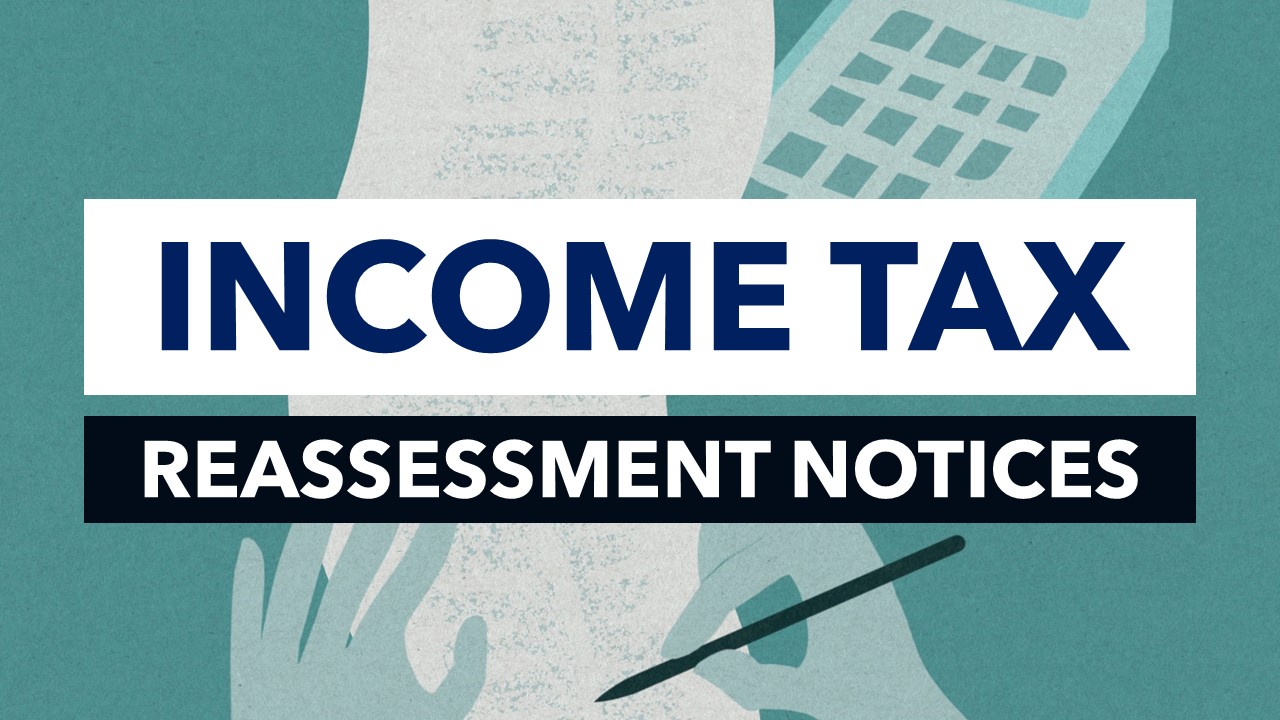
The Supreme Court has decided matter in favour of Income Tax Department where, around 90000 Income Tax reassessment notices issued under old regime between 1st April and 30th June 2021, for assessment years 2013-14 to 2017-18 have been upheld.
Income Tax Notice
 CA Pratibha Goyal
 Oct 3, 2024
Setback for Taxpayers: 90000 Tax reassessment notices issued under old regime upheld by SC
In a major setback to taxpayers, the Supreme Court has upheld, around 90000 Income Tax reassessment notices issued by Income Tax Department under the old regime between 1st April and 30th June 2021, for assessment years 2013-14 to 2017-18.
These notices were challenged by Taxpayers, where they argued that they should fall under the new reassessment regime that took effect on 1 April 2021, during the COVID-19 pandemic.
However, a three-judge panel headed by Chief Justice DY Chandrachud upheld the Ashish Agarwal case verdict of the supreme court, which permitted the issuance of these tax letters during the contested period under the previous government.
The verdict on Thursday also overturned a number of high court orders that had stopped the revenue department from using the previous system to send out tax notices.
The decision is based on disagreements that surfaced during the pandemic years when the government upheld the former system regarding the income tax (I-T) department's authority to reopen earlier tax returns in the event that it was suspected that certain earnings had eluded taxes. As a result, for a few months, the old and new reassessment legislation were both understood to be in effect simultaneously, creating an unprecedented situation.
Numerous letters were sent out as a result of this overlap, and over 10,000 writ petitions were filed. The tax authorities counter challenged many of these petitions by filing special leave applications with the Supreme Court. The ruling of the Supreme Court successfully clarifies the tax legislation that are in place throughout this transitional time.
New versus old laws
The tax department may examine cases dating back 11 years (10 years from the end of the assessment year when a notice is received) if tax evasion exceeds Rs. 50 lakh, according to the new reassessment law, which went into force on April 1, 2021. Four years are allowed for reconsideration in cases where the total amount is less than Rs. 50 lakh.
Prior to this, the tax department could only look into cases that went back a maximum of six years if the taxpayer was proven to have concealed information and the hidden income exceeded Rs. 1 lakh.
However, the pandemic's interruptions led to an extension of the old law's provisions, which resulted in a brief overlap with the new legislation following April 1, 2021.
About Author


CA Pratibha Goyal
Co Founder
CA Pratibha Goyal is Chartered Accountant qualified in 2016, is a Member of The Institute of Chartered Accountants of India having wide experience in the field of Auditing, Taxation, ROC, GST and Secretarial matters etc.
She has written over a thousand articles & has made several videos on topics related to Auditing & Taxation. As a Speaker she has delivered various sessions on various branches of NIRC of ICAI.
CA Pratibha Goyal is Chartered Accountant qualified in 2016, is a Member of The Institute of Chartered Accountants of India having wide experience in the field of Auditing, Taxation, ROC, GST and Secretarial matters etc.
She has written over a thousand articles & has made several videos on topics related to Auditing & Taxation. As a Speaker she has delivered various sessions on various branches of NIRC of ICAI.
 Studycafe
 New Delhi, Delhi, India
 1486
1486My Recent Articles
- Biggest Labour Reform in Indian History: 4 Labour Codes Effective from today
- Tax Audit and ITR Due date not extended in this case: Know More
- Government notifies Agreement and Protocol between India and Qatar [Read Notification]
- CA Breaking: Results of ICAI Examination to be announced soon, Know probable Date
- Breaking: GSTR-3B Due Date for September 2025 extended by CBIC amid Diwali Festivities
Up Next
Loading suggestions…


Recent Posts

All Posts


Tags
No tags yet.
Recent Posts
All Posts
Tags
No tags yet.