Updated Income Tax Return Made More Taxpayer-Friendly; Changes Effective from April 2026:

The government has proposed taxpayer-friendly amendments to updated return provisions, allowing loss reduction and filing after reassessment notices to promote voluntary compliance and reduce litigation.
Loss Reduction and Reassessment Flexibility in Updated ITRs
 Saloni Kumari
 Feb 2, 2026
Updated Income Tax Return Made More Taxpayer-Friendly; Changes Effective from April 2026
The Income-tax Act 2025 includes a detailed framework to furnish income tax returns (ITRs) under Section 263. The section clarifies who are compulsory to file a return, the due dates for different categories of taxpayers, and different types of returns allowed to be furnished, including original, belated, revised, and updated returns. The updated return is designed to encourage voluntary tax compliance by allowing taxpayers to correct or disclose income within a prescribed time.
Section 263(6) allows taxpayers to furnish an updated return within the time period of 48 months from the end of the financial year following the relevant tax year, whether or not an original return was filed earlier. However, the said section also carries some restrictions. Through filing an updated return, taxpayers cannot declare a loss, reduce tax liability, or increase a refund. It also cannot be filed where assessment, reassessment, search, survey, or prosecution proceedings are pending or completed. When a taxpayer files an updated return, he/she is required to pay some additional income tax as prescribed.
Previously, while the law allowed conversion of a loss return into an income return through an updated return, it did not permit filing an updated return that still resulted in a loss. Stakeholders flagged that taxpayers should be allowed to reduce the amount of loss originally claimed in updated return.
Considering the significance of this suggestion, the government has proposed to amend Section 263(6) to allow taxpayers filing an updated return, where they will now be able to reduce their loss compared to that declared in a timely filed return. This amendment is scheduled to take effect from April 01, 2026, with a corresponding amendment in the Income-tax Act, 1961, effective from March 01, 2026.
Further, previously, the provisions of Section 263(6) did not permit furnishing an updated return once reassessment proceedings had begun. Now, the government has proposed to allow taxpayers to file an updated return even after issuance of a reassessment notice under Section 280, in order reduce litigation. In such cases, the taxpayer must file the updated return within the time specified in the notice and cannot file any other return in response to that notice.
Also, when an updated return is filed after a reassessment notice, the additional income tax payable will increase by 10% over the existing rates. But the income disclosed in these types of updated returns will not attract any penalty. These amendments are also scheduled to take effect from April 01, 2026, for tax year 2026-27 onwards, with parallel changes in the Income-tax Act, 1961.
About Author


Saloni Kumari
Content Writer
Saloni is a Content Writer with 2+ years of experience at studycafe.in. She writes legal, taxation, and finance related content including GST, Income Tax etc. Skilled in translating complex judicial pronouncements and regulatory developments into clear, and reader-friendly articles. Experienced in covering judgements of ITAT, High Court, GSTAT, and news related to Income Tax, GST, and corporate law. She can be reached at [email protected].
Saloni is a Content Writer with 2+ years of experience at studycafe.in. She writes legal, taxation, and finance related content including GST, Income Tax etc. Skilled in translating complex judicial pronouncements and regulatory developments into clear, and reader-friendly articles. Experienced in covering judgements of ITAT, High Court, GSTAT, and news related to Income Tax, GST, and corporate law. She can be reached at [email protected].
 StudyCafe
 Delhi, Delhi, India
 2920
2920My Recent Articles
- Flexi Cap vs Multi Cap Funds: What's the Real Difference?
- IBA Recommends Public Sector Banks to Reduce Ambit of Physical Branch Audits to 50% of Total Business
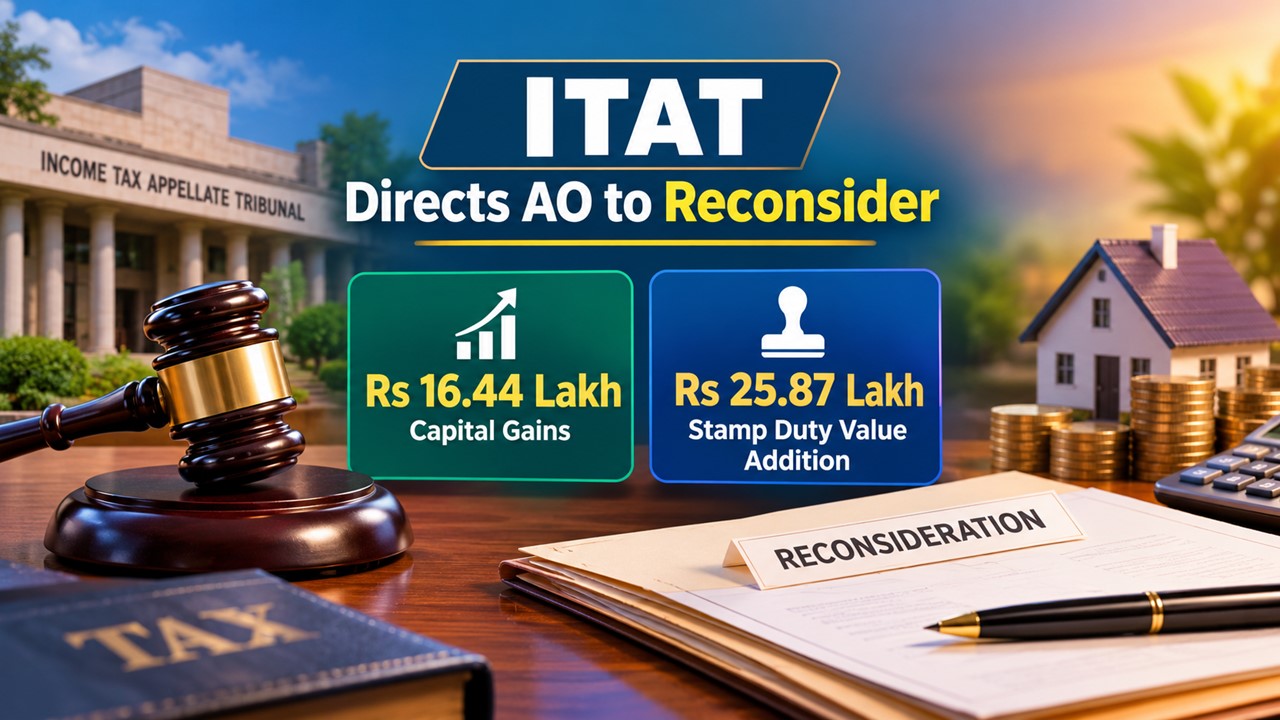
- ITAT Directs AO to Reconsider Rs 16.44 Lakh Capital Gains and Rs 25.87 Lakh Stamp Duty Value Addition
- ITAT Remands Rs 3.33 Crore Demonetisation Cash Deposit Case to AO, Directs Rs 10,000 Relief Fund Payment
- Income Tax Dept Increases Scope for Saksham Nudge Initiative to Further Include Professional Insuring Timely Compliance
Up Next
Loading suggestions…


Recent Posts


All Posts

Recent Posts
All Posts