Who Needs to File ITR by July 31? Check Eligibility, Due Dates, and Extension Update :
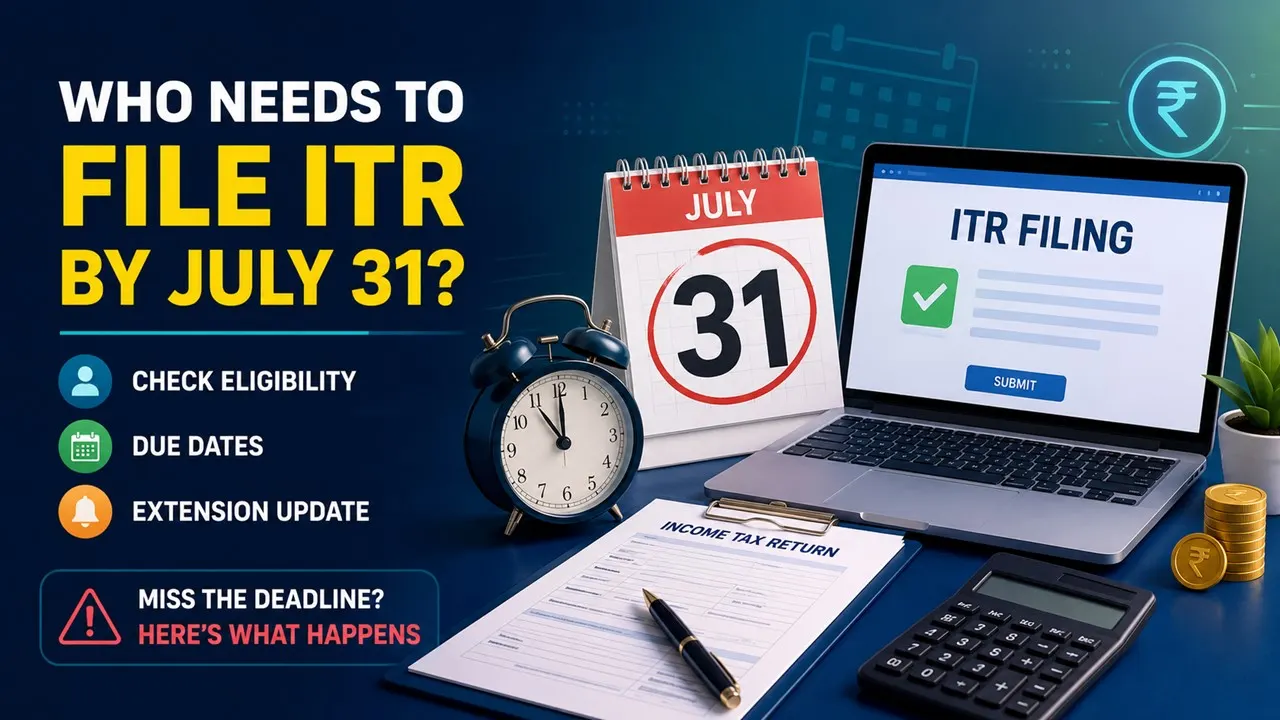
Know the ITR filing deadline for AY 2026-27, who must file by July 31, eligibility criteria, and the latest update on any deadline extension.
Here's What Happens If You Miss July 31 ITR Deadline
 Saloni Kumari
 Jul 29, 2026
Table of Contents

As the deadline to file an Income Tax Return (ITR) for the Assessment Year 2026-27 (Financial Year 2025-26) is approaching, taxpayers are in a hurry to file their tax return before the deadline, i.e., July 31, 2026, in order to avoid penalties, notices and litigation.
The ITR filing deadline of July 31 pertains to the taxpayers who are not required to get their accounts audited. These taxpayers include most salaried employees, pensioners and students, with income up to Rs 50 lakh from two house properties, interest, dividends, long-term capital gains up to Rs 1.25 lakh, or other sources.

What Is the Due Date to File ITR for AY 2026-27?
The due date to file the ITR for the Assessment Year 2026-27 is July 31, 2026. Tax returns can be furnished online at the income tax e-filing portal. Other than this, ITRs can also be filed on fintech platforms that render income tax services at a certain cost.
Note that not every taxpayer is required to file an ITR on or before this date. Taxpayers owning businesses or having professional income filing ITR-3, as well as those opting for the presumptive taxation scheme under ITR-4 (Sugam), are required to file their tax returns on or before either August 31, 2026, or October 31, 2026.
The due date to file an ITR is August 31, 2026, for those earning salary from freelance or business income and October 31, 2026, for those earning business or professional income requiring a tax audit.

Who Is Required to File an ITR?
The taxpayers falling under the following categories as per their tax regime are required to file an ITR:
Old Tax Regime
Individuals aged below 60 years, earning income above Rs 2.5 lakh (income up to Rs 2.5 lakh is tax-free).
Senior citizens aged above 60 years but less than 80 years, earning income above 3 lakh (income up to Rs 3 lakh is tax-free).
Super senior citizen aged 80 years or above, earning income above 5 lakh (income up to 5 lakh is tax-free).
New Tax Regime
The basic exemption limit for all age groups is the same under the new tax regime, i.e., 4 lakh. Those earning income above this limit are required to file an ITR.
Has the July 31 ITR Deadline Been Extended?
The income tax department has not yet officially disclosed any information regarding the ITR deadline extension. As of now, the deadline is the same, i.e., July 31, 2026.
If we talk about last year, the Income Tax Department had extended the ITR filing due date, not once but twice. Once from July 31 to September 15 and then to September 16, as the taxpayers were facing technical glitches in the e-filing portal while submitting their tax returns. However, experts are consistently advising taxpayers not to wait till the last date, because the same relief may not be given this year.
About Author


Saloni Kumari
Content Writer
 StudyCafe
 Delhi, Delhi, India
 2948
2948My Recent Articles
- Maharashtra Govt Eases Registration of Jointly Owned Land Sales, ‘KA’ Copy Can Replace Co-Owners’ NOC
- No Separate Section 69C Unexplained Expenditure Addition Allowed After Accepting Section 44AD Income Without Supporting Evidence: ITAT
- RBI Imposes Restrictions on Puducherry Co-operative Urban Bank for Six Months, Caps Cash Withdrawals at Rs 5,000
- ICAI Opens Application Window for Empanelment of Members to Act as Observer at CA January 2027 Exams
- ICAI CA Inter Sept 2026 Result OUT at caresults.icai.org, Check Steps to Download
Loading suggestions…


Recent Posts


All Posts



Recent Posts
All Posts