5% GST Rate on Tapioca Flour: AAAR Remands Matter to Lower Authority For Fresh Consideration:
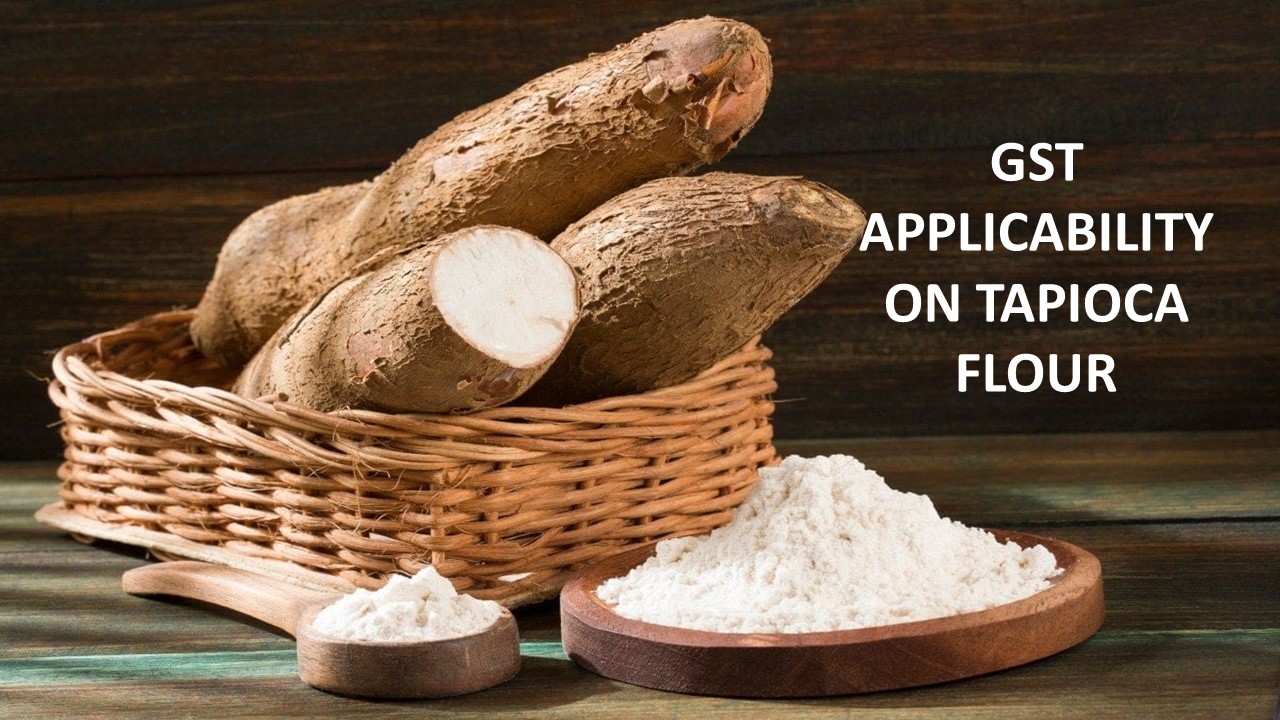
The Tamil Nadu Appellate AAR set aside the advance ruling order and the rectification order.
AAAR Ruling on GST Applicability on Tapioca Flour
 Nidhi
Nidhi Jul 29, 2025
Table of Contents

5% GST Rate on Tapioca Flour: AAAR Remands Matter to Lower Authority for Fresh Consideration
The applicant, V.S. Trading Company, trades Tapioca Flour bought from the registered dealers and is sold within and outside Tamil Nadu. The product is supplied in 50kg bags and is treated as exempted/NIL-rated under GST, based on its classification under the tariff heading 1106 by suppliers. The applicant sought an Advance Ruling on the following questions:
1. Classification of goods, i.e Tapioca Flour obtained by crushing the dried root, and remnants of tapioca roots/tubers.
2. Applicability of Notification issued under the provisions of Act in respect of goods falling under entry No. 78 and tariff item 1106 of Part-A of the exempted goods, and tariff item 1106 in Sl. No. 59 of Part-C of schedule I of the said Act.
3. Determination of the liability to pay tax in respect of the said goods, tariff No. 1106 as mentioned in Sl. No. 78 of Part-A of exempted goods, and Sl. No. 59 of Part-C of I schedule to the Act.
4. Whether such trader/dealer is required to be registered.
AAR Decision
The Authority for Advance Ruling (AAR) held that:- The product falls under HSN 230310 as 'Residues of starch manufacture and similar residues.'
- The product is taxable at 5% GST.
- The exemption under Notification No. 02/2017-CT (Rate) is not applicable.
- The applicant is required to register under the GST Act as per the conditions under Section 22.
AAAR Decision
The Tamil Nadu AAAR observed that the submissions made by the appellant are not clear and also that the applicant has not submitted proof or documentary evidence about the manufacturing process of their product. Now, since the appellant did not submit sufficient proof to support their claim and the AAR also did not consider all facts to pass the advance ruling, the AAAR believes that it should follow the principles of natural justice and restore the application filed by the appellant for advance ruling. Therefore, the Tamil Nadu Appellate AAR set aside the advance ruling order and the rectification order. The AAAR remanded this matter to the lower authority for fresh consideration. The lower authority is directed to pass a fresh order after following the principles of natural justice. However, the decision by the lower authority on the merits of the case is kept open.About Author


Nidhi
Content Writer
Nidhi is a skilled content writer specializing in personal finance. She creates clear, engaging articles on mutual funds, investments, insurance, and wealth-building strategies. With a passion for simplifying complex financial topics, Nidhi helps readers make informed money decisions with confidence. She can be reached at [email protected]
Nidhi is a skilled content writer specializing in personal finance. She creates clear, engaging articles on mutual funds, investments, insurance, and wealth-building strategies. With a passion for simplifying complex financial topics, Nidhi helps readers make informed money decisions with confidence. She can be reached at [email protected]
 Studycafe
 New Delhi, Delhi, India
 1832
1832My Recent Articles
- Karnataka High Court Gives Another Chance in GST Matter Due to Lack of Hearing
- Delay Should Be Condoned if Explanation is Unrefuted: ITAT
- Non-Service of Income Tax Notice, Ill health of taxpayer, ITAT condones Appeal filing delay
- Books of Accounts Cannot be Rejected Without Any Specific Defect: ITAT Kolkata
- Karnataka High Court Sends ITC Matter Back to GST Authorities for Reconsideration
Up Next
Loading suggestions…


Recent Posts



All Posts



Recent Posts
All Posts