5 Hidden Benefits of Filing ITR Even If You Pay No Tax:
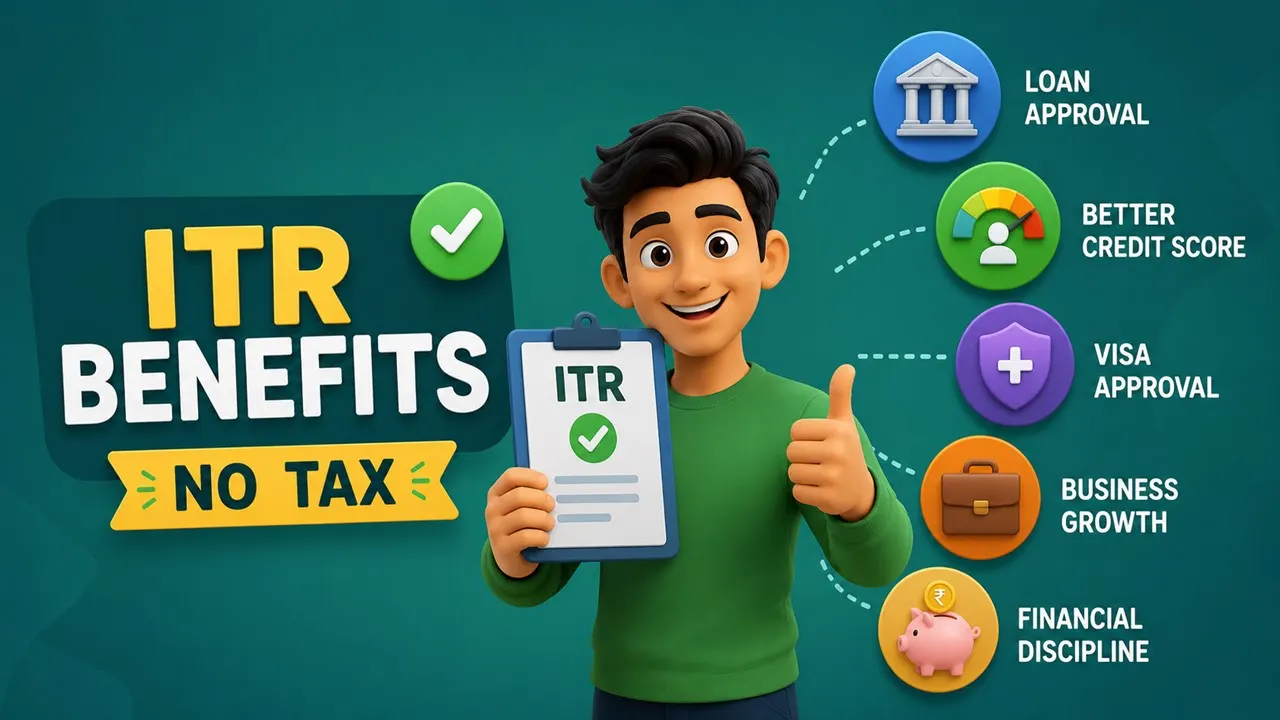
ITR filing helps with tax refunds, loans, visas, insurance, and future tax savings while building a strong financial record.
5 Hidden Benefits of ITR Filing
 Jasmine
 Jun 5, 2026
Table of Contents

5 Hidden Benefits of Filing ITR Even If You Pay No Tax
Filing an Income Tax Return (ITR) in India feels like a task that matters only if tax is payable.
Tax experts say that the biggest misconception that many taxpayers have is that if an employer has already deducted taxes, or if your income is low enough to attract little or no tax, why bother with filing a return? But in reality an ITR is often more useful for home loans, visa applications, insurance purchases, tax refunds, and future tax planning than for dealing with tax authorities.
An ITR is not just a tax filing document, but it is also a financial record card that supports major financial decisions. Experts say filing an ITR offers benefits beyond tax compliance, even for individuals with income below the taxable limit.
Here are five key advantages that taxpayers discover only when they need them:
1. The tax department may actually owe you a refund
Many taxpayers think that once tax has been deducted from their salary, fixed deposit interest or other income, the matter is solved but not always. There are many situations where taxpayers have excess tax deducted through TDS on salary, fixed deposits, or other income sources. Filing an ITR helps claim refunds of this excess tax. Without filing a return, taxpayers can miss out on money that is rightfully theirs.2. Banks Often Ask for Your ITR Before Lending
Most people think about income proof only when applying for a loan or buying a home. But banks and lenders usually ask for ITRs from previous years while evaluating loan applications. This requirement applies to both business owners and salaried individuals. Regularly filing ITR can increase the chances of getting a loan approved. Lenders generally look at ITRs from previous years only to check if the income is steady and the individual has the ability to repay the loan. Most lenders generally require ITRs for the last 2-3 years. When processing the loan, banks generally require last 3 years of ITRs. Consistent filing shows the repayment capacity and financial credibility. ITR is the most accepted proof of income for self-employed, freelancers and consultants.3. Your ITR Can be Useful for Visa Applications
When applying for a visa, many countries require applicants to submit past ITRs along with other documentation. Visa authorities want to make sure that the applicant has a genuine source of income and the financial stability to support it. ITRs are proof of income and of financial stability and hence an important document for visa applications. A consistent filing record can help with the speed of visa processing. It is particularly useful for travellers, students and professionals going abroad.4. ITR Can Help You Get Higher Insurance Coverage
Many buyers overlook the fact that insurers require proof of income, not just income details. Whenever an individual applies for a high-value term insurance plan, insurers may verify whether the declared income justifies the coverage amount. ITRs play a key role in insurance applications and a strong and consistent income record can improve eligibility for higher insurance protection.5. Stock Market Losses Can Become Future Tax Savings
Most investors don't like losses, but they don't know that certain losses can be used to reduce future tax liability. Eligible losses from shares, mutual funds, businesses, or other investments can often be carried forward to offset future gains. However, there is one important condition: eligible losses can be carried forward only if the ITR is filed within the due date. Timely filing allows taxpayers to offset these losses against future gains and reduce tax liability. Missing the deadline could result in losing this valuable tax benefit.The Key Takeaway
An ITR is much more than a tax filing document as it works as a financial record that can help with loan approvals, visa applications, insurance coverage, tax refunds, and future tax planning. Even when no tax is payable, regular ITR filing helps build a credible financial history that can prove valuable when needed most.About Author


Jasmine
Digital Marketing Excutive
 Studycafe
 dwarka, Delhi, India
 108
108My Recent Articles
- ITAT Rules BSNL VRS Compensation Exempt from Tax Under Section 10(10B), Grants Leave Encashment ReliefPremium
- Kerala Headload Workers Welfare Board Granted Income Tax Exemption for Three Tax YearsPremium
- ITR Filing: Why You Shouldn't Rely on a July 31 Deadline Extension
- Meerut Accountant Accused in Rs 65.5 Crore Income Tax Refund Scam
- Professional’s Viral Post on Rs 1 Crore Tax Sparks Debate on India’s Social Security
Up Next
Loading suggestions…


Recent Posts

All Posts

Tags
Recent Posts
All Posts