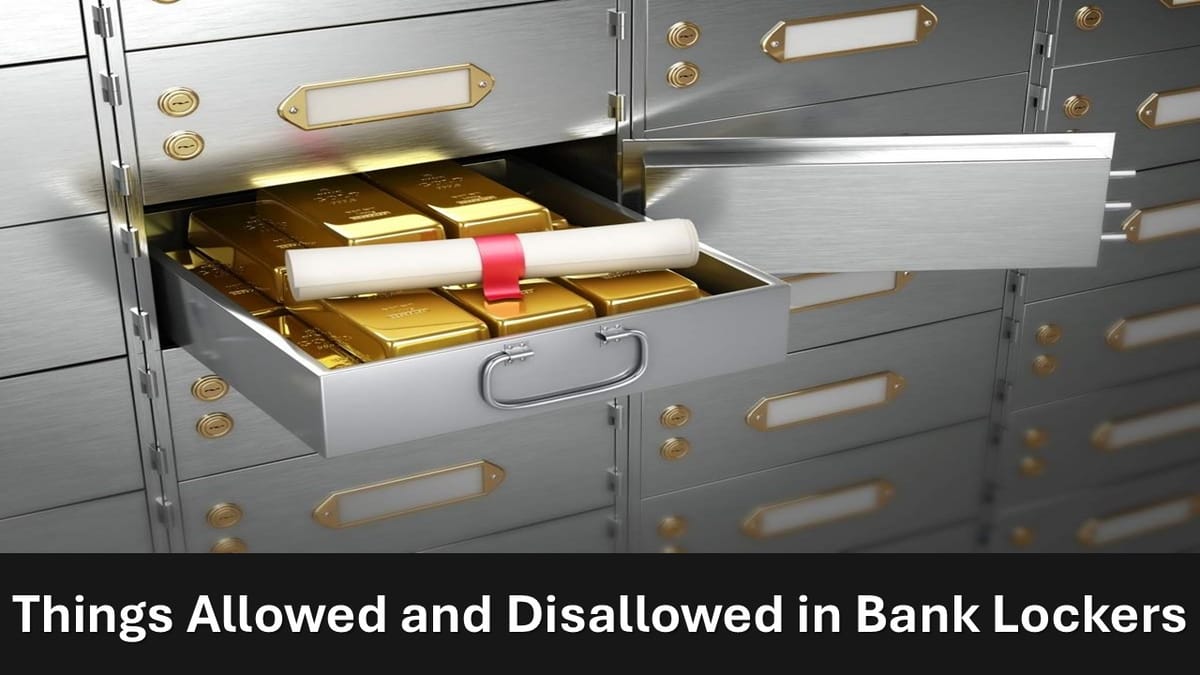
Bank Lockers Rules: What are the Things Allowed and Disallowed in Bank Lockers?

Bank lockers offer a safe and secure way to store your valuable belongings. Many individuals from different segments use this facility to keep their valuable things.

Things Allowed and Disallowed in Bank Lockers

Nidhi | Mar 11, 2025 |

Bank Lockers Rules: What are the Things Allowed and Disallowed in Bank Lockers?

Bank Lockers Rules: What are the Things Allowed and Disallowed in Bank Lockers?

Bank lockers offer a safe and secure way to store your valuable belongings. Many individuals from different segments use this facility to keep their valuable things, including documents and jewellery, secure in the bank lockers. It is one of the most trusted options to keep your things secured, as banks offer extreme safety measures, like restricted areas, security alarms, 24×7 surveillance cameras, etc. However, there are some restrictions governing what can be stored and what cannot. There are some rules and regulations specified by the Reserve Bank of India (RBI) that have to be followed.

 

Table of Content
  1. Things allowed in Bank Lockers
  2. Things not allowed in Bank Lockers
  3. Rules in Case of Damage of the Items in Bank Lockers
  4. Rules regarding the Death of the Customer

Things allowed in Bank Lockers

According to the bank locker rules, you can store the following items in your bank locker:

  • Jewellery made of silver, gold, diamonds, coins, and gold and silver bars.

Things not allowed in Bank Lockers

The following items are prohibited from storage in bank lockers:

  • Food and other items may spoil over time.
  • Cash and currency,
  • Any arms, weapon, explosives, drugs and other types of contraband items,
  • Radioactive material, illegal substances and hazardous items,
  • Other types of material that cause trouble to the bank or its customer.

Rules in Case of Damage of the Items in Bank Lockers

In case of a loss or damage of the material in the lockers due to fire, theft, burglary, or robbery, banks are held responsible. The bank is liable to pay an amount equal to 100 times the yearly rent of the locker. For example, if the bank locker charges are Rs. 2000, the bank will compensate up to Rs.2,00,000 to the customer.

Rules regarding the Death of the Customer

When you open a bank locker, it’s important to choose a nominee or survivorship to take care of your things if something uncertain happens to you.

  •  If you have a nominated person and you pass away, the bank will allow the nominee to open the locker and access your things.
  • If two people jointly share a locker and both need to sign to open it, the bank will give access to them to remove the material jointly.
  • If the person who rented the locker set with a survivorship clause, which states that anyone or the surviving person can open the locker after they die, the bank will follow that rule. So, if one of the people who rented the locker passes away, the other person can still open it and take out the items.

StudyCafe Membership

Join StudyCafe Membership. For More details about Membership Click Join Membership Button
Join Membership

In case of any Doubt regarding Membership you can mail us at [email protected]

Join Studycafe's WhatsApp Group or Telegram Channel for Latest Updates on Government Job, Sarkari Naukri, Private Jobs, Income Tax, GST, Companies Act, Judgements and CA, CS, ICWA, and MUCH MORE!"





Author Bio
My Recent Articles
Karnataka High Court Gives Another Chance in GST Matter Due to Lack of Hearing Delay Should Be Condoned if Explanation is Unrefuted: ITAT Non-Service of Income Tax Notice, Ill health of taxpayer, ITAT condones Appeal filing delay Books of Accounts Cannot be Rejected Without Any Specific Defect: ITAT Kolkata Karnataka High Court Sends ITC Matter Back to GST Authorities for ReconsiderationView All Posts