Madras High Court sets aside GST recovery from buyers, directing a fresh inquiry and tax recovery from non-compliant sellers.
Saloni Kumari | Sep 29, 2025 |

Madras High Court Quashes GST Orders: Fresh Enquiry Ordered Against Sellers for Tax Default
Recently, a company bought rubber sheets from Charles and his wife and paid for them, including the GST amount, and then claimed Input Tax Credit (ITC) on them. Later, it was discovered that Charles and his wife did not pay that GST amount to the government. Instead of going after Charles and his wife, the tax officer demanded tax again from the buyers. Buyers argued this action was unfair and illegal. When the buyer approached the High Court, the court agreed with the arguments served by the buyer, quashed the orders issued by the tax authority, and remanded the matter to the tax officer for fresh consideration, this time questioning the sellers and also starting recovery from them.

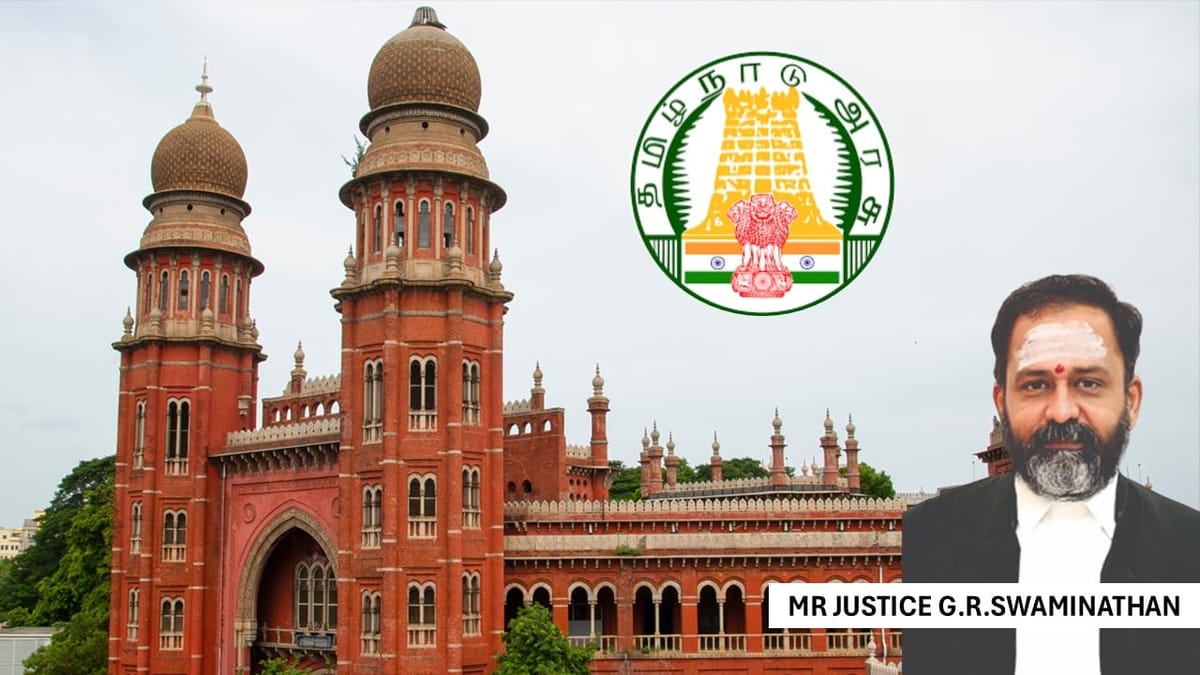
The present writ petition has been filed by a company named M/s.D.Y.Beathel Enterprises (petitioner) in the Madras High Court against the State Tax Officer (Data Cell), (Investigation Wing) (respondent) [W.P.(MD)No.2127 of 2021] under Article 226 of the Constitution of India. The case was heard on February 24, 2021, by Honourable Mr Justice G.R.Swaminathan. The company has prayed the court to quash the assessment order dated 29.10.2020, as it is illegal and unfair, was issued completely without jurisdiction, and is violating the principles of natural justice. Additionally, requested to remand the tax to the respondent and direct them to pass a fresh assessment order after providing a fair chance of hearing by considering their replies dated 01.07.2020 and 21.09.2020.
Background of Case:
The court has issued a common judgment against all the writ petitions filed, as they are all based on the same issue. All petitioners in this batch are dealers registered in the Nagercoil Assessment Circle. They are traders in raw rubber sheets. They all purchased goods from Charles and his wife, Shanthi. Their payment included the GST amount. Charles and Shanthi were also registered dealers in the same assessment circle. Based on the paid amount, invoices, and returns filed by Charles and Shanthi, the petitioner claimed ITC. Later during the investigation, it was found that Charles and Shanthi had not paid GST to the government, even though they collected it.

Tax Department’s Action:
Instead of taking action against Charles and Shanthi, the tax officers asked the petitioner to pay the tax again via show cause notices. In return for the notices, the petitioner replied that they have already paid the complete amount, including GST, to Charles and Shanthi. If you have any doubt, you can run an inquiry. However, still, tax officers did not include Charles and his wife in the inquiry. Instead, it issued a final order considering the petitioners responsible and demanded tax recovery from them.
Respondent’s Argument in Court:
The tax officers claimed that the petitioner claimed ITC on the assumption that sellers paid GST. Since the sellers did not pay, the department was right in recovering tax from the buyers. Hence, ITC reversal was justified.
Court’s Observations:
When the court deeply analysed the case, it ruled that Section 16(1) and (2) of the Tamil Nadu GST Act says ITC can be claimed if the buyer has a tax invoice, goods are received, the tax charged is actually paid to the government, and the buyer has also filed returns. Hence, if the tax is not paid to the government, then the buyer should not bear its liability; instead, complete liability belongs to the seller.
In this case, the department should have run an inquiry against Charles and Shanthi, as they collected tax and did not pay it to the government. Instead, they run the inquiry only against the petitioner and shift all tax liability to the petitioner. The department even finalised its assessment by excluding these disputed transactions, which the judge found unacceptable.
Court’s Final Order:
The court quashed the GST assessment orders because of serious flaws like
Remanded the case to the tax officer for fresh consideration. Directed the officers to hold a fresh inquiry and, this time, deeply examine Charles and Shanthi as witnesses. Parallel recovery action must be started against them. The earlier replies of the petitioners will still be valid; only the inquiry stage will be repeated.
All writ petitions were allowed. No costs were imposed.

In case of any Doubt regarding Membership you can mail us at [email protected]
Join Studycafe's WhatsApp Group or Telegram Channel for Latest Updates on Government Job, Sarkari Naukri, Private Jobs, Income Tax, GST, Companies Act, Judgements and CA, CS, ICWA, and MUCH MORE!"