ITAT upheld the Rs 1.59 lakh notional rent addition on a vacant Hyderabad flat and dismissed the assessee’s appeal.
Jasmine | Jun 5, 2026 |
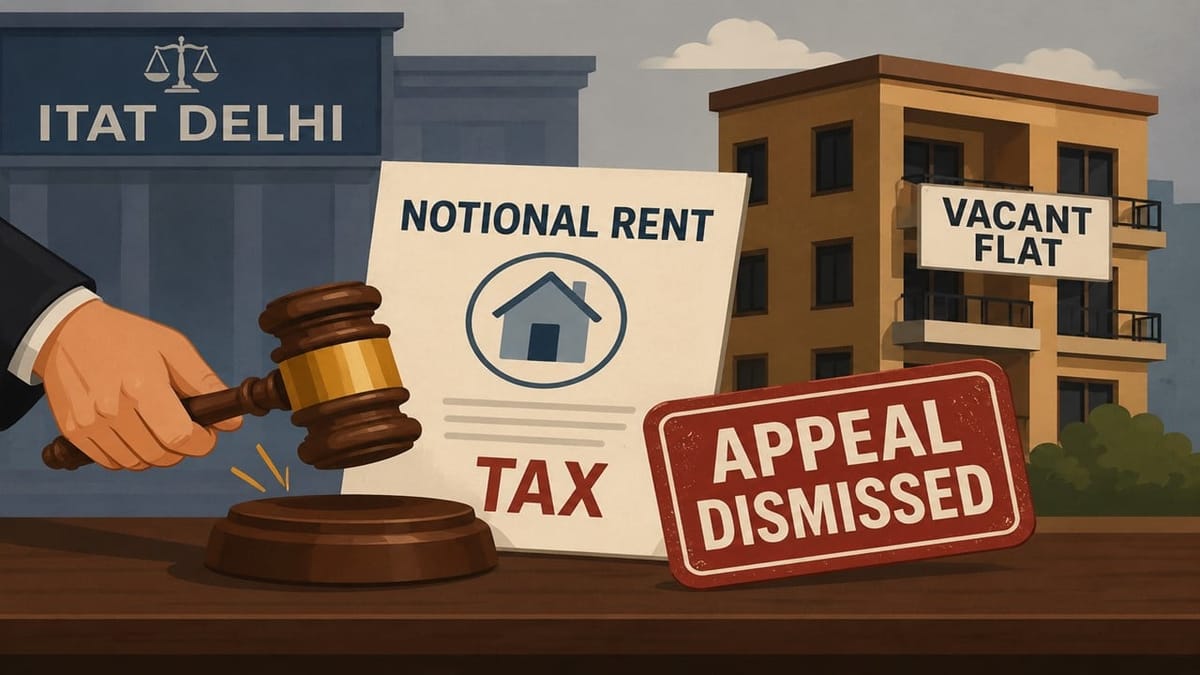

ITAT Delhi Upholds Tax on Notional Rent from Vacant Flat: Dismisses Assessee’s Appeal
The ITAT Delhi dismissed the appeal of a salaried taxpayer who had failed to file his return for AY 2017-18 and challenged the addition of notional rental income from a vacant Hyderabad flat and the denial of a deduction under Section 80TTA. The Tribunal upheld the findings of the CIT(A), observing that the assessee had not complied with statutory notices or substantiated his claims. While the TDS credit of Rs 14.32 lakh was allowed, the additions and disallowances made by the assessing officer were sustained, resulting in dismissal of the appeal.
The assessee is a salaried individual, and his main source of income is from salary on which tax is deducted at source by the employer. The assessee failed to file his return of income for A.Y. 2017-18. A notice u/s 148 of the Act was sent to the assessee through e-mail. Thereafter, notices u/s 142(1) were sent to the assessee, but those remained unanswered. He later replied to two show-cause notices. During the relevant year, the assessee had income from the following multiple sources:

Salary Income: Rs 52,15,953, as reflected in Form 16 issued by the employer. TDS of Rs 14,31,480 was deducted and reported in Form 26AS.
Interest Income from Bank Deposits: Rs 40,993, as per bank statements. TDS of Rs 1100.82 was deducted and reflected in Form 26AS.

The assessment was completed u/s 147/144/144B of the Income Tax Act through the Faceless Assessment Scheme. Apart from salary and interest income, the Assessing Officer (AO) added Rs 1,59,600 as income from house property in respect of a vacant flat owned by the assessee in Hyderabad.
The AO did not allow credit for TDS of Rs. 14,32,580 appearing in Form 26AS. On appeal, the CIT(A)/NFAC granted the TDS credit but upheld the addition made by AO. Dissatisfied with the sustained addition, the assessee filed a further appeal before the Tribunal. The assessee challenged the CIT(A)’s order and said that the CIT(A)’s order is incorrect both in law and on facts. He further said that the CIT(A) wrongly upheld the addition of Rs 1,59,600 made by the assessing officer as income from house property in respect of his Hyderabad flat. The assessee also argued that the CIT(A) erred in confirming the disallowance of the deduction of Rs 10,000 claimed under Section 80TTA of the Income Tax Act. Further, he submitted that the CIT(A) failed to properly appreciate the facts, evidence, and submissions placed on record before affirming the additions made by the Assessing Officer. The assessee also reserved the right to add, amend, modify, or withdraw any of the grounds of appeal during the course of the proceedings.
On the other hand, the learned Departmental Representative (DR) supported the order of the CIT(A).
After hearing the submissions of the learned Departmental Representative (DR) and examining the material available on record, the Tribunal noted that the CIT(A) had granted partial relief to the assessee and recorded certain findings in support of the same. The CIT(A) held that the assessing officer has acted as per law and principles of natural justice. The assessee has failed to comply with statutory notices and has not filed the return of income, nor has he filed any evidence to support his claim or deduction. The additions made under the heads of Salary, Income from House Property and Income from Other Sources were confirmed. The CIT(A) also held that the reassessment proceedings were validly initiated, the denial of deduction under Section 80TTA was justified, the levy of interest was mandatory, and the initiation of penalty proceedings was lawful. However, the CIT(A) accepted the assessee’s claim for TDS credit and directed the assessing officer to grant full credit of Rs 14,32,580 as reflected in the departmental records. Consequently, the appeal was partly allowed.
The Tribunal observed that the CIT(A) had duly considered all the issues raised by the assessee and had provided detailed reasons for sustaining the additions and disallowances made by the Assessing Officer. Considering the facts and circumstances of the case, the Tribunal found no justification to interfere with the findings of the CIT(A). Accordingly, all the grounds raised by the assessee were dismissed. As a result, the appeal filed by the assessee in ITA No. 1243/Del/2026 was dismissed.

In case of any Doubt regarding Membership you can mail us at [email protected]
Join Studycafe's WhatsApp Group or Telegram Channel for Latest Updates on Government Job, Sarkari Naukri, Private Jobs, Income Tax, GST, Companies Act, Judgements and CA, CS, ICWA, and MUCH MORE!"






![Government notifies exemption for FIIs on interest on Government Securities [Read Notification]](/cdn-cgi/image/width=320,height=195,fit=contain,format=webp,gravity=auto,metadata=none,quality=75/wp-content/uploads/2026/06/Government-Issues-Income-tax-Amendment-Ordinance-2026-to-Exempt-Certain-Foreign-Investors.jpg)