Air India and its designated subsidiaries/JVs are being strategically disinvested
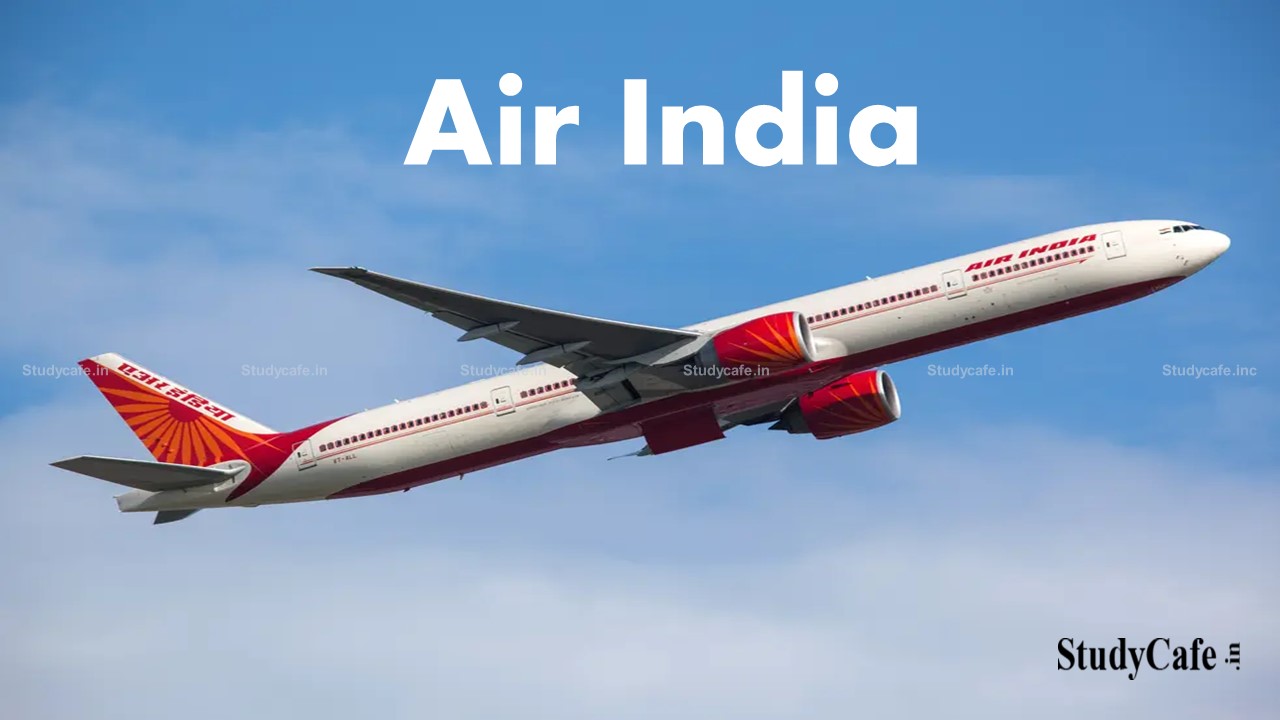
Air India and its designated subsidiaries/JVs are being strategically disinvested Due to Air India's massive debt, the government used an Enterprise …
 Sushmita Goswami
 Dec 7, 2021
Air India and its designated subsidiaries/JVs are being strategically disinvested
Due to Air India's massive debt, the government used an Enterprise Value (EV) auction process for strategic disinvestment of the company and its designated subsidiaries/JVs (100 percent shareholding in AIXL and 50 percent shareholding in AISATS). Dr Bhagwat Kisanrao Karad, Union Minister of State for Finance, revealed this in a written reply to a question in the Lok Sabha today.
Given more information, the Minister noted that under the EV strategy, bidders were required to quote a combined debt and equity value, with a split of 85 percent debt and a minimum of 15% equity consideration for distribution of quoted EV. The strategic disinvestment was completed as a going concern for the entire company. Assets and liabilities not included in the transaction will remain with the purchaser.
According to the Minister, the strategic disinvestment transaction was completed through an open, transparent, and competitive procedure that included:
- Seven Expressions of Interest (EOIs) were submitted in the first stage of the transaction, with five EOIs being rejected due to non-compliance with eligibility criteria and two EOIs being shortlisted for the second stage.
- The information was made available to the Qualified Interested Bidders (QIBs) through the Virtual Data Room (VDR), which also inspected the assets and facilities of the companies involved in the transaction.
- The bidders were sent a Request for Proposal (RFP). Before submitting bids, the Share Purchase Agreement (SPA) was negotiated and issued to the QIBs. DIPAM has a set of suggested criteria for strategic disinvestment transactions that should be tailored to each transaction. The Share Purchase Agreement (SPA) was reached after extensive inter-ministerial deliberations at numerous fora, including the Inter-Ministerial Group (IMG), the Core Group of Secretaries on Disinvestment (CGD), and the Air India Specific Alternative Mechanism (AISAM).
- The Reserve Price for the transaction was set at Rs 12,906 crore in accordance with best market practises and existing norms, based on the Transaction Adviser's business appraisal and the Asset Valuer's asset valuation. The Reserve Price was set only after sealed bids were received.
- Following a competitive and transparent disinvestment procedure, two financial bids were received. M/s Talace Pvt Ltd, a fully owned subsidiary of M/s Tata Sons Pvt Ltd, stated an EV of Rs 18,000 crore, with a debt retention in AI + AIXL of Rs 15,300 crore (85% of the EV reported) and a cash component of Rs 2,700 crore (15 percent of EV quoted).
- On October 25, 2021, the SPA was signed. A set of Conditions Precedent (CPs) must be met by the successful bidder, Air India, and the Government of India before the transaction can be closed, according to the SPA.
- Professional guidance from professionals - Transaction Adviser, Legal Adviser, and Asset Valuer - was provided to the transaction through a transparent, competitive procedure.
- Employees cannot be retrenched for a year after the closing date, and if they are retrenched in the second year, they will be eligible for a voluntary retirement scheme with maximum benefits.
- Other perks, such as gratuity, provident fund benefits, and passage privileges, will be available to employees in accordance with applicable legislation and industry practise.
- Employees were given six months to stay in the residential communities once they closed.
- There is a provision for employees to participate in an ESOP programme after the company has closed.
- The strategic acquirer will give medical benefits to current employees in accordance with industry standards.
- All former employees (as of the closing date) and eligible current employees (who have reached 55 years of age or have completed 20 years of service) and their spouses are entitled to medical benefits after retirement.
About Author


Sushmita Goswami
Content Manager
Sushmita Goswami is a content writer with 2+ years of experience in Finance, Recruitment, Education and career Related Content. She is a Graduate from Delhi University in Journalism and Mass Communication
Sushmita Goswami is a content writer with 2+ years of experience in Finance, Recruitment, Education and career Related Content. She is a Graduate from Delhi University in Journalism and Mass Communication
 Studycafe
  New Delhi , Delhi, India
 886
886My Recent Articles
- What to Consider When Choosing an Online Trading Platform?
- Post Office Franchise Scheme: Take Post Office Franchise at Rs 5000 and Earn Commission upto 20%; Check Details Here
- IAN invests INR 4.5 crore in Fintech NBFC Indium Finance
- UPI a Digital Public Good, No Charges in Consideration: Finance Ministry
- ITR Filing Penalty: Check Taxpayers Exempt from Paying a Late Fee even Missing the Deadline
Up Next
Loading suggestions…


Recent Posts

All Posts
Tags
Recent Posts
All Posts