Bombay HC Orders GST Registration Restoration After Full Payment of Dues:
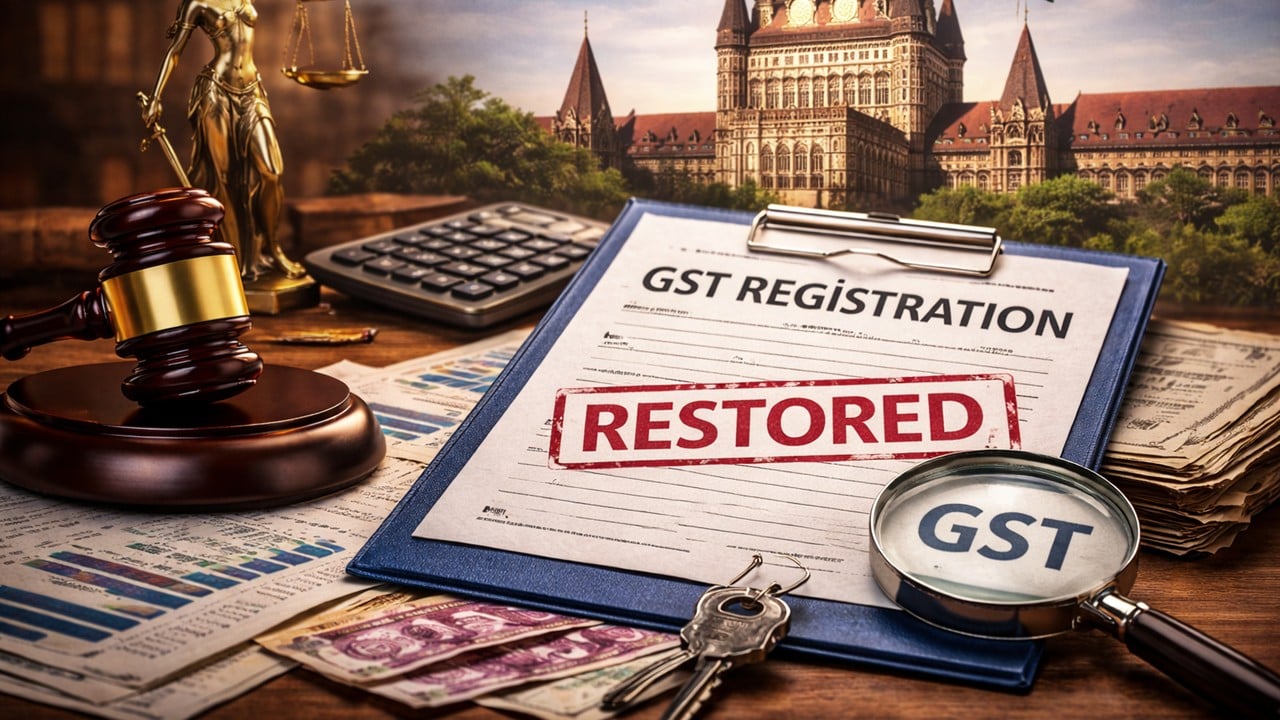
Permanent cancellation of GST registration held disproportionate once tax, interest and penalty are paid
Bombay HC orders GST registration restoration after full payment of dues
 Meetu Kumari
 Feb 7, 2026
Bombay HC Orders GST Registration Restoration After Full Payment of Dues
The petitioner, an individual proprietor, was granted GST registration in July 2018 in connection with business conducted from his premises under a conducting arrangement with a third-party operator. Due to prolonged illness and bed rest, the petitioner failed to file GST returns for more than six months, leading to the issuance of a show cause notice and retrospective cancellation of registration with effect from 1 July 2017. Although the cancellation was initially revoked in February 2020 upon payment of dues, the registration was again cancelled retrospectively in December 2020 without granting a personal hearing.
The petitioner discharged all outstanding GST liabilities, including tax, interest and penalty, and cooperated with proceedings initiated by the Anti-Evasion Wing. Upon full payment, provisional attachments were lifted and the department confirmed that no government dues remained outstanding. Still, the petitioner’s application seeking restoration of GST registration under Section 30 of the CGST Act remained unattended, compelling the petitioner to approach the High Court.
Main Issue: Whether GST authorities can refuse to restore a cancelled GST registration despite full payment of tax dues, interest and penalty, and whether such refusal violates Sections 29 and 30 of the CGST Act read with Rule 23 of the CGST Rules.
HC's Decision: The Hon'ble High Court held that cancellation of GST registration carries serious civil consequences and cannot be sustained without strict adherence to statutory safeguards, including the requirement of granting an opportunity of hearing. The Court observed that Section 30 of the CGST Act expressly empowers authorities to revoke cancellation of registration once statutory conditions are fulfilled.
The Court held that refusal to restore registration served no revenue purpose and was wholly disproportionate. The Court reiterated that GST law is intended to facilitate tax compliance and revenue collection, not to permanently exclude assessees from the tax framework. Thus, the Court allowed the writ petition and directed immediate restoration of the petitioner’s GST registration with all related benefits.
To Read Full Judgment, Download PDF Given Below
About Author


Meetu Kumari
Content Manager
Meetu Kumari is an Experienced Advocate and Content Writer with 4+ years of demonstrated history of working in the law practice industry. Skilled in Developing Content, Researching, and Drafting. Strong professional with a Bachelor of Science (B.Sc.) focused on Law from Gujarat National Law University.
Meetu Kumari is an Experienced Advocate and Content Writer with 4+ years of demonstrated history of working in the law practice industry. Skilled in Developing Content, Researching, and Drafting. Strong professional with a Bachelor of Science (B.Sc.) focused on Law from Gujarat National Law University.
 Studycafe
 Jodhpur, Rajasthan, India
 2264
2264My Recent Articles
- ITAT Condones 302-Day Delay, Restores Salary Assessment for Fresh VerificationPremium
- ITAT Condones Delay After Tax Consultant's Death, Restores Appeals for Fresh HearingPremium
- ITAT Remands Salary Addition, Says Taxability Depends on Salary Becoming Due, Not Mere ReceiptPremium
- ITAT Deletes TP Royalty Adjustment, Orders Fresh Review of Commission BenchmarkingPremium
- ITAT Quashes Reassessment Over Unsigned Section 148 Notice Issued to AssesseePremium
Up Next
Loading suggestions…


Recent Posts
All Posts

Recent Posts
All Posts