CBDT Simplifies Delay Condonation for Filing Forms 10-IC and 10-ID:
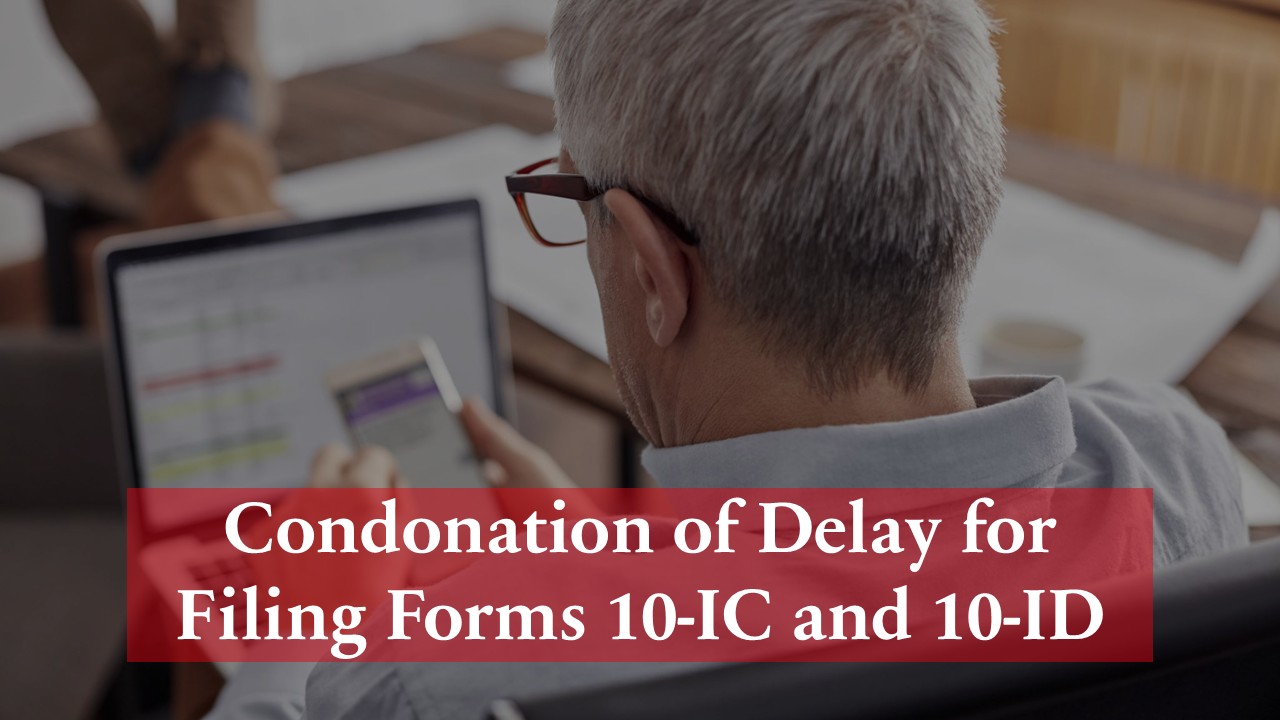
CBDT Simplifies Delay Condonation for Filing Forms 10-IC and 10-ID CBDT has issued Circular No. 17/2024, which provides relief to taxpayers who suffe…
Condonation of Delay for Filing Forms 10-IC and 10-ID
 Anisha Kumari
 Nov 20, 2024
CBDT Simplifies Delay Condonation for Filing Forms 10-IC and 10-ID
CBDT has issued Circular No. 17/2024, which provides relief to taxpayers who suffered hardship due to delayed filing of their Form 10-IC and Form 10-ID. These forms, eligible for condonation under Section 119(2)(b) of the Income Tax Act, 1961, pertain to Assessment Years (AYs) 2020-21, 2021-22, and 2022-23. The circular acknowledges cases of genuine hardship while ensuring compliance with tax regulations.
Key Provisions of the Circular
1. Delegation of Authority:
- Applications involving delays up to 365 days will be processed by the Principal Commissioners of Income Tax (Pr. CIT) and Commissioners of Income Tax (CIT).
- Delays exceeding 365 days will be considered by the Principal Chief Commissioners of Income Tax (Pr. CCIT), Chief Commissioners of Income Tax (CCIT), or Directors General of Income Tax (DGIT).
- The taxpayer has filed their return of income for the relevant AY on or before the due date prescribed under Section 139(1) of the Income Tax Act.
- The taxpayer has opted for taxation under Section 115BAA (Form 10-IC) or Section 115BAB (Form 10-ID) and correctly selected the option under "Filing Status" in Part A-GEN of Form ITR-6.
- The delay must be due to a reasonable cause, and the case should establish genuine hardship to the taxpayer.
- Applications for condonation of delay must be filed within three years from the end of the relevant AY. This period applies to applications made on or after the date of this circular.
- Such applications must be resolved within six months from the date of their receipt by the authority concerned.
- Filing of returns within the due date.
- Correct selection of the mode of filing.
- Valid and sufficient cause for the delay.
About Author


Anisha Kumari
Content Writer
Anisha is a finance content writer at StudyCafe, writing on domains like mutual funds, stock market trends, GST, income tax, and SIPs. With a knack for breaking down complex financial topics, Anisha delivers clear and insightful articles that keep readers informed and empowered. She can be reached at [email protected].
Anisha is a finance content writer at StudyCafe, writing on domains like mutual funds, stock market trends, GST, income tax, and SIPs. With a knack for breaking down complex financial topics, Anisha delivers clear and insightful articles that keep readers informed and empowered. She can be reached at [email protected].
 Studycafe
  Bokaro, Jharkhand, India
 321
321My Recent Articles
- AI Tools Catch Rs. 68 Lakh Capital Gains Tax Fraud in Hyderabad
- Bank of Baroda Chief Manager’s Suicide Raises Concerns Over Work Pressure
- CA in Trouble: ED Seizes Rs. 6.8 Cr Assets in ERDC Trust Fraud Case
- Gujarat Ambuja Exports Receives GST Demand Order of Rs. 33 Lakh
- GST AAR: Exchange of Silverscrap for finished ornaments Supply
Up Next
Loading suggestions…


Recent Posts

All Posts


Tags
No tags yet.
Recent Posts
All Posts
Tags
No tags yet.