CBIC Announces New Trade Facilitation Measures for Transshipment and Air Cargo:
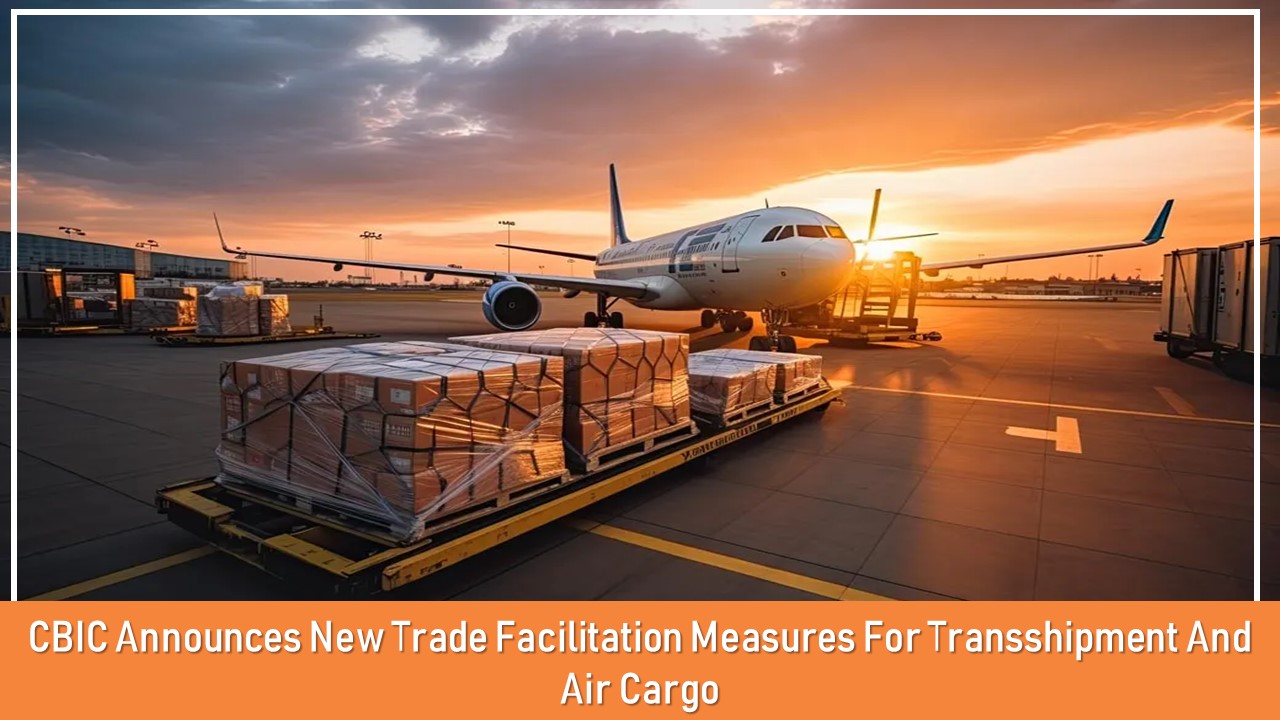
The Central Board of Indirect Taxes and Customs (CBIC) has implemented some trade facilitation initiatives for transshipment and air cargo operations.
CBIC Launched Various Trade Facilitation Steps for Transshipment and Air Cargo
 Nidhi
Nidhi Apr 26, 2025
CBIC Announces New Trade Facilitation Measures for Transshipment and Air Cargo
The Central Board of Indirect Taxes and Customs (CBIC) has implemented some trade facilitation initiatives for transshipment and air cargo operations. The move has been taken to improve infrastructure and warehousing of air cargo, particularly for horticulture perishable high-value produce, as well as for streamlining customs and cargo screening processes.
To ease the process for businesses, the CBIC has removed the transshipment permit charge from April 24, 2025. Imported goods are usually transported by logistics companies between customs regions without paying duty by availing a transhipment procedure under the Customs Act 1962. Previously, they used to pay a transhipment permit fee per permit, but with the growth in trade and cargo volumes, this caused delays. On noticing the problem, CBIC has chosen to eliminate this fee to speed up the process. The official change was implemented through Notification No. 30/2025-Cus (N.T.) dated April 24, 2025.
Additionally, as the volume of air cargo was growing, there was a need to remove Unit Load Devices (ULDs) outside the Customs Area in some cases of high-value or perishable cargo. To simplify customs procedures and bring them in line with global standards, the CBIC has introduced an easier and more uniform process for the temporary import of Unit Load Devices (ULDs) used in air cargo. This new procedure follows a similar approach already in place for marine containers at seaports since 2005.
Earlier, when ULDs or air containers were temporarily brought into India, the importer of the goods had the responsibility for re-exporting them. However, with the new process, the responsibility has shifted to the carriers or agents.
The new measures are designed to simplify compliance and promote smoother trade at air cargo complexes. Airlines, console agents, and other stakeholders are encouraged to take advantage of these new facilities.
About Author


Nidhi
Content Writer
Nidhi is a skilled content writer specializing in personal finance. She creates clear, engaging articles on mutual funds, investments, insurance, and wealth-building strategies. With a passion for simplifying complex financial topics, Nidhi helps readers make informed money decisions with confidence. She can be reached at [email protected]
Nidhi is a skilled content writer specializing in personal finance. She creates clear, engaging articles on mutual funds, investments, insurance, and wealth-building strategies. With a passion for simplifying complex financial topics, Nidhi helps readers make informed money decisions with confidence. She can be reached at [email protected]
 Studycafe
 New Delhi, Delhi, India
 1832
1832My Recent Articles
- Karnataka High Court Gives Another Chance in GST Matter Due to Lack of Hearing
- Delay Should Be Condoned if Explanation is Unrefuted: ITAT
- Non-Service of Income Tax Notice, Ill health of taxpayer, ITAT condones Appeal filing delay
- Books of Accounts Cannot be Rejected Without Any Specific Defect: ITAT Kolkata
- Karnataka High Court Sends ITC Matter Back to GST Authorities for Reconsideration
Up Next
Loading suggestions…


Recent Posts


All Posts

Tags
No tags yet.
Recent Posts
All Posts
Tags
No tags yet.