Cheque Bounce: Supreme Court Rules Partners Liable Even If Firm Not Made Accused:
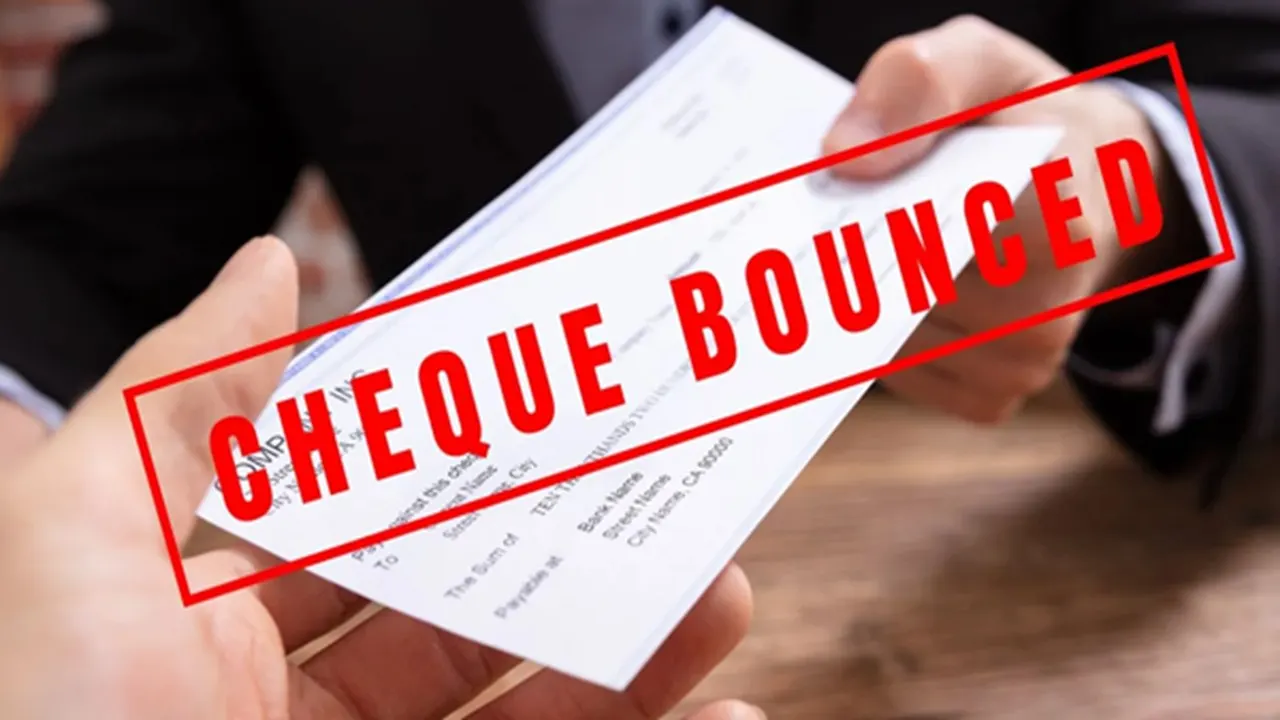
The Supreme Court says that HC was wrong to dismiss the complaint just because the partnership firm was not named or notified separately, hence quashes HC's order.
SC Clarifies Partner Liability in Cheque Bounce Cases Under Section 138
 Saloni Kumari
 Jul 28, 2025
Cheque Bounce: Supreme Court Rules Partners Liable Even If Firm Not Made Accused
The Supreme Court of India has said that if a cheque issued by a partnership firm bounces, a legal case under Section 138 of the Negotiable Instruments Act, 1881, can still be filed against the individual partners. This is allowed even if the partnership firm itself is not named as an accused in the case. The current petition is being filed in the Supreme Court of India by an individual named Dhanasingh Prabhu (Appellant) against Chandrasekar and Another (Respondents). The appellant has filed this criminal appeal because they are dissatisfied with the final judgment and order passed by the Madras High Court on February 26, 2024. In that decision, the High Court allowed Criminal Original Petition No. 1533/2024 filed by the accused (respondents) and, as a result, cancelled the complaint (STC No. 1106/2022) that the appellant had filed against them under Section 138 of the Negotiable Instruments Act, 1881, which deals with cheque bounce cases. The dispute began when a cheque was issued in the name of a partnership firm, but the legal notice under Section 138 was sent only to the individual partners. The firm itself was not sent any notice and was not included in the complaint. Because of this, the Madras High Court dismissed the complaint filed by the appellant. However, the Supreme Court later set aside that decision. The court said, "When the said offence is proved against an individual/natural person, he is punished with imprisonment for a term that may be extended to two years or with a fine that may extend to twice the amount of the cheque. But when such an offence is committed by a company, which is an artificial juristic entity, Section 141 of the Act applies." Section 141 states that if an individual committing an offence under Section 138 of the Act is a firm, then every person who was in charge of the firm and responsible for running its business at that time, along with the firm itself, will be considered to be guilty of the offence and can be punished. Since a firm is not a real person and cannot be sent to jail, the law treats certain people connected to the company as responsible. These people can then be charged and punished for the offence. However, the designated above-category individual who is considered to be guilty of the offence along with the firm, can escape from punishment under the following conditions:
- They can prove that they did not know the offence was happening; or
- They can show that they did everything they reasonably could to stop it from happening.
About Author


Saloni Kumari
Content Writer
Saloni is a Content Writer with 2+ years of experience at studycafe.in. She writes legal, taxation, and finance related content including GST, Income Tax etc. Skilled in translating complex judicial pronouncements and regulatory developments into clear, and reader-friendly articles. Experienced in covering judgements of ITAT, High Court, GSTAT, and news related to Income Tax, GST, and corporate law. She can be reached at [email protected].
Saloni is a Content Writer with 2+ years of experience at studycafe.in. She writes legal, taxation, and finance related content including GST, Income Tax etc. Skilled in translating complex judicial pronouncements and regulatory developments into clear, and reader-friendly articles. Experienced in covering judgements of ITAT, High Court, GSTAT, and news related to Income Tax, GST, and corporate law. She can be reached at [email protected].
 StudyCafe
 Delhi, Delhi, India
 2961
2961My Recent Articles
- GSTAT Sets Aside Ex Parte GST Appeal Order After First Appellate Authority Ignores Taxpayer’s Arguments
- GSTAT Sets Aside Non-Speaking GST Appellate Order, Remands Case Over Failure to Meet 80% Registered Procurement Requirement
- Sakshi Chandak Secures AIR 1 in CA Intermediate September 2026 Exam with 83.67% After Studying Up to 16 Hours a Day
- MCA Releases List of Companies Struck Off Under Section 248(2) for September 2026 at mca.gov.in
- ITAT Deletes Section 43 Penalty for Non-Disclosure of Foreign Assets in Schedule FA
Up Next
Loading suggestions…


Recent Posts


All Posts


Recent Posts
All Posts