ITAT Remands Case Over Unsigned Sale Agreement; Orders Fresh Verification of Rs. 13 Lakh Receipt:
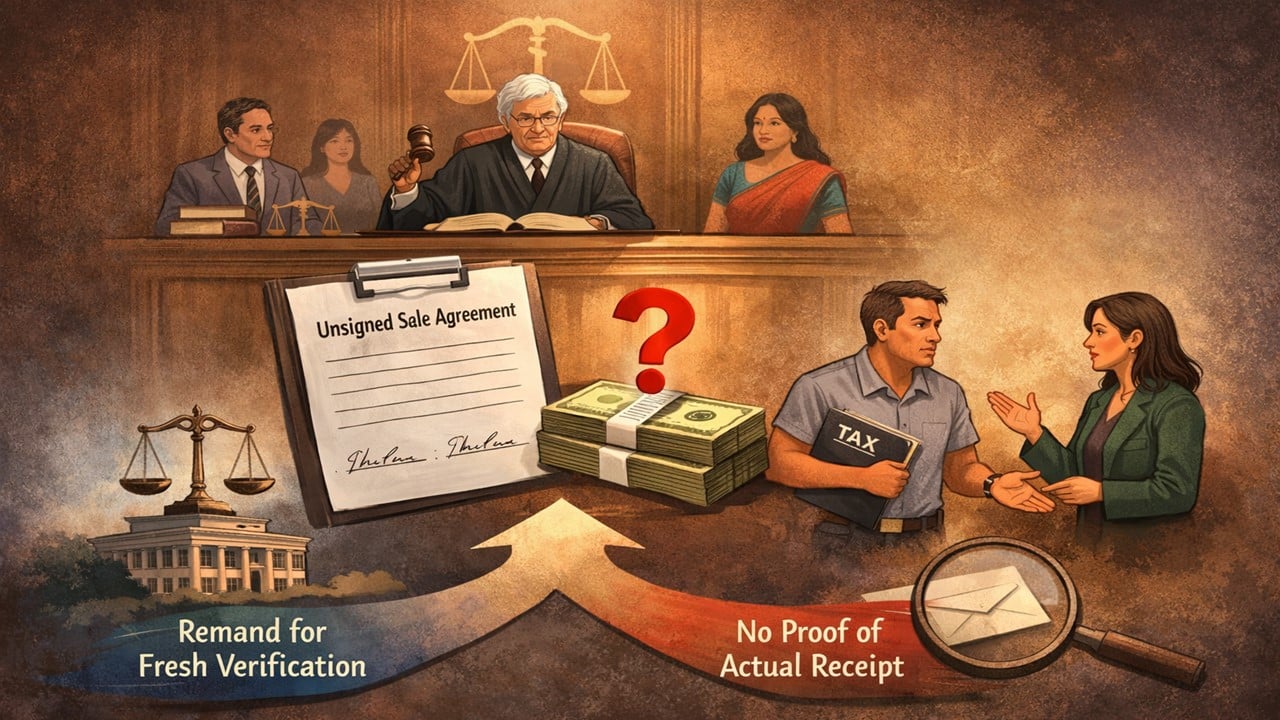
ITAT remands the case for fresh verification, holding that an unsigned sale agreement alone cannot justify capital gains addition without independent proof of actual receipt.
Unsigned Sale Agreement Not Conclusive Proof: Rules ITAT
 Saloni Kumari
 Dec 19, 2025
ITAT Remands Case Over Unsigned Sale Agreement; Orders Fresh Verification of Rs. 13 Lakh Receipt
Smt. Nomula Narmada filed the present appeal before the Income Tax Appellate Tribunal (ITAT) Hyderabad, challenging an order passed by the CIT(A) Hyderabad on June 28, 2025.
Nomula filed her return for the relevant financial year, declaring the total income of Rs. 76,83,250. Later, the return was selected for the purpose of scrutiny, where the Assessing Officer (AO) noticed that Nomula had sold seven plots. During verification, the assessee admitted the sale consideration of the plot No. 233 at Rs. 6,44,000, while during the search operation, officials found an unsigned agreement of sale mentioning the sale consideration of Rs. 37,26,500. Considering the agreement, AO treated the difference amount of Rs. 30,82,500 as undisclosed sale consideration and made the addition of the same to the assessee's income under the head “Capital Gains.” AO completed the assessment, declaring the total income of the assessee at Rs. 10,765,750.
The assessee approached CIT(A), challenging the decision of AO; however, CIT(A) upheld the addition made by AO and dismissed the assessee's appeal. Thereafter, the assessee filed an appeal before the ITAT Hyderabad. The tribunal examined both the unsigned sale agreement and the registered sale deed and discovered that the buyer, the property, and the role of the assessee’s son (as GPA holder) were the same in both documents. The assessee’s son had also admitted that part of the sale amount was received in cash.
However, the tribunal ruled that an unsigned agreement alone cannot be considered as proof of a higher sale value unless there is independent proof and it is properly signed. The unsigned agreement mentioned payment of Rs. 13 lakh; however, there is no clear and valid evidence showing this amount was actually received through the bank or cheque.
Hence, based on the above findings, the tribunal remanded the case to the Assessing Officer (AO) to freshly verify whether the Rs. 13 lakh was received through banking channels by the assessee or her son. If the bank receipt is found, that means the addition made by the AO may be valid, and if no such receipt is found, then the addition cannot be sustained. The AO must freshly consider the case, giving the assessee a proper chance of hearing. The appeal has been allowed for statistical purposes.
About Author


Saloni Kumari
Content Writer
Saloni is a Content Writer with 2+ years of experience at studycafe.in. She writes legal, taxation, and finance related content including GST, Income Tax etc. Skilled in translating complex judicial pronouncements and regulatory developments into clear, and reader-friendly articles. Experienced in covering judgements of ITAT, High Court, GSTAT, and news related to Income Tax, GST, and corporate law. She can be reached at [email protected].
Saloni is a Content Writer with 2+ years of experience at studycafe.in. She writes legal, taxation, and finance related content including GST, Income Tax etc. Skilled in translating complex judicial pronouncements and regulatory developments into clear, and reader-friendly articles. Experienced in covering judgements of ITAT, High Court, GSTAT, and news related to Income Tax, GST, and corporate law. She can be reached at [email protected].
 StudyCafe
 Delhi, Delhi, India
 2924
2924My Recent Articles
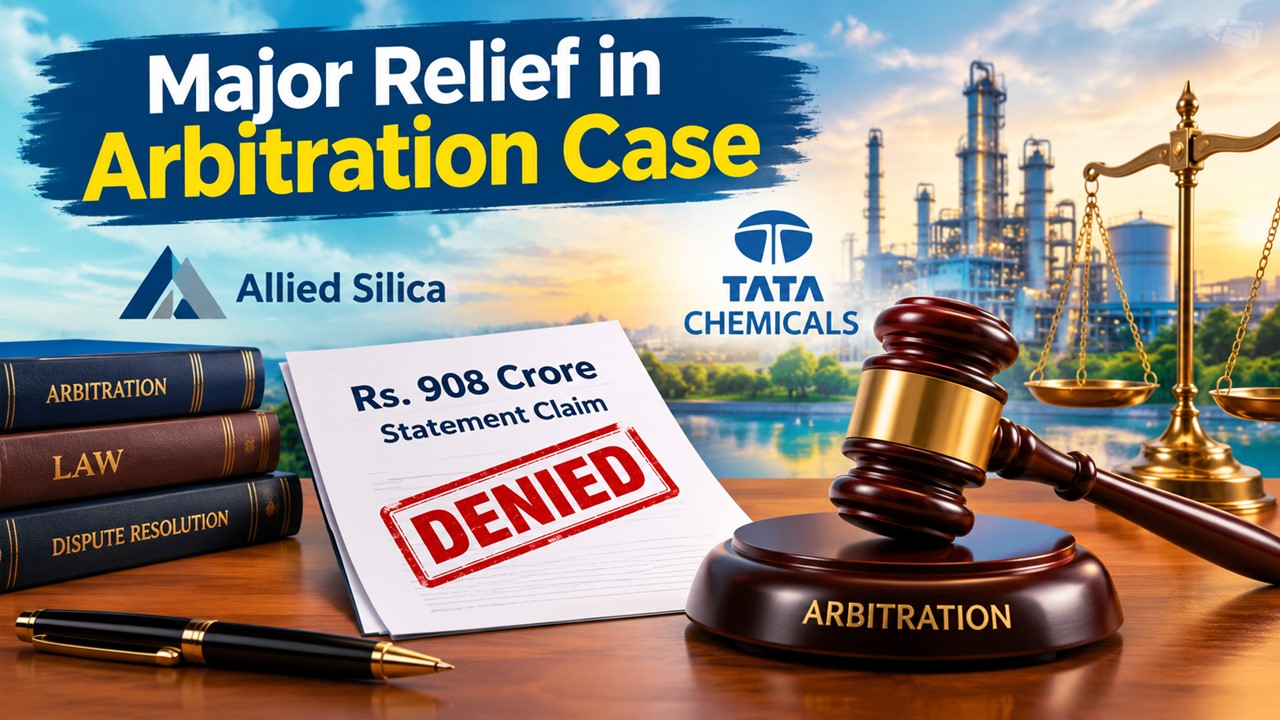
- Major Relief in Arbitration Case: MCIA Denies Rs 908 Crore Statement Claim Made by Allied Silica Against Tata Chemicals
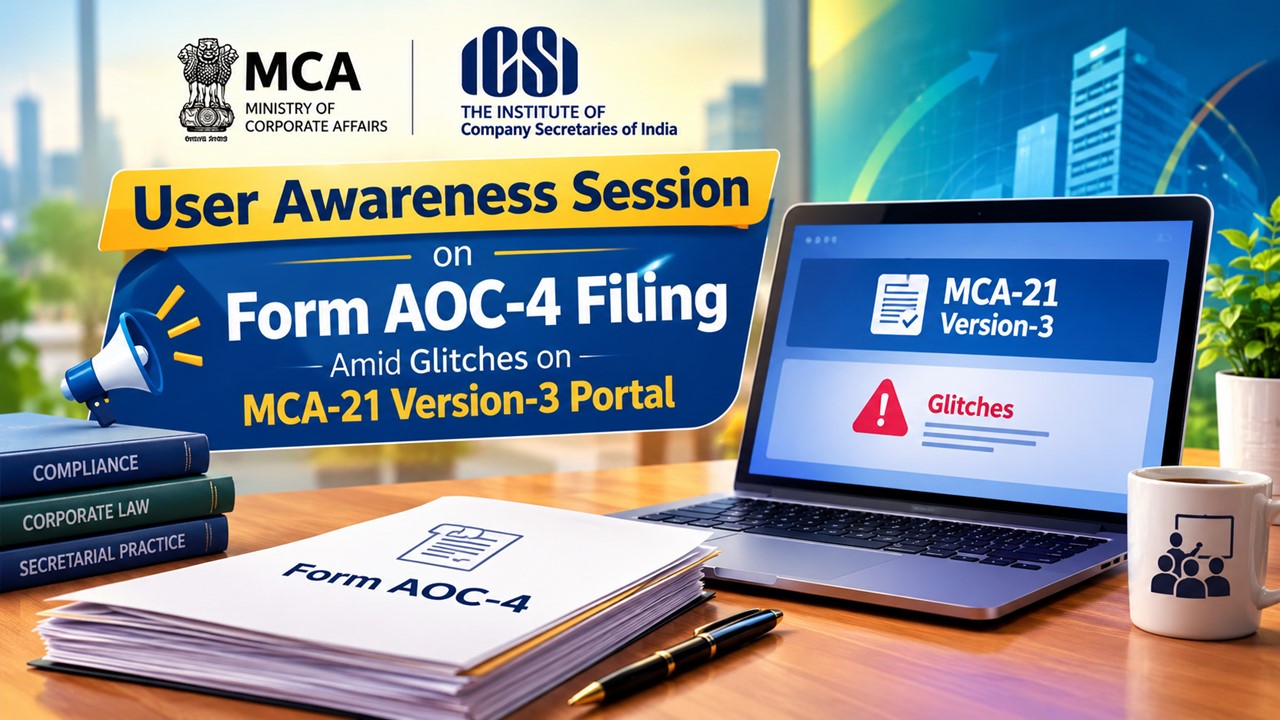
- MCA and ICSI to Hold User Awareness Session on Form AOC-4 Filing Amid Glitches on MCA-21 Version-3 Portal
- GSTN Introduces New E-Invoicing Facility for Self-Invoices Under Reverse Charge Mechanism
- Flexi Cap vs Multi Cap Funds: What's the Real Difference?
- IBA Recommends Public Sector Banks to Reduce Ambit of Physical Branch Audits to 50% of Total Business
Up Next
Loading suggestions…


Recent Posts
All Posts

Tags
Recent Posts
All Posts