China Expands Foreign Income Tax Scrutiny to Less Wealthy Individuals:
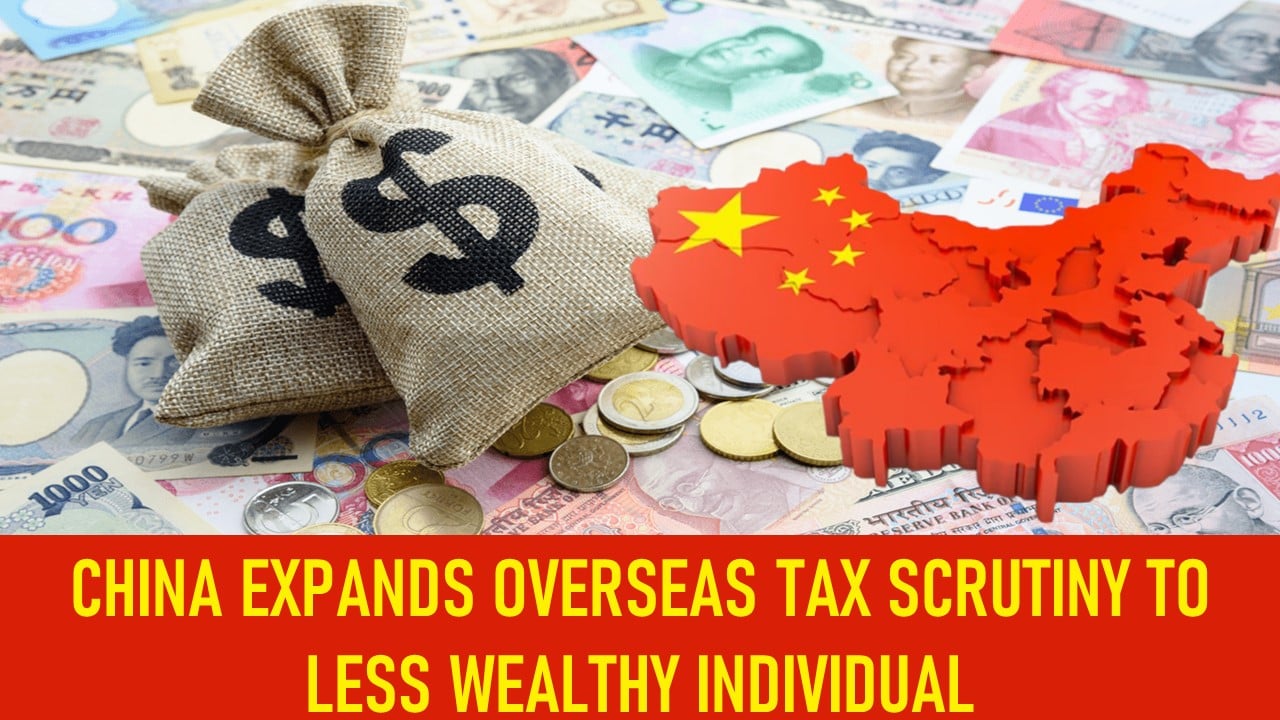
After focusing on the wealthy citizens last year, the government of China is now widening its focus on the less wealthy individuals, too.
Foreign Income Earned by China's Residents Under Scrutiny
 Nidhi
Nidhi Jun 5, 2025
China Expands Foreign Income Tax Scrutiny to Less Wealthy Individuals
China is making strong efforts to collect taxes on the foreign income of its citizens. After focusing on the wealthy citizens last year, the government is now widening its focus on the less wealthy individuals, too. As per some sources, the officials are keeping an eye on various types of foreign income, including dividends, employee stock options and investment returns, where the investment gains can be subject to taxation at 20%.
Tax service providers have seen a sharp increase in enquiries over the past few months from clients who have less than $1 million in assets. This is a shift from last year's crackdown, which mainly focused on individuals with up to $10 million. According to one source, the tax authorities are targeting Chinese residents who have overseas investments, particularly in U.S. and Hong Kong stocks.
Chinese authorities are looking to increase their fiscal income and reduce the budget deficit as Beijing has boosted stimulus to deal with U.S. tariffs. Local governments are facing pressure because the ongoing property crisis and deleveraging have made it harder for them to depend on land sales or heavy borrowing to cover their expenses.
Chinese investors are also moving wealth overseas as the economy has faced challenges after a crackdown on private enterprises. China's president, Xi Jinping's push for "common prosperity" has also damaged confidence. However, he has made a high-profile push to boost the confidence of entrepreneurs.
So far this year, mainland Chinese investors have invested around HK$658 billion (about $83.9 billion) into stocks listed in Hong Kong through the cross-border trading link. This amount is more than double the outflows during the same period last year.
China’s Ministry of Finance believes there is potential to increase revenue by tightening tax collection, especially on income that should be taxed under individual income tax but has not been reported by taxpayers or the authorities.
The residents of Beijing, Shanghai, and provinces have been directed to review their foreign gains and report the tax by June 30. A data analysis has revealed that a few residents did not report their overseas gains for taxation. The fine that the residents were asked to pay stood at $17,720, which is very low.
China's recent tax crackdown follows its 2018 adoption of the Common Reporting Standard (CRS), a global system for sharing financial information to control tax evasion. Although Chinese laws have long required residents to pay tax on their worldwide income, including profits from overseas investments, these rules were rarely enforced until last year.
Under the Common Reporting Standard (CRS), China has been automatically exchanging financial information with nearly 150 countries and regions in recent years. This includes details about accounts held by people who are subject to tax in each participating country.
The personal investable assets in mainland China could reach $80 trillion by 2030. Of that, overseas investments are expected to make up 11% of household investable assets, an increase from 8% in 2023.
About Author


Nidhi
Content Writer
Nidhi is a skilled content writer specializing in personal finance. She creates clear, engaging articles on mutual funds, investments, insurance, and wealth-building strategies. With a passion for simplifying complex financial topics, Nidhi helps readers make informed money decisions with confidence. She can be reached at [email protected]
Nidhi is a skilled content writer specializing in personal finance. She creates clear, engaging articles on mutual funds, investments, insurance, and wealth-building strategies. With a passion for simplifying complex financial topics, Nidhi helps readers make informed money decisions with confidence. She can be reached at [email protected]
 Studycafe
 New Delhi, Delhi, India
 1832
1832My Recent Articles
- Karnataka High Court Gives Another Chance in GST Matter Due to Lack of Hearing
- Delay Should Be Condoned if Explanation is Unrefuted: ITAT
- Non-Service of Income Tax Notice, Ill health of taxpayer, ITAT condones Appeal filing delay
- Books of Accounts Cannot be Rejected Without Any Specific Defect: ITAT Kolkata
- Karnataka High Court Sends ITC Matter Back to GST Authorities for Reconsideration
Up Next
Loading suggestions…


Recent Posts



All Posts



Tags
No tags yet.
Recent Posts
All Posts
Tags
No tags yet.