PCIT’s Section 263 revision quashed where AO had made due enquiries on alleged bogus purchases:
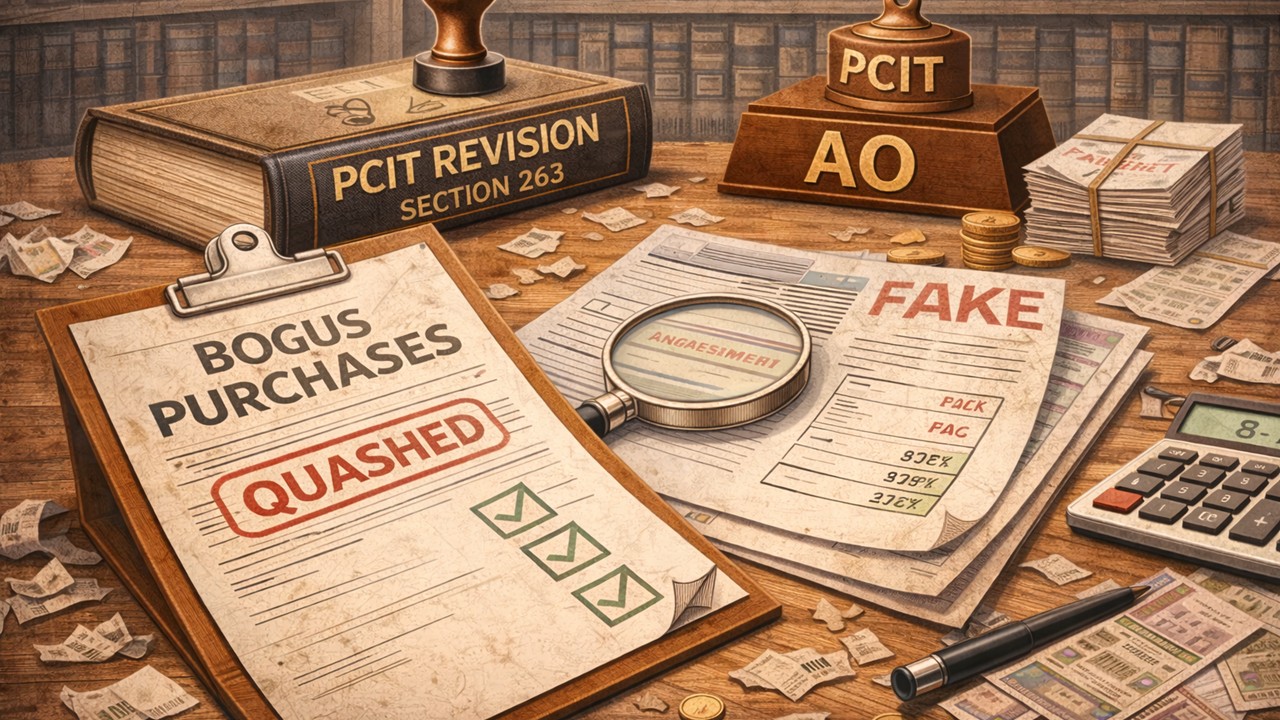
ITAT Delhi holds that inadequate enquiry is not lack of enquiry; plausible AO view cannot be substituted under Section 263
ITAT quashes Section 263 revision in bogus purchase case
 Meetu Kumari
 Feb 3, 2026
PCIT’s Section 263 revision quashed where AO had made due enquiries on alleged bogus purchases
The assessee, Cone Craft Paper Pvt. Ltd., engaged in trading of paper products, filed its return for AY 2021-22 declaring income of Rs. 82.84 lakh. During scrutiny, the Assessing Officer issued notices under Sections 143(2), 142(1) and 133(6) to verify purchases from various suppliers. Based on responses and material on record, the AO treated certain purchases as unverifiable/bogus and disallowed 25% and 12.5% of such purchases, aggregating to Rs. 48.65 lakh, while completing the assessment under Section 143(3) read with Section 144B.
The Principal Commissioner invoked Section 263, holding that the AO should have disallowed 100% of alleged bogus purchases under Section 69C, relying on Kanak Impex (India) Ltd. and N.K. Proteins Ltd., and set aside the assessment as erroneous and prejudicial to revenue. The assessee challenged the revision order before the ITAT.
Issue Before ITAT: Whether the Principal Commissioner was justified in invoking revisionary jurisdiction under Section 263 by treating the assessment order as erroneous and prejudicial to the interests of revenue, despite the AO having conducted enquiries and adopted a plausible view on disallowance of alleged bogus purchases.
ITAT's Order: The ITAT allowed the assessee’s appeal and set aside the Section 263 order. The Tribunal held that the AO had conducted detailed enquiries by issuing statutory notices under Sections 143(2), 142(1) and 133(6), examined purchase transactions, and consciously adopted a view by making partial disallowances. This was not a case of lack of enquiry, but at best of adequacy of enquiry, which does not permit invocation of Section 263. The Tribunal further held that the reliance placed by the PCIT on Kanak Impex (India) Ltd. and N.K. Proteins Ltd. was misplaced, as those decisions were factually distinguishable and dealt with cases of complete non-cooperation or unexplained expenditure.
Applying the principle laid down in Malabar Industrial Co. Ltd., the Tribunal ruled that a plausible view taken by the AO cannot be substituted merely because the PCIT holds a different opinion. Thus, the revision order was quashed and the appeal of the assessee was allowed.
To Read Full Judgment, Download PDF Given Below
About Author


Meetu Kumari
Content Manager
Meetu Kumari is an Experienced Advocate and Content Writer with 4+ years of demonstrated history of working in the law practice industry. Skilled in Developing Content, Researching, and Drafting. Strong professional with a Bachelor of Science (B.Sc.) focused on Law from Gujarat National Law University.
Meetu Kumari is an Experienced Advocate and Content Writer with 4+ years of demonstrated history of working in the law practice industry. Skilled in Developing Content, Researching, and Drafting. Strong professional with a Bachelor of Science (B.Sc.) focused on Law from Gujarat National Law University.
 Studycafe
 Jodhpur, Rajasthan, India
 2264
2264My Recent Articles
- ITAT Condones 302-Day Delay, Restores Salary Assessment for Fresh VerificationPremium
- ITAT Condones Delay After Tax Consultant's Death, Restores Appeals for Fresh HearingPremium
- ITAT Remands Salary Addition, Says Taxability Depends on Salary Becoming Due, Not Mere ReceiptPremium
- ITAT Deletes TP Royalty Adjustment, Orders Fresh Review of Commission BenchmarkingPremium
- ITAT Quashes Reassessment Over Unsigned Section 148 Notice Issued to AssesseePremium
Up Next
Loading suggestions…


Recent Posts

All Posts

Recent Posts
All Posts