CIT(A) Cannot Dismiss Appeal for Delay Without Granting Opportunity: ITAT Mumbai:
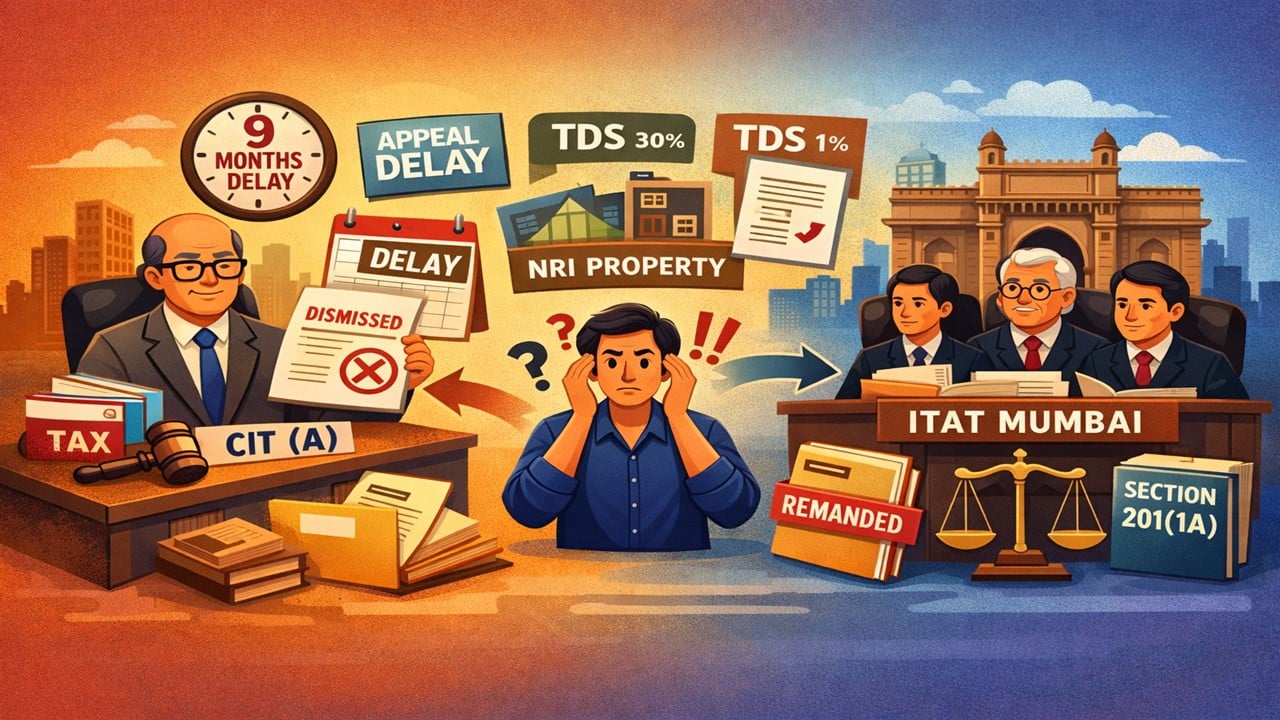
ITAT held that CIT(A) cannot dismiss an appeal for delay without granting an opportunity of being heard and remanded the matter for fresh consideration.
Appeal Dismissed for Delay Without Opportunity Remanded by ITAT
 Vanshika verma
 Feb 7, 2026
CIT(A) Cannot Dismiss Appeal for Delay Without Granting Opportunity: ITAT Mumbai
The ITAT Mumbai held that the CIT(A) wrongly dismissed the appeal on the ground of delay without giving the assessee an opportunity of being heard. As a result, the tribunal set aside the order and remanded the matter to the CIT(A) to reconsider the delay and decide the case afresh on its merits after providing due hearing.
The present appeal has been filed by Aarya Sarwate against I.T.O. in ITAT Mumbai, challenging an order dated November 14, 2022, passed by the CIT(A) under section 201(1)/201(1A) of the Income-tax Act, 1961.
The Assessing Officer (AO) found that the assessee bought a property for Rs. 1.60 crore from Mr Balram Agarwal and Mrs Usha Agrawal, who were Non-Resident Indians (NRIs), through an agreement dated December 6, 2019. As per law, when property is purchased from NRIs, TDS at 30% (plus surcharge and cess) should be deducted. However, the assessee deducted only 1% TDS and did not have any lower deduction certificate under Section 197.
Because of this, the Income Tax Officer (TDS), Thane, treated the assessee as a defaulter under Sections 201(1) and 201(1A) and charged interest and a late fee under Section 234E.
The assessee filed an appeal before the CIT(A) against the order passed by the TDS authority. However, the CIT(A) noticed that the appeal was filed with a delay of about nine months. As per Form-35, the order under section 201(1A) was passed on November 14, 2022, but the appeal was filed only on September 6, 2023. According to the law, the appeal should have been filed within 30 days (i.e., by December 14, 2022). Apart from this, the CIT(A) also observed that the assessee did not give any valid reason for this delay as required under section 249(3) of the Act. Therefore, due to the long and unexplained delay, the appeal was dismissed without examining the case on its merits.
Being aggrieved with the CIT(A) decisions, the assessee then approached the tribunal. During the hearing, the assessee argued that the CIT(A) did not give him any chance to explain the delay in filing the appeal and dismissed it on his own, which was against the principles of natural justice. On examining the record, the tribunal found that the CIT(A) dismissed the appeal only because of the delay and did not give the assessee any opportunity of being heard. Because of this, the issues raised in the appeal were not properly examined.
After considering all the facts. Tribunal set aside the appellate order and restored the case to the CIT(A) to give the assessee a chance to explain the delay and, if satisfied, to pass a fresh order after hearing the case properly. As a result, the Tribunal allowed the assessee's appeal.
About Author


Vanshika verma
Content Writer
Vanshika Verma is a Content Writer with 1+ year of experience at Studycafe.in. A B.Com graduate from Delhi University, She writes articles on Finance, Tax, ICAI, GST, and the latest financial news, with a focus on making complex topics easy for readers and professionals.
Vanshika Verma is a Content Writer with 1+ year of experience at Studycafe.in. A B.Com graduate from Delhi University, She writes articles on Finance, Tax, ICAI, GST, and the latest financial news, with a focus on making complex topics easy for readers and professionals.
 Studycafe
 Delhi, Delhi, India
 2096
2096My Recent Articles
- Pinarayi Vijayan Moves Supreme Court Challenging Kerala High Court Order to Register FIR in CMRL Alleged Bribery Case
- CBI Lays Trap in Srinagar, Arrests SMC Ward Officer Red-Handed While Allegedly Accepting Rs 10,000 Bribe
- NIIT Limited Discloses Income Tax Department’s Appeal Before Delhi ITAT, Says No Adverse Financial Impact Expected
- Fake WhatsApp Boss Dupes Company Accountant of Rs 40 Lakh; Surat Police Arrest Haryana Man in Cyber Fraud Case
- Uttarakhand Tax Department Detects Rs 2.5 Crore Tax Evasion at Ramnagar Resort
Up Next
Loading suggestions…


Recent Posts


All Posts



Tags
Recent Posts
All Posts