Delhi HC Refuses Writ Intervention After Rs 5.71 Crore GST Demand Order, Relegates Petitioner to Statutory Appeal:
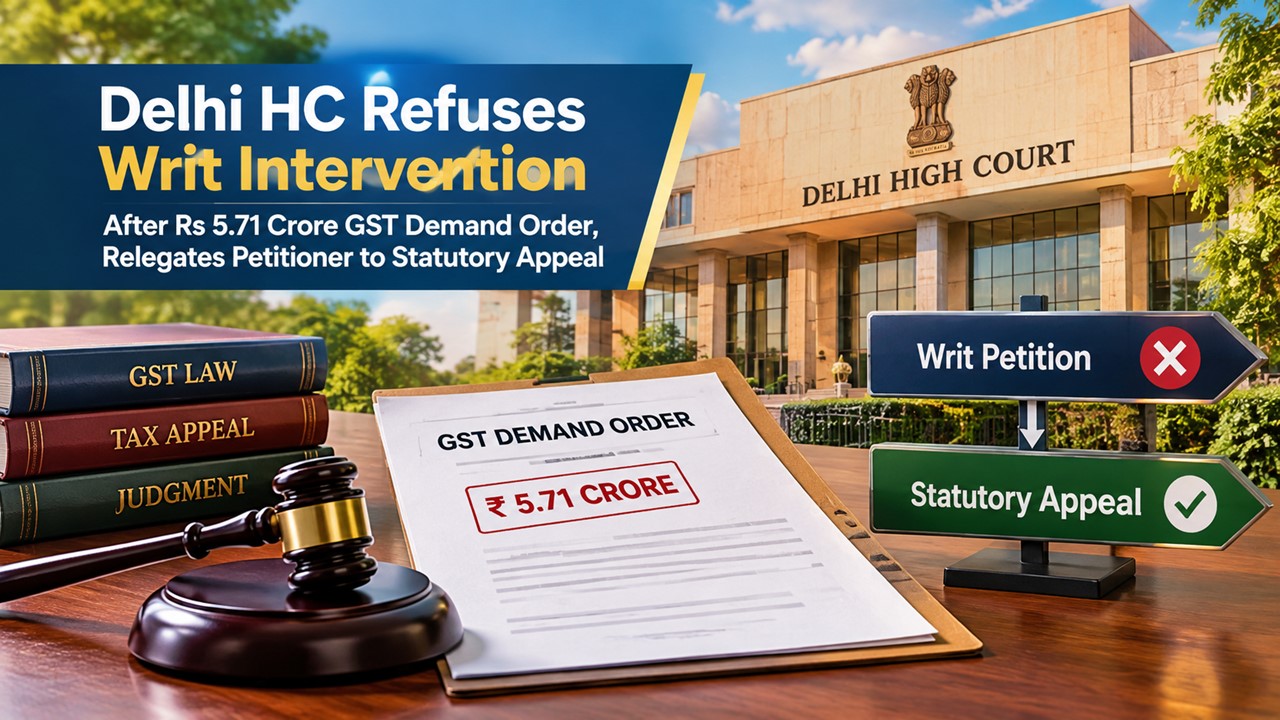
HC dismissed the writ petition, directing the petitioner to pursue the statutory appeal against the Rs 5.71 crore GST demand while leaving the Section 6(2)(b) issue open.
High Court Leaves Section 6(2)(b) Issue Open
 Saloni Kumari
 Sep 21, 2026
The Delhi High Court has dismissed a writ petition challenging proceedings initiated by the Directorate General of Goods and Services Tax Intelligence (DGGI), Delhi Zonal Unit (DZU), after observing that an Order-in-Original had already been passed and the petitioner had an alternative statutory remedy of appeal under Section 107 of the CGST Act.
On August 03, 2024, the Directorate General of DGGI/DZU had sent a show cause notice (SCN) to the petitioner, Saraswati Printers. The adjudicating authority completed the adjudication on January 31, 2025, vide an Order-in-Original. Subsequently, the petitioner filed a writ petition before the Delhi High Court challenging an SCN issued by the DGGI/DZU. During the pendency of the proceedings, the adjudicating authority passed an Order-in-Original dated January 31, 2025, confirming a demand of Rs. 5.71 crore under Section 74 of the CGST Act, along with applicable interest and penalty.

The petitioner argued that the DGGI/DZU proceedings were barred under Section 6(2)(b) of the CGST Act because State GST authorities had already initiated proceedings concerning the same subject matter. The petitioner relied on State GST SCNs dated September 25, 2023, December 8, 2023 and May 20, 2024, along with the orders passed pursuant to them.
The petitioner's principal complaint was that "the proceedings initiated by the DGGI relate to the very same subject matter which had already been the subject of proceedings before the State GST authorities. According to the Petitioner, the initiation of proceedings under the CGST Act was, therefore, expressly barred by Section 6(2)(b) of the CGST Act."
The respondents, however, contended that the State GST proceedings related to return-based discrepancies and specific instances of ineligible Input Tax Credit (ITC), whereas the DGGI investigation was based on intelligence regarding alleged fraudulent availment and utilisation of ITC through invoices without actual supply of goods.

The High Court observed that determining whether both proceedings concerned the “same subject matter” would require examination of the allegations, transactions, liabilities, factual foundations and material involved in both proceedings. The Court declined to undertake such an examination under Article 226, particularly since the adjudication order had already been passed and a statutory appeal was available.
The Court clarified that "this Court has not expressed any opinion on the applicability of Section 6(2)(b) of the CGST Act, the question as to whether the proceedings initiated by the State GST authorities and the DGGI/DZU concern the same subject matter, or on the merits of the demand confirmed by the Order-in-Original dated 31.01.2025. All such issues are left open for consideration by the competent statutory authority in accordance with law."
Accordingly, the Delhi High Court dismissed the writ petition along with the pending application and relegated the petitioner to the statutory appellate remedy.
About Author


Saloni Kumari
Content Writer
 StudyCafe
 Delhi, Delhi, India
 2894
2894My Recent Articles
- Voltas Limited Gets Complete Relief as GST Department Withdraws Rs 15.43 Crore Tax Demand SCN
- ITAT Sets Aside Section 69A Unexplained Money Addition After AO Passes Assessment Order Before Hearing Date
- High Court Sets Aside Ex Parte Appellate Order After Upload of SCN Merely on GST Portal's ‘Additional Notice and Orders’ Tab
- ITAT Rejects Trust’s Appeal Against Section 12A Registration Renewal Denial After Eight Hearing Opportunities
- GST Portal Opens GSTR-9 and GSTR-9C Filing for FY 2025-26: Check Due Date and Key Points
Loading suggestions…


Recent Posts
All Posts

Recent Posts
All Posts