Draft Income Tax Rules, 2026: Know These ITR Changes:
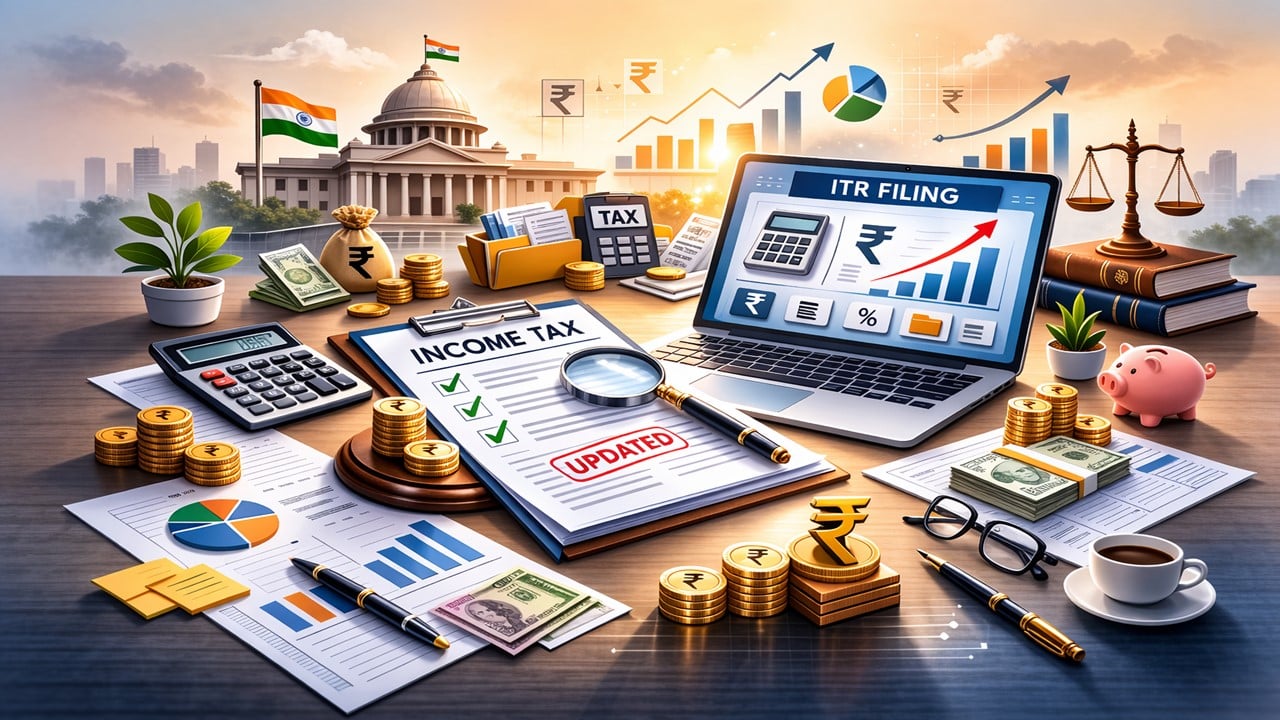
Experts say that taxpayers must be extra careful about their eligibility for the ITR forms, as the draft rule changes can affect their filing status.
ITR Changes Under Draft Income Tax Rules, 2026
 Nidhi
Nidhi Feb 19, 2026
Draft Income Tax Rules, 2026: Know These ITR Changes
The Income Tax Department had earlier released the draft Income Tax Rules, 2026. These draft rules, effective from April 1, 2026, propose to bring clarity and simplicity to the Income Tax Return (ITR) forms.
These drafts are open for shareholder consultation. The last date to submit the feedback or suggestion is February 22, 2026.
The draft proposes significant changes, like a method for calculating the holding period of capital assets in certain cases, revised guidelines for the notification of zero-coupon bonds, etc. Let us understand the new changes for the income tax return (ITR) filers.
Fewer Rules and ITR Forms
The Income Tax Rules, 2026, reduce the number of rules from 511 to 333. It also proposes to cut the number of ITR forms from 399 to 190.
Evolving ITR Forms
Under the new draft rule, the ITR-1 (Sahaj) and ITR-4 (Sugam) allow the assessee to own 2 properties, which was earlier 1.
The new draft also expands the list of income not eligible to be reported in ITR-1 and ITR-4. Under the 1961 rule, ITR-1 and ITR-4 were not allowed if the assessee earned income under section 115BBE (unexplained investments or money/cash credits). This list now covers other incomes like transfer of carbon credits, virtual digital assets (VDA), online games, etc.
ITR Form Ineligibility
ITR-1 has 12 disqualifications, including foreign assets or signing authority in foreign accounts, director status in any company, foreign-source income, income exceeding Rs 50 lakh, holding unlisted equity shares, agricultural income more than Rs 5,000, etc.
ITR-4, which is meant for presumptive taxpayers, has 15 disqualifications.
Experts say that taxpayers must be extra careful about their eligibility for the ITR forms, as the draft rule changes can affect their filing status.
Capital Gains Challenges
The draft rules also bring some challenges for the long-term capital gains reporting. Taxpayers can report long-term capital gains from listed equity shares in the ITR-1 and ITR-4 only if these gains are not more than Rs 1.25 lakh and there are no carry-forward losses. This brings more challenges for the retail investors who actively trade.
Experts suggest that taxpayers carefully classify their gains as short-term or long-term. Even small trades or SIP redemptions can affect your eligibility if they exceed limits.
Risk of Defective Returns
As per the new conditions, your return will be treated as "defective" if
- A return of income can be treated as defective if:
- All required fields, parts, schedules, statements, or columns are not properly filled.
- The details of the tax payment are not correctly mentioned.
- The audit report is not submitted before filing the ITR (if an audit is applicable).
- The MAT or AMT credit claimed does not match the last filed ITR.

About Author


Nidhi
Content Writer
Nidhi is a skilled content writer specializing in personal finance. She creates clear, engaging articles on mutual funds, investments, insurance, and wealth-building strategies. With a passion for simplifying complex financial topics, Nidhi helps readers make informed money decisions with confidence. She can be reached at [email protected]
Nidhi is a skilled content writer specializing in personal finance. She creates clear, engaging articles on mutual funds, investments, insurance, and wealth-building strategies. With a passion for simplifying complex financial topics, Nidhi helps readers make informed money decisions with confidence. She can be reached at [email protected]
 Studycafe
 New Delhi, Delhi, India
 1832
1832My Recent Articles
- Karnataka High Court Gives Another Chance in GST Matter Due to Lack of Hearing
- Delay Should Be Condoned if Explanation is Unrefuted: ITAT
- Non-Service of Income Tax Notice, Ill health of taxpayer, ITAT condones Appeal filing delay
- Books of Accounts Cannot be Rejected Without Any Specific Defect: ITAT Kolkata
- Karnataka High Court Sends ITC Matter Back to GST Authorities for Reconsideration
Up Next
Loading suggestions…


Recent Posts


All Posts


Tags
Recent Posts
All Posts