ITAT Cancels Penalty for Late ITR Filing, Cites COVID-19 Hardship and No Intentional Under-Reporting:
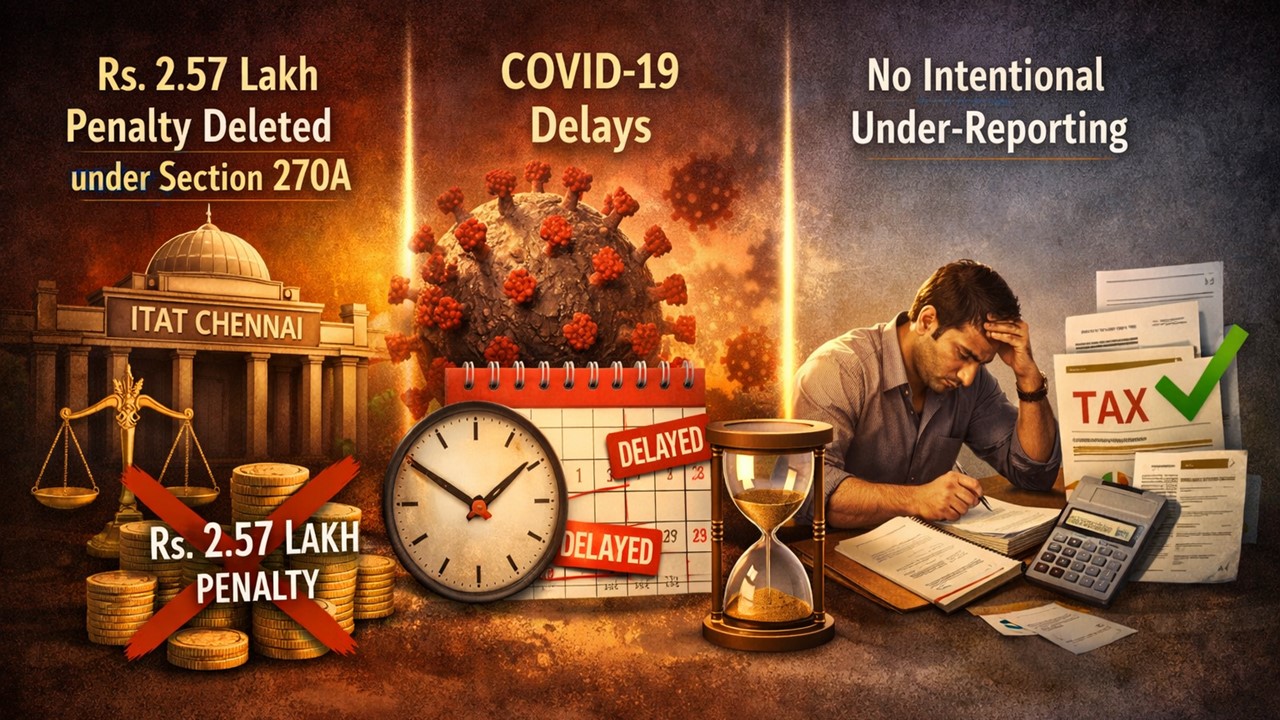
ITAT Chennai deletes Rs. 2.57 lakh penalty under Section 270A, citing COVID-19 delays and no intentional under-reporting by the assessee.
Tribunal Held Late Filing Were Genuine and Not Intentional
 Saloni Kumari
 Feb 16, 2026
ITAT Cancels Penalty for Late ITR Filing, Cites COVID-19 Hardship and No Intentional Under-Reporting
The ITAT deleted the Rs. 2.57 lakh penalty imposed under Section 270A, holding that late ITR filing due to COVID-19 and accurate income reporting showed no intentional under-reporting, and ruled in favour of the assessee.
The Income Tax Appellate Tribunal (ITAT), ‘B’ Bench, Chennai, has recently announced its ruling on an appeal filed by Shri Santhosh Abraham against the Income Tax Department, challenging an order dated October 23, 2025, passed by the CIT(A)/NFAC Delhi. The case belongs to the Assessment Year 2020-21. The key dispute is regarding whether the First Appellate Authority (FAA) is justified in confirming the penalty imposed under Section 270A of the Act, amounting to Rs. 257,631, for alleged under-reporting of income.
The assessee company had filed its income tax return (ITR) for the year in consideration, i.e., AY 2020-21, declaring a substantial financial transaction in the stock market and suffering a loss of Rs. 197,056 and a total earned salary of Rs. 2,276,480 from TCS and Ashok Leyland, on which tax was already deducted at source (TDS). During this period, he and his family were affected by Covid-19, which ultimately led to delayed filing. The tax authorities issued a notice dated March 22, 2024, under Section 148, addressed to the assessee. In response to the notice, the assessee filed a revised return declaring its total income at Rs. 22,76,480 and tax liability at Rs. 5,26,210. Thereafter, the assessment was completed.
After completion of the assessment, a penalty notice under Section 274 was issued to the assessee, alleging under-reported income. Subsequently, penalty proceedings were initiated, where the assessee claimed he could not file his ITR because his family was affected by COVID-19 and that the income declared matched the assessed income. He further argued that almost the entire tax liability was already paid through TDS, and there was no intention to conceal income.
When the tribunal analysed the case, it noted that the reasons given by the assessee for late filing were genuine and not intentional. Also found the other arguments raised by the assessee as relevant and true. Therefore, the tribunal held that the under-reporting of income was not intentional. Accordingly, the tribunal deleted the impugned penalty imposed under Section 270A and ruled in favour of the assessee.
About Author


Saloni Kumari
Content Writer
Saloni is a Content Writer with 2+ years of experience at studycafe.in. She writes legal, taxation, and finance related content including GST, Income Tax etc. Skilled in translating complex judicial pronouncements and regulatory developments into clear, and reader-friendly articles. Experienced in covering judgements of ITAT, High Court, GSTAT, and news related to Income Tax, GST, and corporate law. She can be reached at [email protected].
Saloni is a Content Writer with 2+ years of experience at studycafe.in. She writes legal, taxation, and finance related content including GST, Income Tax etc. Skilled in translating complex judicial pronouncements and regulatory developments into clear, and reader-friendly articles. Experienced in covering judgements of ITAT, High Court, GSTAT, and news related to Income Tax, GST, and corporate law. She can be reached at [email protected].
 StudyCafe
 Delhi, Delhi, India
 2889
2889My Recent Articles
- ITAT Sets Aside Rejection of Charitable Trust’s Section 12AB Registration Application, Remands Case to CIT(E) for Fresh Consideration
- Can Same-Sex Partners Claim Tax Exemption on Gifts as Spouses? Karnataka High Court to Examine
- ITAT Remits Section 80G Renewal Application to CIT(E) for Fresh Consideration in Light of CBDT Circular
- Dreamfolks Services Faces Rs 1.58 Crore IGST Demand Over ITC Availment on Invoices Issued by GST-Cancelled Supplier
- ITAT Restores Taxpayer's Appeal In Interest of Natural Justice After CIT(A)'s Failure to Decide Appeal on Merits
Up Next
Loading suggestions…


Recent Posts

All Posts

Tags
Recent Posts
All Posts