EPF Amendments Not Applicable to Exempted Establishments Automatically: HC:
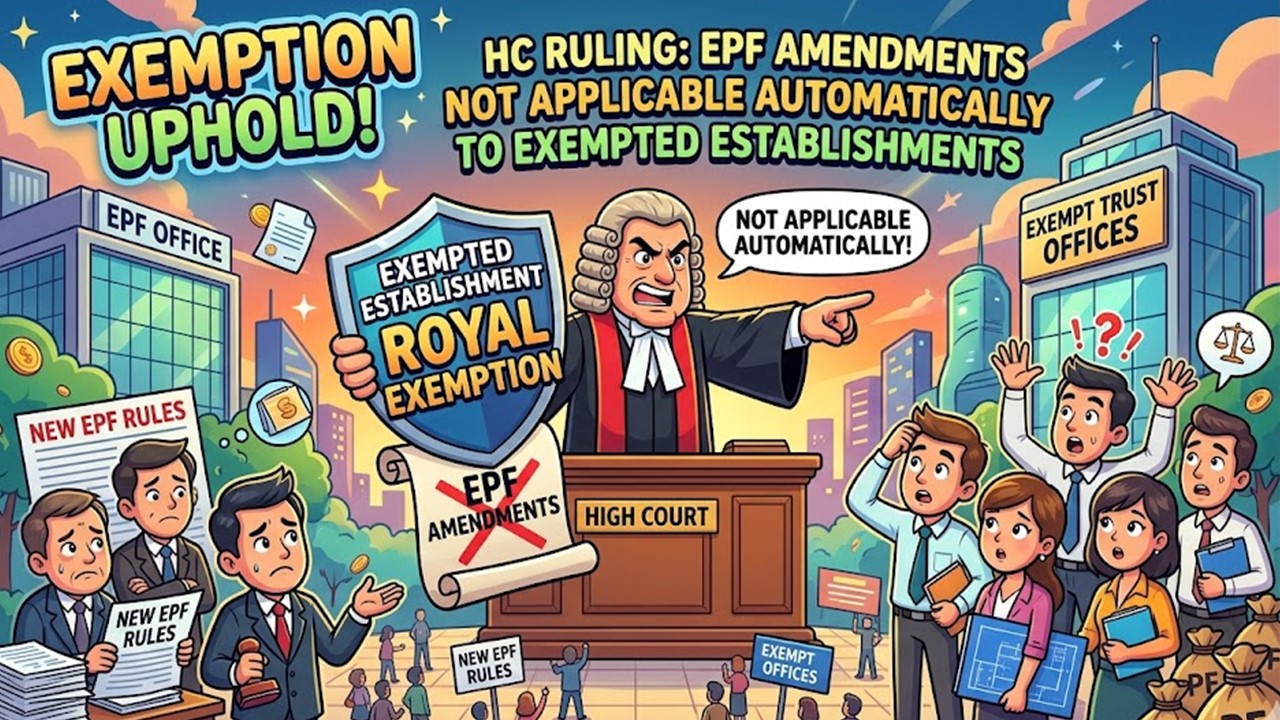
The Calcutta High Court holds that Para 27AA EPF amendments require specific Gazette notification to bind exempted establishments.
Para 27AA Valid, But Not Automatically Applicable to Exempted EPF Establishments
 Meetu Kumari
 Apr 24, 2026
EPF Amendments Not Applicable to Exempted Establishments Automatically: HC
This case is essentially a clash between the government's power to tighten rules and a company's right to procedural fairness. Caledonian Jute and several other companies found themselves in a legal tug-of-war with the Employees’ Provident Fund (EPF) authorities over how "exempted" status works. For years, these companies managed their own private Provident Fund trusts rather than paying into the government’s central pool. They had specific "exemption notifications" that spelt out their rules.
However, the government eventually introduced Paragraph 27AA, which added a new list of stricter conditions (found in Appendix 'A') that these private trusts had to follow. When the companies didn't immediately pivot to these new rules, the government hit them with non-compliance notices. The companies fought back with a technical but vital argument: "You gave us a specific licence with specific rules. You can't just change the goalposts by passing a general law; you have to formally amend our specific licences in the Official Gazette first."
Main Issue: Whether conditions introduced under Paragraph 27AA of the EPF Scheme automatically apply to establishments already granted exemption under Section 17 of the EPF Act, or whether a specific Gazette notification required to modify such exemption conditions?
HC's Decision: This ruling from the Calcutta High Court is essentially a "yes, but" decision that balances the government's power with a company's right to proper process. The Court started by siding with the Employees' Provident Fund (EPF) authorities on the big picture. It confirmed that the government is fully within its rights to toughen up rules (via Paragraph 27AA and Appendix ‘A’) if the goal is to protect workers' savings.
The legal validity of the rules themselves isn't the problem; the government has a broad mandate to update these schemes to keep employee welfare secure. The Judges ruled that new regulations don't just "auto-install" themselves onto these companies. If a business was granted an exemption under a specific legal notification years ago, that notification is a binding document. To change the rules for that specific company, the government can’t just point to a general update; they have to formally amend that original notification and publish it in the Official Gazette.
To Read Full Judgment, Download PDF Given Below
About Author


Meetu Kumari
Content Manager
Meetu Kumari is an Experienced Advocate and Content Writer with 4+ years of demonstrated history of working in the law practice industry. Skilled in Developing Content, Researching, and Drafting. Strong professional with a Bachelor of Science (B.Sc.) focused on Law from Gujarat National Law University.
Meetu Kumari is an Experienced Advocate and Content Writer with 4+ years of demonstrated history of working in the law practice industry. Skilled in Developing Content, Researching, and Drafting. Strong professional with a Bachelor of Science (B.Sc.) focused on Law from Gujarat National Law University.
 Studycafe
 Jodhpur, Rajasthan, India
 2264
2264My Recent Articles
- ITAT Condones 302-Day Delay, Restores Salary Assessment for Fresh VerificationPremium
- ITAT Condones Delay After Tax Consultant's Death, Restores Appeals for Fresh HearingPremium
- ITAT Remands Salary Addition, Says Taxability Depends on Salary Becoming Due, Not Mere ReceiptPremium
- ITAT Deletes TP Royalty Adjustment, Orders Fresh Review of Commission BenchmarkingPremium
- ITAT Quashes Reassessment Over Unsigned Section 148 Notice Issued to AssesseePremium
Up Next
Loading suggestions…


Recent Posts

All Posts


Recent Posts
All Posts