Fake Invoicing: Income Tax Department sending notices to Reopen Old Tax Cases:
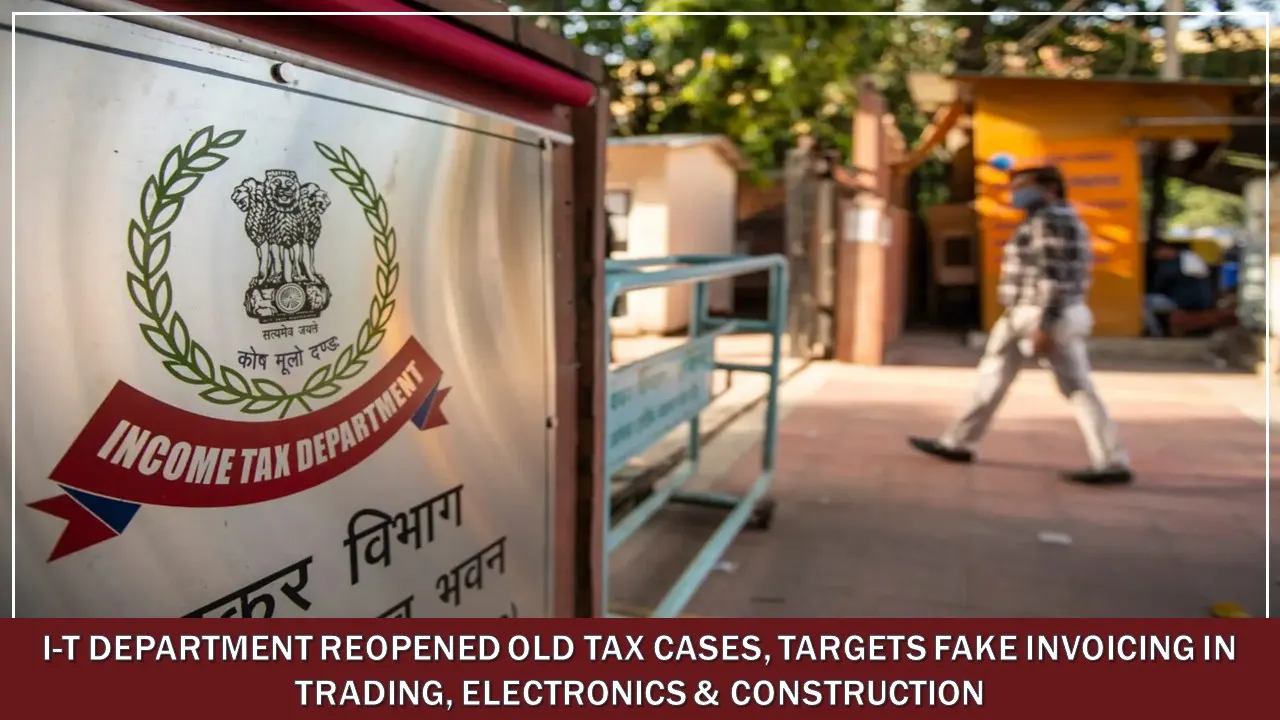
The Income Tax Department is reopening old tax assessment cases to catch businesses that reduced their profit by submitting false expenses and trying to avoid paying tax.
I-T Dept Targeting Firms Using Fake Invoices
 Nidhi
Nidhi Apr 12, 2025
Table of Contents

Fake Invoicing: Income Tax Department sending notices to Reopen Old Tax Cases
The Income Tax Department is reopening old tax assessment cases to identify businesses that reduced their profit by submitting false expenses and trying to avoid paying tax. As per sources, the department is also investigating five-year-old tax records involving cases of tax evasion.
The tax authority is inspecting trading, electronics, and construction sectors. It believes that many of these companies issued fake invoices from fake suppliers who never existed. These fake suppliers Issue fake bills for the companies. By using these fake bills, companies show higher expenses to reduce their taxable income and wrongly claim ITC.
Section 147: Reopening tax cases
Earlier, some of the tax returns were accepted without any problems. However, at present, new GST data shows fake transactions. So, the Income Tax Department has reopened the cases under Section 147 of the Income Tax Act, which allows them to reassess returns if income was hidden or wrongly shown.Section 148: Department can reopen cases up to 5 years
Section 148 allows the department to reopen assessment cases up to the past 3 years. If hidden income exceeds Rs. 50 lakh and is related to assets, expenses, or fake entries, they can go back up to 5 years.What are the expected penalties?
If firms are unable to submit documents to prove that the purchase they made is real, the tax department may consider it a fake expense and can impose heavy penalties and extra tax demands. Even if GST officers have already reversed the ITC, the Income Tax Department is doing its own checks. Experts say just reversing ITC doesn’t prove a purchase is fake; businesses still need to show proper documents as proof. Businesses must submit documents such as GST invoices, goods receipt notes, E-way bills, and transport records to prove that a purchase is real. Tax experts say even honest businesses are getting affected. If one fake supplier is found in the supply chain, it can cause problems for everyone. Authorities may reject expense claims even if the rest of the chain is genuine.About Author


Nidhi
Content Writer
Nidhi is a skilled content writer specializing in personal finance. She creates clear, engaging articles on mutual funds, investments, insurance, and wealth-building strategies. With a passion for simplifying complex financial topics, Nidhi helps readers make informed money decisions with confidence. She can be reached at [email protected]
Nidhi is a skilled content writer specializing in personal finance. She creates clear, engaging articles on mutual funds, investments, insurance, and wealth-building strategies. With a passion for simplifying complex financial topics, Nidhi helps readers make informed money decisions with confidence. She can be reached at [email protected]
 Studycafe
 New Delhi, Delhi, India
 1832
1832My Recent Articles
- Karnataka High Court Gives Another Chance in GST Matter Due to Lack of Hearing
- Delay Should Be Condoned if Explanation is Unrefuted: ITAT
- Non-Service of Income Tax Notice, Ill health of taxpayer, ITAT condones Appeal filing delay
- Books of Accounts Cannot be Rejected Without Any Specific Defect: ITAT Kolkata
- Karnataka High Court Sends ITC Matter Back to GST Authorities for Reconsideration
Up Next
Loading suggestions…


Recent Posts
All Posts

Tags
No tags yet.
Recent Posts
All Posts
Tags
No tags yet.