Government Issues New Guidelines for GST: New System Now Mandatory for All:
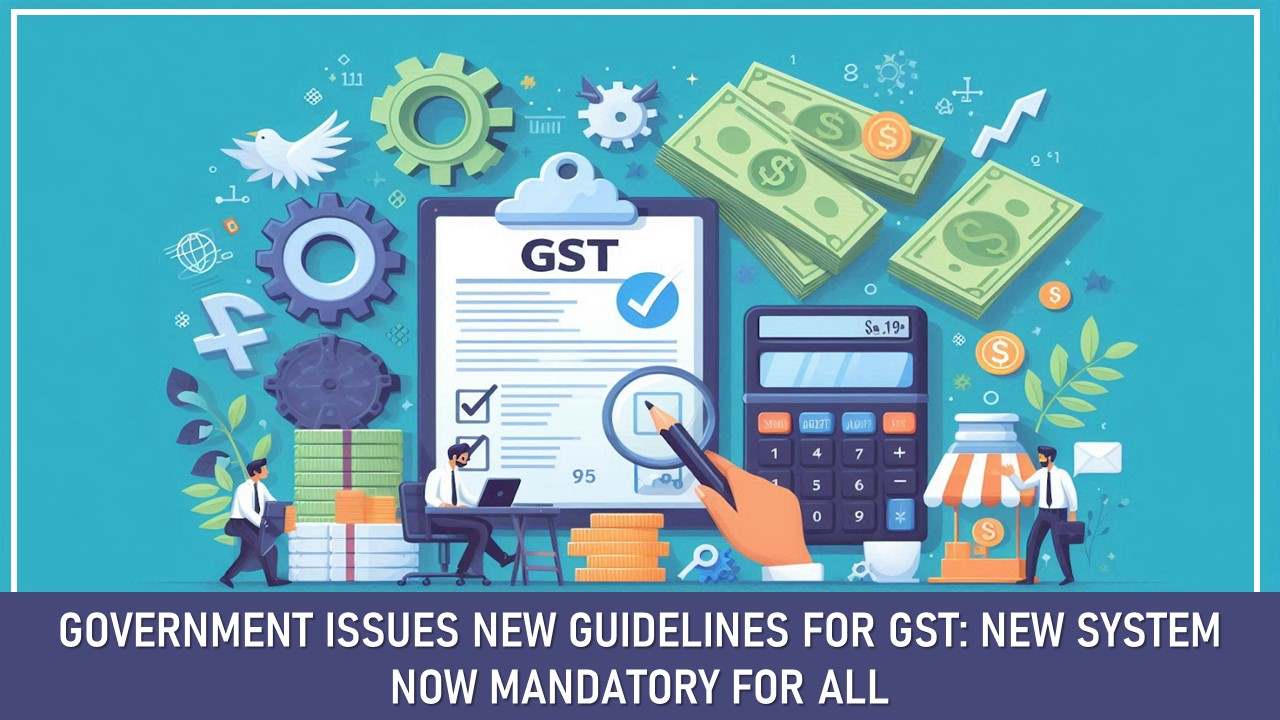
The government has issued guidelines for new rules regarding the GST Appellate Tribunal (GSTAT), which are mandatory for everyone.
Government Introduces New GST Guidelines: System Now Mandatory for All
 Nidhi
Nidhi Apr 28, 2025
Table of Contents

Government Issues New Guidelines for GST Appellant Tribunal
The government has issued guidelines for new rules regarding the GST Appellate Tribunal (GSTAT). Let us take a look at these updated rules.
E-Filing Now Mandatory for GST Appeals
As per the new rules, e-filing will now be necessary to file an appeal, and the hearing will be conducted in a formal way. This means that you will not always need to go to the tribunal in person for the hearing, you can also join via video call or online platform. This system is mandatory for all and aims to make the process easier and more convenient.Urgent Cases to Be Heard Quickly with E-Filing and Special Permissions
As per the new rules, if an applicant files an urgent case before 12 noon along with all required documents, then the case will be registered in the Appellate Tribunal on the next working day. In rare cases, if the application is submitted between 12 noon and 3 pm, it can still be listed for the next day, but only with special permission from the Tribunal or its President.Timings and Structure for Dispute Resolution
The GST Appellate Tribunal bench (GSTAT), which handles GST disputes, will operate from 10:30 am to 1:30 pm and then from 2:30 pm to 4:30 pm. However, the President has the authority to adjust these timings. The administrative offices of the Appellate Tribunal will be available on all working days from 9:30 am to 6 pm. The government appointed Justice (Retd.) Sanjay Kumar Mishra as the first President of the GST Appellate Tribunal in May last year. Sanjay Kumar Mishra, the first President of the GST Appellate Tribunal (GSTAT), is a former Chief Justice of the Jharkhand High Court. He was appointed by a Search-cum-Selection Committee led by the Chief Justice of India. The GST structure includes GSTAT as a higher-level court where you can appeal if you disagree with the decision made in your initial GST case. It has been formed under the Central Goods and Services Tax Act, 2017. The main bench of GSTAT is in Delhi, and 31 state benches across the country. These benches have been set up after taking approval from the GST Council. The process of judicial and technical members is still in progress. The establishment of GSTAT is expected to make the entire GST system more effective and transparent. Once the GST Appellate Tribunal (GSTAT) is fully set up, it will help resolve GST disputes more quickly, transparently, and efficiently.Other Features of the New Rules
- Comprehensive Structure: The framework consists of 11 chapters, 70 rules and 4 statutory forms, covering the entire procedure and administration.
- Standard Form: Four standard forms have also been introduced, including Form GSTAT-01 (Appeal), Form GSTAT-02 (Order Sheet), CDR-01 and CDR-02 have been fixed for court management.
About Author


Nidhi
Content Writer
Nidhi is a skilled content writer specializing in personal finance. She creates clear, engaging articles on mutual funds, investments, insurance, and wealth-building strategies. With a passion for simplifying complex financial topics, Nidhi helps readers make informed money decisions with confidence. She can be reached at [email protected]
Nidhi is a skilled content writer specializing in personal finance. She creates clear, engaging articles on mutual funds, investments, insurance, and wealth-building strategies. With a passion for simplifying complex financial topics, Nidhi helps readers make informed money decisions with confidence. She can be reached at [email protected]
 Studycafe
 New Delhi, Delhi, India
 1832
1832My Recent Articles
- Karnataka High Court Gives Another Chance in GST Matter Due to Lack of Hearing
- Delay Should Be Condoned if Explanation is Unrefuted: ITAT
- Non-Service of Income Tax Notice, Ill health of taxpayer, ITAT condones Appeal filing delay
- Books of Accounts Cannot be Rejected Without Any Specific Defect: ITAT Kolkata
- Karnataka High Court Sends ITC Matter Back to GST Authorities for Reconsideration
Up Next
Loading suggestions…


Recent Posts


All Posts
Tags
No tags yet.
Recent Posts
All Posts
Tags
No tags yet.