GST 2.0 Reforms 2025: Relief for Many, Trouble for Hospitality Sector:
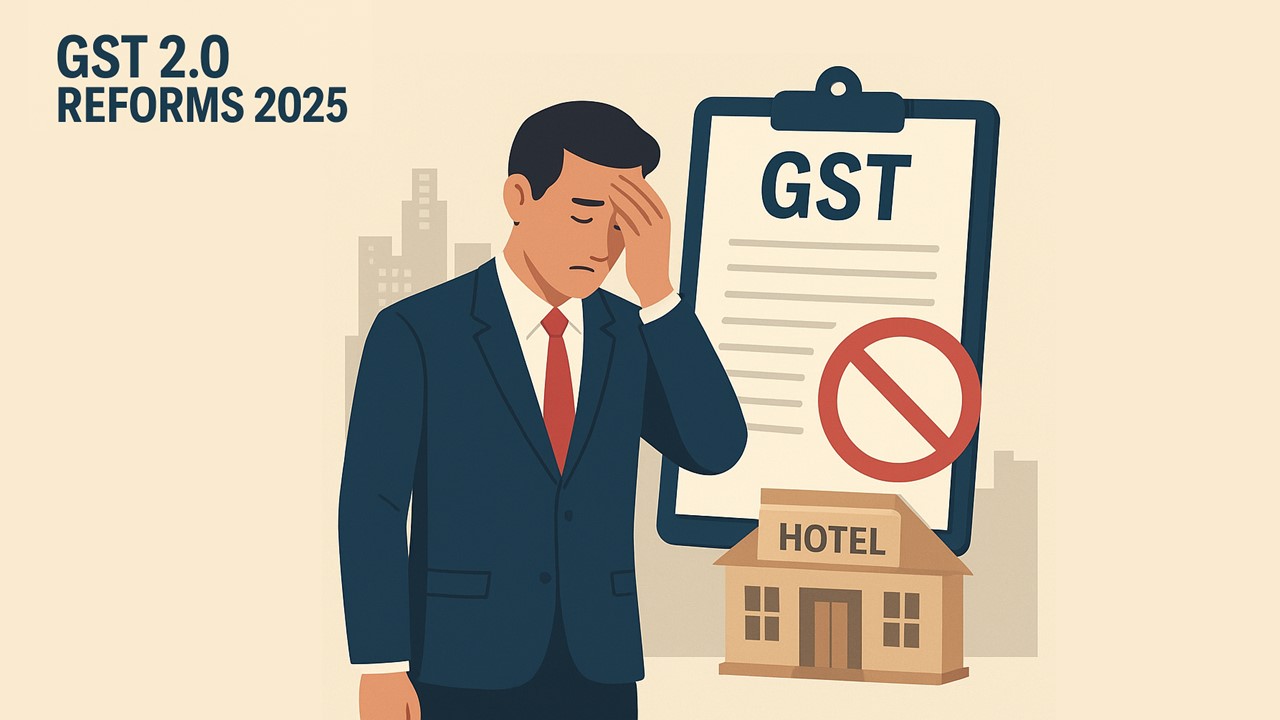
The GST council announces GST 2.0 reforms 2025, which slash tax rates for restaurants and hotels, but block input tax credit (ITC), raising industry concerns.
GST Reforms 2025: GST Lowered, Profits Still Under Pressure
 Saloni Kumari
 Sep 8, 2025
GST 2.0 Reforms 2025: Relief for Many, Trouble for Hospitality Sector
The GST (Goods and Services Tax) council has announced a new version of GST, called GST 2.0, which includes tax reductions for restaurants and mid-range hotels. However, these cuts come with a catch: businesses will not be allowed to claim input tax credit (ITC), which is a major concern for the industry.
The GST has been lowered to 5% for restaurants; however, they are still not allowed to claim ITC on goods and services they buy to run their business. Various industry experts have said that this lowers the benefit of the GST reduction.
The vice president of an association said that this reduction in GST will benefit restaurants in two ways. First, the cost of their input purchases will reduce by 7%; this will help quick service restaurants (QSRs) the most because they use a lot of processed foods, which used to be taxed at 12% but now have a lower tax. Other items such as utensils, kitchen tools, and packaging materials will also become cheaper, since their tax has been reduced from 12% to 5%.
These items can account for up to 30% of a restaurant’s total income, especially for quick service restaurants (QSRs) and casual dining places. Overall, restaurants can save between 0.5% and 1.5% of their total revenue. As a result, stock prices of companies like Devyani International (KFC, Pizza Hut), Jubilant FoodWorks (Domino’s), and Sapphire Foods went up, reflecting investor optimism.
One of the key demands from restaurants was to be allowed ITC, especially for costs like rent and commissions paid to food delivery platforms, but this has not been approved. Restaurants even pay GST on rent via a system called the reverse charge mechanism if the landlord is not registered under GST. This has been a significant cost burden for them since the rule was introduced last year.
For hotels also, the GST has been lowered from 12% to 5% for rooms priced at Rs. 7,500 or less per night. This reduction is likely to help hotels boost their domestic tourism, especially among budget-conscious travellers. Executives from hotel chains and travel platforms believe this will encourage more people to take trips, including weekend getaways and business travel, which are important for the industry’s growth.
However, like restaurants, hotels are not allowed to claim ITC. Hotel industry leaders are unhappy with this; they say this will adversely affect their profits and make it more expensive to expand or maintain operations. The Hotel Association of India stated that while the tax cut helps travellers, it could discourage hotel companies from investing in this segment.
Some experts said that although the GST cut is good for guests, hotels will face higher overhead costs and lower margins. Others, like Sanjay Sethi of Chalet Hotels, suggested that the government should allow ITC, raise the price limit for the lower tax rate to Rs. 12,000, and link it to inflation (Consumer Price Index) so that it can be updated automatically over time.
About Author


Saloni Kumari
Content Writer
Saloni is a Content Writer with 2+ years of experience at studycafe.in. She writes legal, taxation, and finance related content including GST, Income Tax etc. Skilled in translating complex judicial pronouncements and regulatory developments into clear, and reader-friendly articles. Experienced in covering judgements of ITAT, High Court, GSTAT, and news related to Income Tax, GST, and corporate law. She can be reached at [email protected].
Saloni is a Content Writer with 2+ years of experience at studycafe.in. She writes legal, taxation, and finance related content including GST, Income Tax etc. Skilled in translating complex judicial pronouncements and regulatory developments into clear, and reader-friendly articles. Experienced in covering judgements of ITAT, High Court, GSTAT, and news related to Income Tax, GST, and corporate law. She can be reached at [email protected].
 StudyCafe
 Delhi, Delhi, India
 2924
2924My Recent Articles
- Major Relief in Arbitration Case: MCIA Denies Rs 908 Crore Statement Claim Made by Allied Silica Against Tata Chemicals
- MCA and ICSI to Hold User Awareness Session on Form AOC-4 Filing Amid Glitches on MCA-21 Version-3 Portal
- GSTN Introduces New E-Invoicing Facility for Self-Invoices Under Reverse Charge Mechanism
- Flexi Cap vs Multi Cap Funds: What's the Real Difference?
- IBA Recommends Public Sector Banks to Reduce Ambit of Physical Branch Audits to 50% of Total Business
Up Next
Loading suggestions…


Recent Posts
All Posts
Recent Posts
All Posts