GST: 210 Cr Allocated for Goods and Services Tax Appellate Tribunal:
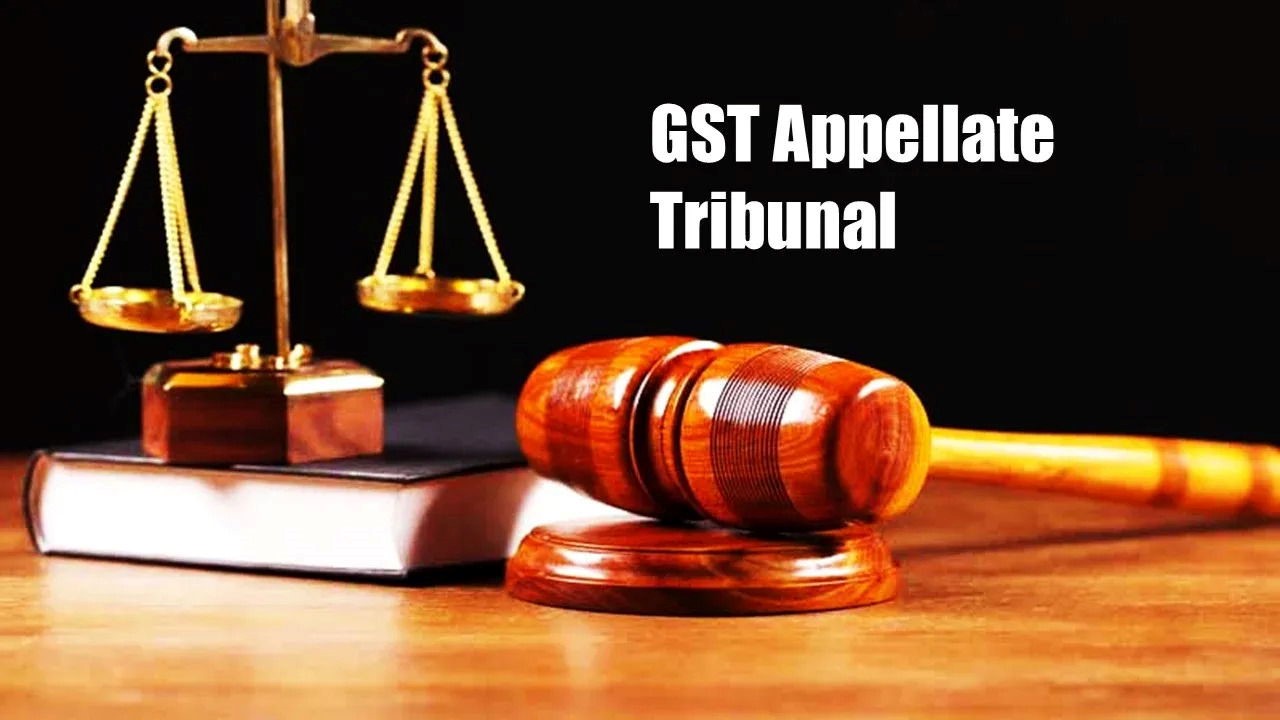
Here is a detailed update on the status, delays, budget, and interim measures related to the GSTAT as addressed in Lok Sabha on July 21, 2025.
GSTAT Status, Budget, and Delays Explained
 Saloni Kumari
 Jul 22, 2025
GST: 210 Cr Allocated for Goods and Services Tax Appellate Tribunal
Here in this article there is mentioned the response of the Government of India to Lok Sabha Unstarred Question No. 158 as asked by Shri Manish Tewari on July 21, 2025. Below are the asked questions:
"Will the Minister of FINANCE be pleased to state:
(a) The total number of Goods and Services Tax Appellate Tribunal (GSTAT) benches, including Principal and State Benches, notified for each State and Union Territory along with their proposed locations.
(b) The total number of fully operational GSTAT benches, including Principal and State Benches, in the country, State/UT-wise.
(c) The details of the budget allocated, funds released and utilised so far for the establishment and operationalisation of GSTAT benches, State/UT-wise.
(d) The reasons for the delay in making the GSTAT benches operational despite the Central Goods and Services Tax Act, 2017 came into effect in 2017; and
(e) The details of interim measures being adopted to handle pending GST disputes due to the non-availability of an appellate forum under GST?"
Below is the response of the Government of India to Lok Sabha Unstarred Question No. 158 regarding the Goods and Services Tax Appellate Tribunal (GSTAT), asked by Shri Manish Tewari on July 21, 2025:
(a) The government has planned 31 State Benches spread across 45 different locations in India. Plus, there will be one Principal Bench located in New Delhi. These benches were officially notified by the government through a notification (S.O. 5063(E)) dated November 26, 2024, and have been updated as needed.
(b) As of now, none of the GSTAT benches, neither the state benches nor the principal bench, are fully operational. This means no GST tribunal is functioning yet, anywhere in the country.
(c) The total budget allocated for setting up and running GSTAT for the financial year 2025-26 is Rs. 210.05 crore (i.e., Rs. 210,04,70,000). Out of this, only around Rs 3.06 crore (Rs 3,05,58,376) has been utilised so far. This indicates that the process is still in very early stages; most of the funds haven’t yet been spent, likely because appointments and infrastructure are still being worked on.
(d) There are multiple legal and procedural reasons for this delay, explained step-by-step below:
1. Legal challenges in 2018-2019:
The original sections 109 and 110 of the CGST Act (which dealt with how the tribunal would be formed and who would be its members) were challenged in court.
- In the Revenue Bar Association vs. Union of India, the Madras High Court in September 2019 struck down those sections because they were not constitutionally valid.
- However, the Supreme Court struck down these rules too, saying they didn’t meet judicial independence standards.
- The government tried again with new rules in 2020, called:
- But these were also challenged in the Supreme Court, which again asked for further changes.
- Based on the court’s direction, the Tribunal Reforms Act, 2021 was passed to fix the issues and bring everything in line.
- A Group of Ministers (GoM) was formed to examine how GSTAT should be set up.
- In its 49th meeting on 18th Feb 2023, the GST Council recommended that GSTAT should finally be constituted.
- Following the Council's recommendation, the Finance Act 2023 amended Sections 109 and 110 of the CGST Act to fix earlier flaws.
- On 28th December 2023, more changes were made via the CGST (Second Amendment) Act 2023 to bring everything in line with the Tribunal Reforms Act.
- After all these changes, the actual work of appointing members, hiring staff, and setting up the infrastructure for GSTAT has finally started.

- This allows taxpayers to claim input tax credit (ITC) for FY 2017-18 to FY 2020-21, even if claimed late (up to 30th Nov 2021 in GSTR-3B).
- This helps those who couldn’t claim ITC due to delays.
- For appeals before GST authorities, the maximum pre-deposit has been reduced from Rs. 25 crore to Rs. 20 crore (each for CGST and SGST).
- For appeals before the GSTAT, the pre-deposit has been reduced from 20% (max Rs. 50 crore) to 10% (max Rs. 20 crore).
- This is done to help businesses with cash flow and working capital.
- A new section 128A was added to launch an amnesty scheme.
- For tax demand notices under Section 73 for FY 2017-18 to 2019-20, if taxpayers pay the full tax amount by 31st March 2025, then interest and penalties can be waived.
About Author


Saloni Kumari
Content Writer
Saloni is a Content Writer with 2+ years of experience at studycafe.in. She writes legal, taxation, and finance related content including GST, Income Tax etc. Skilled in translating complex judicial pronouncements and regulatory developments into clear, and reader-friendly articles. Experienced in covering judgements of ITAT, High Court, GSTAT, and news related to Income Tax, GST, and corporate law. She can be reached at [email protected].
Saloni is a Content Writer with 2+ years of experience at studycafe.in. She writes legal, taxation, and finance related content including GST, Income Tax etc. Skilled in translating complex judicial pronouncements and regulatory developments into clear, and reader-friendly articles. Experienced in covering judgements of ITAT, High Court, GSTAT, and news related to Income Tax, GST, and corporate law. She can be reached at [email protected].
 StudyCafe
 Delhi, Delhi, India
 2922
2922My Recent Articles
- GSTN Introduces New E-Invoicing Facility for Self-Invoices Under Reverse Charge Mechanism
- Flexi Cap vs Multi Cap Funds: What's the Real Difference?
- IBA Recommends Public Sector Banks to Reduce Ambit of Physical Branch Audits to 50% of Total Business
- ITAT Directs AO to Reconsider Rs 16.44 Lakh Capital Gains and Rs 25.87 Lakh Stamp Duty Value Addition
- ITAT Remands Rs 3.33 Crore Demonetisation Cash Deposit Case to AO, Directs Rs 10,000 Relief Fund Payment
Up Next
Loading suggestions…


Recent Posts

All Posts
Recent Posts
All Posts