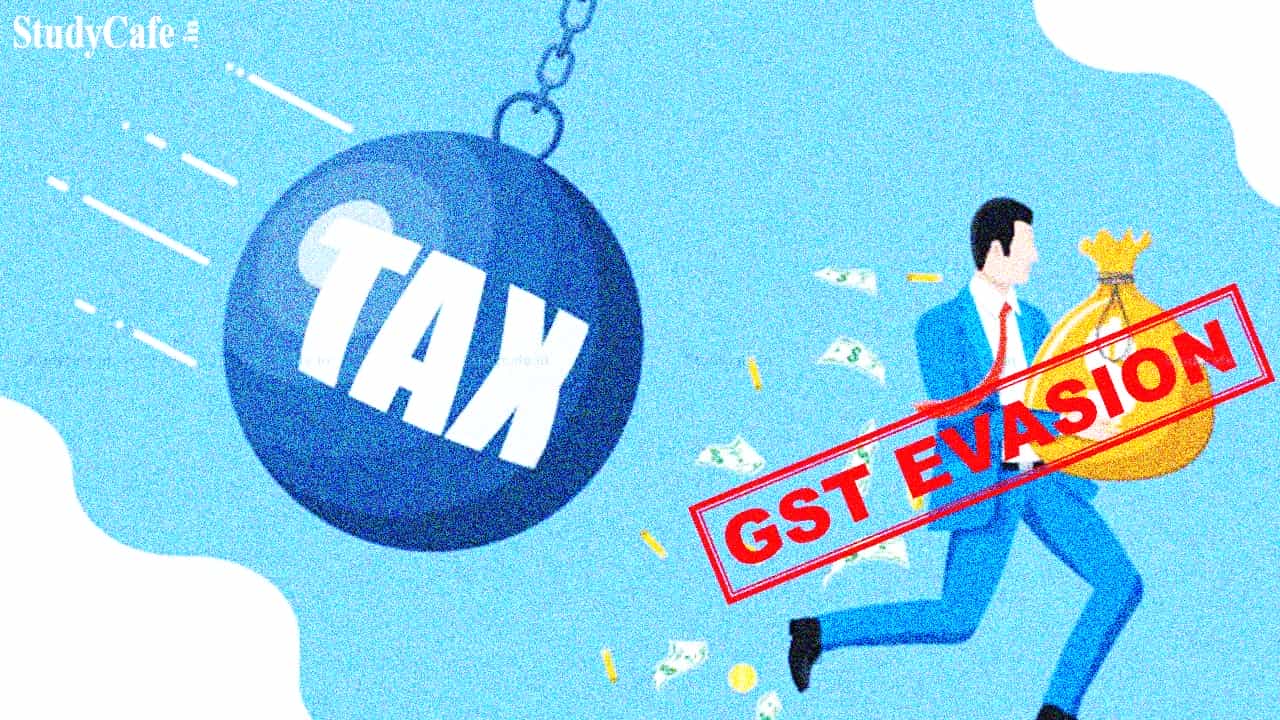
GST evasion of Rs.420 crore detected in various sectors in Kerala
GST evasion of Rs.420 crore detected in various sectors in Kerala The Directorate General of GST Intelligence's Kochi Zonal Unit, which oversees all …
 Reetu
Reetu Oct 29, 2022
Table of Contents

GST evasion of Rs.420 crore detected in various sectors in Kerala
The Directorate General of GST Intelligence's Kochi Zonal Unit, which oversees all of Kerala and Lakshadweep, has discovered around 420 crore worth of GST evasion. It has recovered almost 115 crore of the taxes that were evaded in various industries during the FY 2021–22.
In the current financial year, the Unit also discovered around 283 crore with a realisation of 47 crore. Additionally, the office has made two arrests in FY 2021–2022 and another in the current financial year for flagrant violations of the GST law.
According to Giridhar G. Pai, Additional Director General, one such area is real estate. They have started search and summons procedures against 15 Kerala real estate companies. Investigations turned up evidence of evasion in the form of improper input tax credit usage, suppression of turnover, and nonpayment of the landowners' portion.
Input tax credit accumulation
Builders are responsible for paying GST on building services for any apartments, flats, or units for which payments were made by consumers prior to completion or first occupancy. If payments are made for a unit after its completion or first occupancy, there is no GST obligation. The builders often claim input tax credits for all of the units, and they are obligated to reverse the credit for inputs used in units for which no GST is due. They illegally accumulate input tax credits by failing to do so. The GST is subsequently paid with this credit rather than with cash. The majority of builders enter into joint venture agreements with landowners, and as payment, the landowners receive a portion of the units that are built. Due to the fact that payments are made in the form of development rights as soon as the project is launched, GST must be paid on all units, flats, and apartments in the share given to landowners. Customers have reserved some of these apartments. According to the research, GST is only paid on landowner's share units that have been sold to end customers before the date of completion or the date of first occupancy. Unsold units are incorrectly considered as exempt, and no GST is paid. A new reduced tax rate without the advantage of input tax credit has been adopted for residential constructions as of April 1, 2019. GST must be paid in cash only for any new projects that are started after March 31, 2019. It has been discovered that some builders are using input tax credits to discharge their GST liability at the new, lower rates.About Author


Reetu
Content Manager
Reetu is a Content Writer with 4+ years of experience in GST, Income Tax, Finance, Company Law, Education and Career Related Content. She is a B.COM (Honrs.) Graduate.
Reetu is a Content Writer with 4+ years of experience in GST, Income Tax, Finance, Company Law, Education and Career Related Content. She is a B.COM (Honrs.) Graduate.
 Studycafe
 Delhi, Delhi, India
 8071
8071My Recent Articles
- Income Tax Guide for Indian Defence Personnel for Tax Filing, Taxable Allowances and Other Benefits
- Income Tax Return Breaking: ITR Forms released for AY 25-26
- Ex-DRT Officials Sentenced to 5 Years Rigorous Imprisonment by Madras High Court along with Rs.27 Lakh Fine
- GSTN issued Advisory on Case Sensitivity in IRN Generation
- RBI to issue Notes of Rs.10 and Rs.500 bearing Signature of Guv Malhotra
Up Next
Loading suggestions…


Recent Posts

All Posts

Recent Posts
All Posts