GST Invoice Amendments Effective from April 1: How will it Impact Your business?:
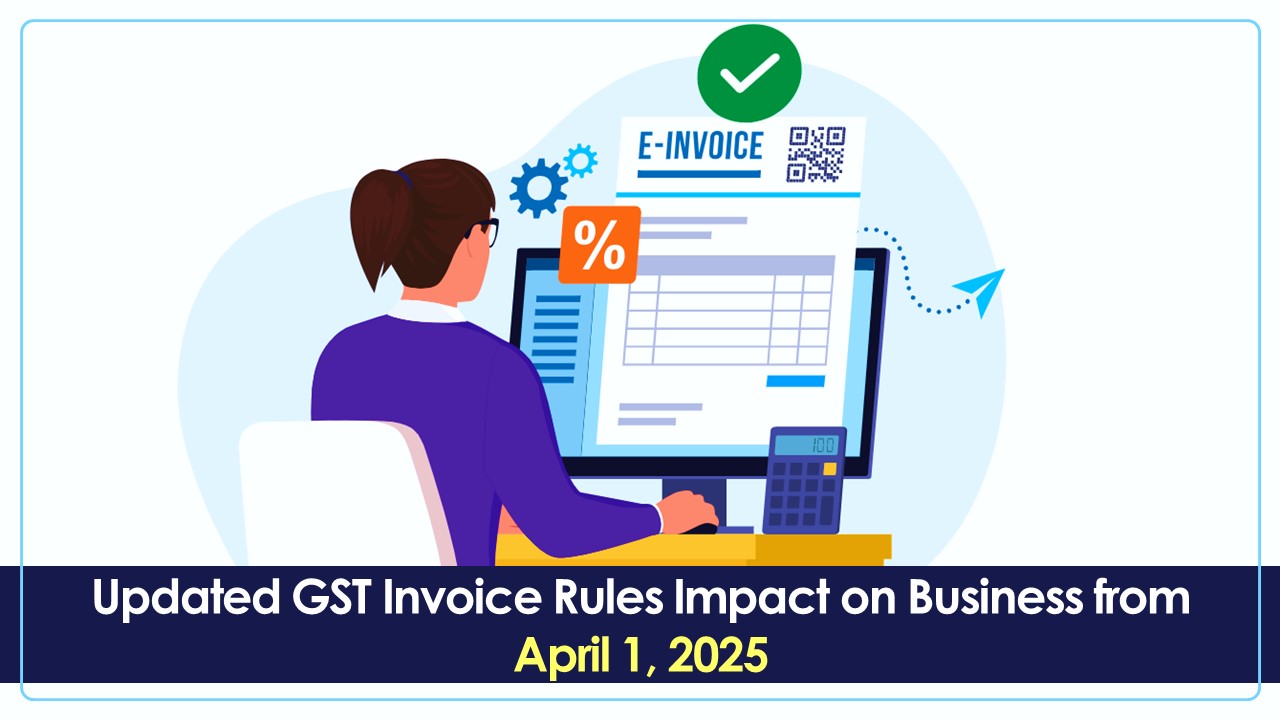
From April 1, 2025, businesses having an AATO above Rs.10 crore need to submit an e-invoice to the IRP within 30 days of the date of issuance.
Updated GST Invoice Rules Impact on Business from April 1, 2025
 Nidhi
Nidhi Mar 31, 2025
Table of Contents

GST Invoice Amendments Effective from April 1: How will it Impact Your business?
Starting from April 1, 2025, businesses having an Annual Aggregate Turnover (AATO) above Rs.10 crore need to submit an e-invoice to the Invoice Registration Portal (IRP) within 30 days of the date of issuance. Earlier, this 30-day reporting limit applied only to businesses with AATO of Rs. 100 crore or more. As the limit has been reduced, many businesses will be affected by this regulation.
As per experts, these changes focus on increasing security and compliance but will also make the process complex. Businesses need to update their system and provide training to their employees to handle these new requirements.
Understanding the Current Rule?
So far, the businesses with AATO of Rs. 100 crores and more have been asked to report e-invoices on the invoice registration portal (IRP) within 30 days of the date of issuance. Therefore, businesses below the AATO of Rs. 100 crore were not required to follow the 30-day upload window. Some companies delay reporting invoices, causing issues with input tax credit (ITC) claims and tax compliance. The government is focusing on addressing outdated invoices and fixing gaps in compliance.How will it impact your Business?
- Input Tax Credit (ITC) Challenges: In case a business fails to raise an invoice within 30 days, it will not be utilized for claiming ITC, which will affect its working capital.
- System Changes: Companies will be required to modify their billing and invoicing systems to accommodate the new deadlines, potentially involving software modifications and employee training.
- Tighter Compliance: Real-time monitoring of invoices will ensure fewer errors and prevent fraudulent claims.
- Charges and Rejections: Late submissions of invoices will be rejected by the Invoice Registration Portal (IRP), which may result in charges and loss of funds.
About Author


Nidhi
Content Writer
Nidhi is a skilled content writer specializing in personal finance. She creates clear, engaging articles on mutual funds, investments, insurance, and wealth-building strategies. With a passion for simplifying complex financial topics, Nidhi helps readers make informed money decisions with confidence. She can be reached at [email protected]
Nidhi is a skilled content writer specializing in personal finance. She creates clear, engaging articles on mutual funds, investments, insurance, and wealth-building strategies. With a passion for simplifying complex financial topics, Nidhi helps readers make informed money decisions with confidence. She can be reached at [email protected]
 Studycafe
 New Delhi, Delhi, India
 1832
1832My Recent Articles
- Karnataka High Court Gives Another Chance in GST Matter Due to Lack of Hearing
- Delay Should Be Condoned if Explanation is Unrefuted: ITAT
- Non-Service of Income Tax Notice, Ill health of taxpayer, ITAT condones Appeal filing delay
- Books of Accounts Cannot be Rejected Without Any Specific Defect: ITAT Kolkata
- Karnataka High Court Sends ITC Matter Back to GST Authorities for Reconsideration
Up Next
Loading suggestions…


Recent Posts
All Posts
Tags
No tags yet.
Recent Posts
All Posts
Tags
No tags yet.