GST: Kerala AAR Taxes Sabarimala Temple Auction and Exploitation Rights:
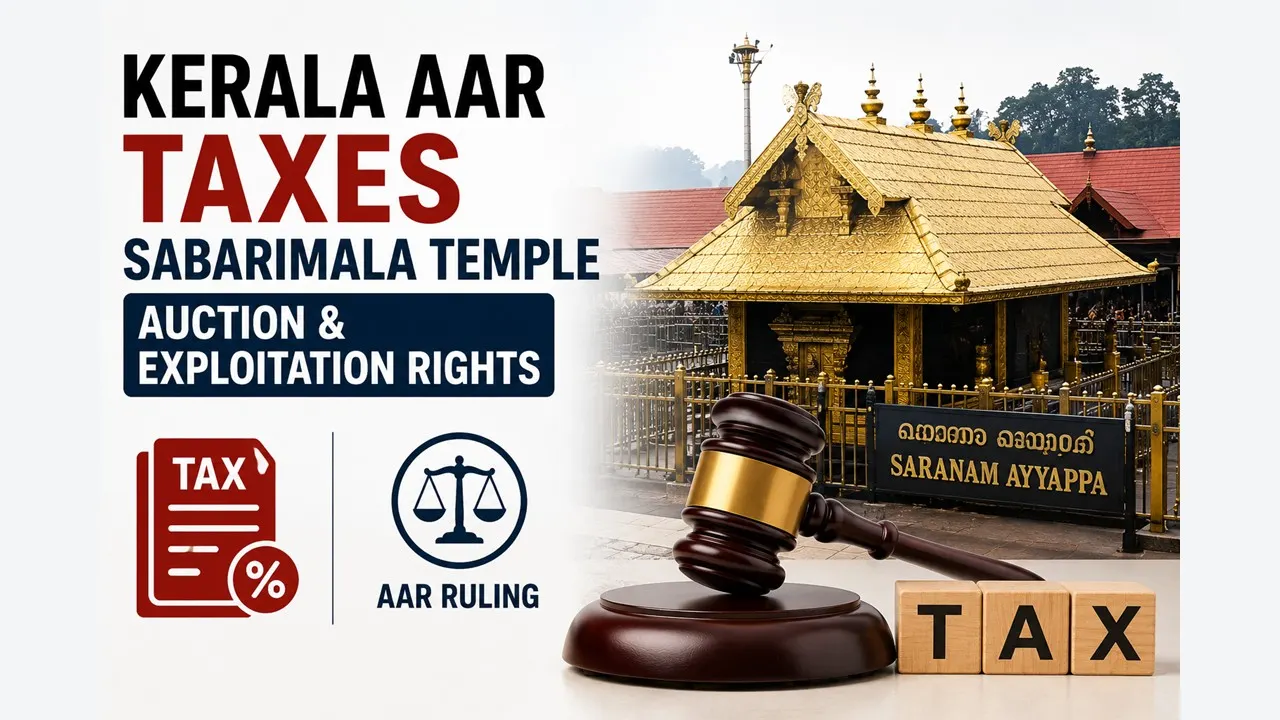
Kerala AAR rules temple auction rights taxable while exempting specific agricultural and religious activities.
Travancore Devaswom Board conducts recurring auctions for temple remnant collection
 Meetu Kumari
 May 18, 2026
The Kerala Authority for Advance Ruling (AAR) in Advance Ruling No. KER/01/2026 held that auctioning exclusive rights to collect temple offering remnants, broken coconuts, and clothes abandoned by pilgrims constitutes a taxable supply of services under the GST regime. A Bench comprising Shri Jomy Jacob, IRS and Shri Mansur M.I. examined the nature of commercial arrangements entered into by the Travancore Devaswom Board and ruled that such recurring auction activities amount to “business” within the meaning of Section 2(17) of the CGST Act, 2017.
The applicant, Travancore Devaswom Board, a statutory body constituted under the Travancore-Cochin Hindu Religious Institutions Act, 1950, administers several temples including the Sabarimala and Pamba Devaswoms. The Board approached the Authority seeking clarity on the GST implications of various auction and tender activities conducted by it, including auctioning the rights to collect leftover rice offerings, broken coconuts, clothes discarded by pilgrims in the Pamba River, coconut harvesting rights, and rights relating to ritual performances. The applicant contended that its predominant character was religious in nature and therefore its activities could not be treated as “business” under GST law.
The Revenue authorities argued that the Board was systematically generating revenue through organized public tenders and commercial contracts, thereby satisfying the statutory ingredients of “business”. It was submitted that the Board was granting commercial exploitation rights to private contractors for consideration and such activities were squarely taxable supplies under Section 7 of the CGST Act.

“The Authority held that the Board, despite being a religious statutory body, was engaged in organized and recurring commercial transactions through public auctions and tenders, thereby falling within the scope of ‘business’ under Section 2(17) of the CGST Act.”

While examining the nature of the transactions, the AAR observed that auctioning the rights to collect remnant rice offerings, broken coconuts, and clothes abandoned in the Pamba River was not a sale of goods. Instead, the Board was granting an exclusive commercial license to contractors for exploitation of such materials. Accordingly, the transactions were classified as taxable supplies of services liable to GST.
However, the Authority carved out exceptions in relation to agricultural and purely religious activities. It held that granting rights to harvest coconuts directly from standing trees situated on temple lands amounted to an agricultural activity eligible for exemption. Similarly, assigning rights connected with traditional ritual performances such as Pulluvan Pattu and Balithara was treated as a religious activity outside the ambit of taxable commercial services.
“The AAR clarified that rights relating to direct agricultural harvesting and performance of core religious rituals retain their exempt character and cannot be equated with commercial licensing activities.”
On the issue of Reverse Charge Mechanism (RCM), the Authority further held that honorariums and sitting fees paid to the President and members of the Board would not attract GST under Notification No. 13/2017-Central Tax (Rate). It noted that the members function as statutory appointees and cannot be treated as “directors” of a company for the purpose of levy under RCM provisions.
Thus, the Kerala AAR ruled that auctioning commercial rights relating to temple offering remnants and pilgrim waste is taxable under GST, whereas agricultural harvesting rights and direct ritual performance rights remain exempt. The Authority also held that no GST liability arises under RCM on honorariums paid to the Board’s members and President.
To Read Full Order, Download PDF Given Below.
About Author


Meetu Kumari
Content Manager
 Studycafe
 Jodhpur, Rajasthan, India
 2264
2264My Recent Articles
- ITAT Condones 302-Day Delay, Restores Salary Assessment for Fresh VerificationPremium
- ITAT Condones Delay After Tax Consultant's Death, Restores Appeals for Fresh HearingPremium
- ITAT Remands Salary Addition, Says Taxability Depends on Salary Becoming Due, Not Mere ReceiptPremium
- ITAT Deletes TP Royalty Adjustment, Orders Fresh Review of Commission BenchmarkingPremium
- ITAT Quashes Reassessment Over Unsigned Section 148 Notice Issued to AssesseePremium
Loading suggestions…


Recent Posts


All Posts
Tags
Recent Posts
All Posts