GST Penalty Cannot Be Imposed On Mere Speculation Of Undervaluation: HC:
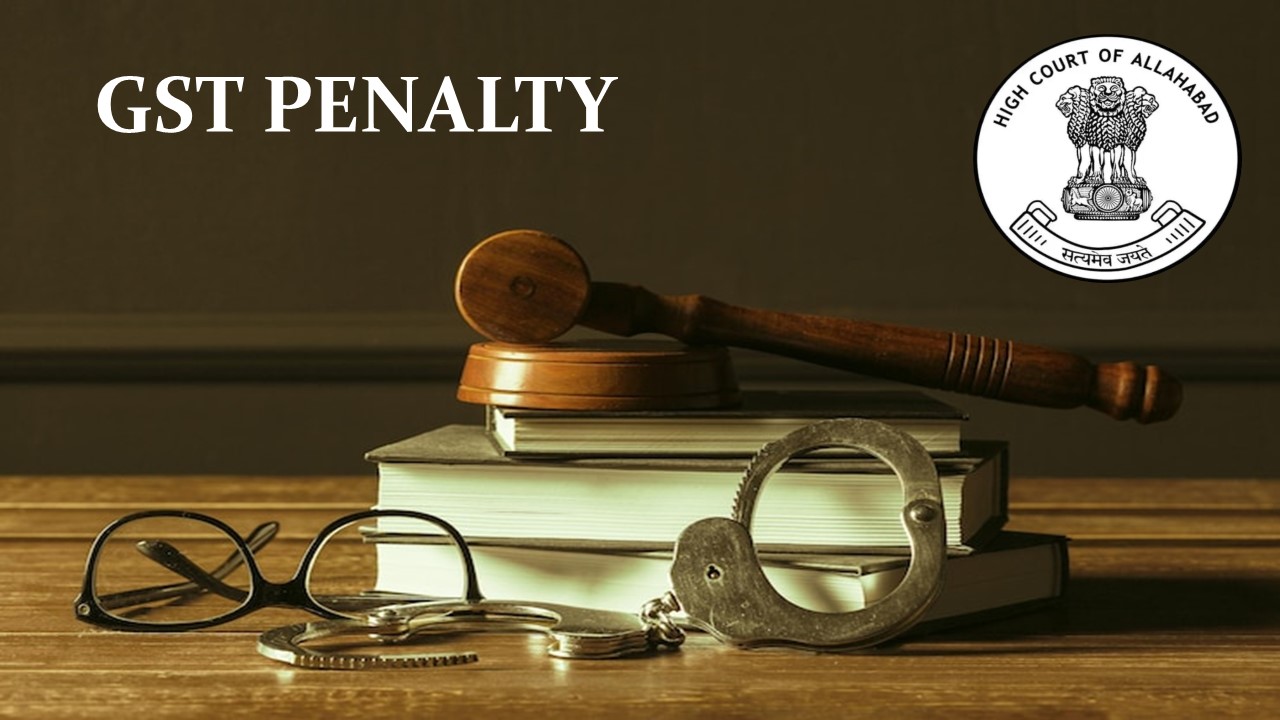
Allahabad High Court rules that the GST penalty cannot be imposed solely on suspicion of misclassification without solid evidence.
GST Penalty Quashed as Misclassification Allegation Found Baseless by Allahabad HC
 Saloni Kumari
 Jul 15, 2025
GST Penalty Cannot Be Imposed On Mere Speculation Of Undervaluation: HC
The present Writ Tax Petition (No. 2596 of 2025) is filed by M/S Tirupati Agro Commodities (petitioner) before the Allahabad High Court, in Court No. 3, with the division bench consisting of Justice Shekhar B. Saraf and Justice Praveen Kumar Giri. The State of Uttar Pradesh and two other authorities are the respondents in this case. The lawyer Vedika Nath is representing the petitioner, and the lawyer Vedika Nath, who is representing the Chief Standing Counsel (C.S.C.), represented the State.
Background of Case:
This current petition is being filed by the petitioner under Article 226 of the Constitution of India, which grants high courts the power to issue directions, orders, or writs for the enforcement of legal rights. The company was challenging an order dated 08.05.2025 by Respondent No. 2 (a tax officer), where a penalty was imposed on the petitioner under Section 129(3) of the Uttar Pradesh Goods and Services Tax (UP GST) Act, 2017.
The penalty was imposed because the tax officer believed that the company had misclassified goods. As per the rules, it is necessary to correctly classify goods in GST under the right tax rate category (HSN code). If they are incorrectly classified, this can lead to a lower payment of tax. In this case, the company is accused of misclassifying goods; however, there is no issue regarding undervaluation or fake documents.
Court's Observation:
The High Court deeply examined the case and penalty order and discovered that it was based only on the doubt that the goods were wrongly classified.
In order to support this decision, the court took assistance from a previous judgment of the Allahabad High Court. The case titled Shamhu Saran Agarwal and Company vs. Additional Commissioner Grade [reported in 2024, 160 Taxmann.com 151 (Allahabad)] was on the same matter. In this case, the court ruled that penalties under Section 129 of the UP GST Act cannot be imposed only on doubt or speculation about the undervaluation of goods.
Instead, if there’s an honest dispute about valuation or classification, the tax officers must use Section 73 or Section 74 of the UP GST Act, which deal with assessment and recovery of tax in cases of fraud or non-fraud.
In the current case, the goods were being transported with proper and complete documents, like the invoice and the e-way bill. There was no issue regarding the actual value of the goods, and the only concern was whether the goods were classified correctly under the right HSN code. The Court noted that this kind of classification issue does not justify a penalty under Section 129, which is meant for detention and seizure in case of movement without proper documents or for serious violations.
Court's Final Decision
- The court gave the final conclusion that the penalty imposed was not legally fair and had no proper basis in law. Therefore, the Court quashed the order dated 08.05.2025 issued by the tax officer.
- The court ordered that any penalty amount already paid by the petitioner must be refunded within the time period of eight weeks from the date of this order.
About Author


Saloni Kumari
Content Writer
Saloni is a Content Writer with 2+ years of experience at studycafe.in. She writes legal, taxation, and finance related content including GST, Income Tax etc. Skilled in translating complex judicial pronouncements and regulatory developments into clear, and reader-friendly articles. Experienced in covering judgements of ITAT, High Court, GSTAT, and news related to Income Tax, GST, and corporate law. She can be reached at [email protected].
Saloni is a Content Writer with 2+ years of experience at studycafe.in. She writes legal, taxation, and finance related content including GST, Income Tax etc. Skilled in translating complex judicial pronouncements and regulatory developments into clear, and reader-friendly articles. Experienced in covering judgements of ITAT, High Court, GSTAT, and news related to Income Tax, GST, and corporate law. She can be reached at [email protected].
 StudyCafe
 Delhi, Delhi, India
 2924
2924My Recent Articles
- Major Relief in Arbitration Case: MCIA Denies Rs 908 Crore Statement Claim Made by Allied Silica Against Tata Chemicals
- MCA and ICSI to Hold User Awareness Session on Form AOC-4 Filing Amid Glitches on MCA-21 Version-3 Portal
- GSTN Introduces New E-Invoicing Facility for Self-Invoices Under Reverse Charge Mechanism
- Flexi Cap vs Multi Cap Funds: What's the Real Difference?
- IBA Recommends Public Sector Banks to Reduce Ambit of Physical Branch Audits to 50% of Total Business
Up Next
Loading suggestions…


Recent Posts
All Posts


Recent Posts
All Posts