GST Reform: Pharma, Textiles, EVs and Other Sectors Seek Relief from Accumulated ITC:
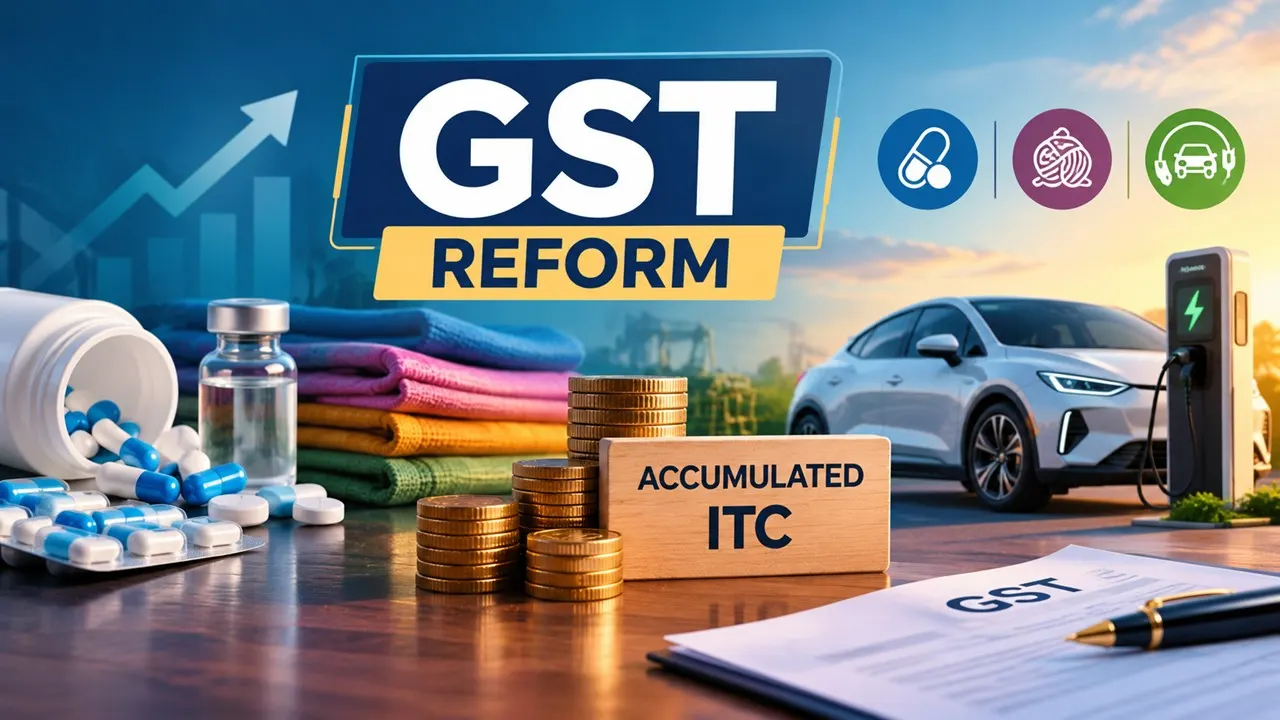
Pharmaceuticals, textiles, footwear, fertilisers, renewable energy and EV sectors may seek relief from accumulated ITC arising from persistent inverted duty structures under GST.
Experts Call for Refunds on Input Services and Capital Goods
 Saloni Kumari
 Oct 3, 2026
Certain sectors, including pharmaceuticals, textiles, footwear, fertilisers, renewable energy, and electric vehicles (EVs), are expected to seek relief from accumulated input tax credit (ITC).
According to the experts, the reforms introduced to the Goods and Services Tax (GST) in September 2025 had reduced the number of slabs from four to two, broadened inverted duty structures in several sectors, and simplified the indirect tax regime.

When the GST rate on input is higher than that on outward/finished goods, resulting in ITC accumulation (as businesses cannot fully utilise the credit against their output tax liability), it creates an inverted duty structure (IDS). While the recent GST rate reduction has decreased the tax burden on numerous products, businesses in sectors such as pharmaceuticals, textiles, footwear, fertilisers, renewable energy and electric vehicles continue to face large amounts of accumulated ITC.
An expert has said that addressing unutilised ITC, particularly in sectors facing inverted duty structures, remains one of the unfinished agendas under GST. He noted that although refunds are available in certain cases, the existing framework does not fully cover credit arising from input services and capital expenditure. This can result in significant working capital being blocked for long periods.

The GST Council is expected to consider several process reforms at its upcoming meeting, including matters related to ITC. The government has earlier attempted to address accumulated ITC through GST rate rationalisation and risk-based provisional refunds in inverted duty cases. However, experts said that faster refunds mainly solve the timing problem and do not remove the underlying accumulation where the rate inversion is structural.
In several industries, input services and capital goods attract GST at 18%, while the final products may be taxed at only 5%. According to the Partner and Indirect Tax Policy Leader, EY India, this mismatch can leave substantial ITC locked in electronic credit ledgers. This increases working capital requirements and can eventually become an embedded cost in the supply chain, affecting domestic manufacturing and investment.
Another expert has said that businesses making large investments in plant, machinery and related services often accumulate significant GST credits during their setup and expansion phases. These credits may remain blocked for long periods because the existing refund mechanism does not adequately cover capital expenditure-related credits.
Experts suggested a two-pronged approach involving correction of persistent inverted duty structures and a review of the refund mechanism. Allowing refunds for genuine accumulated ITC arising from input services and capital goods could improve liquidity, reduce tax cascading and support domestic manufacturing. Relief may also be considered where credits remain unutilised due to business closures, limited outward supplies, large upfront investments, timing mismatches or tax paid on advances.
About Author


Saloni Kumari
Content Writer
 StudyCafe
 Delhi, Delhi, India
 2954
2954My Recent Articles
- CBDT Clarifies BSNL, MTNL VRS-2019 Compensation Taxable Under Section 10(10C), Not 10(10B)
- Govt Extends Deadline for Raw Sugar Customs Duty Exemption upto December 31
- ITAT Deletes Section 69A Addition as Income Computation Supports Source of Cash Deposits
- Short Compliance Window Prompts ITAT to Allow Additional Evidence in Unsecured Loan Case
- ITAT Deletes Section 68 Unexplained Cash Credit Addition as NSEL Account Was Opened After FY 2011-12
Loading suggestions…


Recent Posts

All Posts


Recent Posts
All Posts