GSTN Introduces New E-Invoicing Facility for Self-Invoices Under Reverse Charge Mechanism:
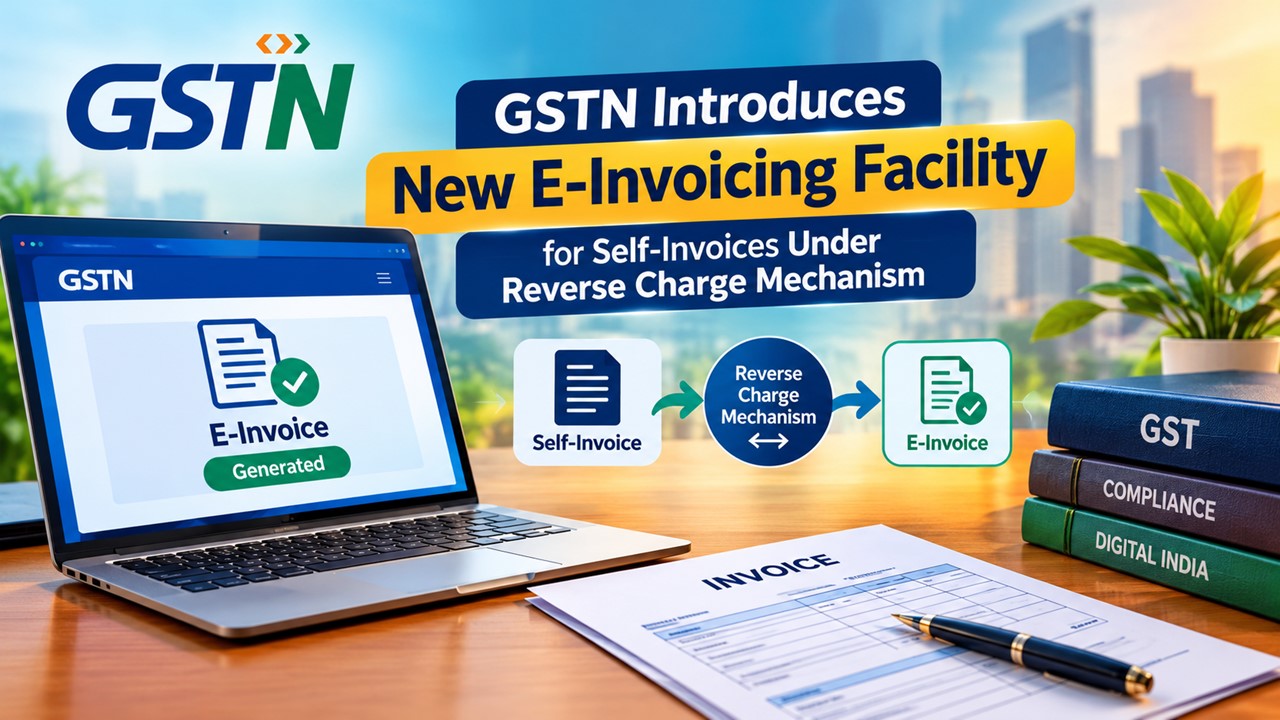
GSTN has enabled sandbox testing of e-invoicing for recipient-generated self-invoices covering domestic RCM supplies and import of services, with the rollout date yet to be announced.
E-Invoicing Enabled for RCM Domestic Supplies and Import of Services
 Saloni Kumari
 Oct 16, 2026
The Goods and Services Tax Network (GSTN) has introduced a facility for e-invoicing of Recipient Generated Self Invoices under the Reverse Charge Mechanism (RCM) for Domestic Supplies from Unregistered Persons (RCMDOM) and Import of Services (RCMIMP) on the GST portal.
The 57th GST Council Meeting, held on October 08, 2026, in New Delhi under the chairmanship of Union Finance Minister Smt Nirmala Sitharaman, has proposed recommendations regarding the extension of the e-Invoicing facility scope for domestic supplies received from an unregistered person where the tax is payable under the reverse charge mechanism (RCM), as well as for the import of services, for taxpayers having an Aggregate Annual Turnover (AATO) of Rs 5 crore or above, subject to applicable statutory provisions and government notifications.

Under the existing e-invoicing framework, invoices are generally reported by registered suppliers. With this enhancement, eligible registered recipients will also be able to report self-invoices for specified RCM transactions through authorised Invoice Registration Portals (IRPs). After successful submission and validation of the required invoice details, an IRN will be generated.
GSTN has implemented the necessary system enhancements in the sandbox environments of all six authorised IRPs, namely NIC IRP-1, NIC IRP-2, Cygnet, Clear, EY and IRIS. Taxpayers, GST Suvidha Providers (GSPs), Application Service Providers (ASPs), ERP providers and other integration partners can use these environments to test and prepare their systems for integration.

NIC IRP-1 will issue a detailed release note covering technical specifications, business validations and other operational requirements. GSTN and the IRPs will also organise a webinar to explain the new functionality. However, the production rollout date and commencement of reporting requirements have not yet been announced. Taxpayers are advised to monitor the official e-Invoice portal for further updates.
About Author


Saloni Kumari
Content Writer
 StudyCafe
 Delhi, Delhi, India
 2922
2922My Recent Articles
- Flexi Cap vs Multi Cap Funds: What's the Real Difference?
- IBA Recommends Public Sector Banks to Reduce Ambit of Physical Branch Audits to 50% of Total Business
- ITAT Directs AO to Reconsider Rs 16.44 Lakh Capital Gains and Rs 25.87 Lakh Stamp Duty Value Addition
- ITAT Remands Rs 3.33 Crore Demonetisation Cash Deposit Case to AO, Directs Rs 10,000 Relief Fund Payment
- Income Tax Dept Increases Scope for Saksham Nudge Initiative to Further Include Professional Insuring Timely Compliance
Loading suggestions…


Recent Posts



All Posts
Tags
Recent Posts
All Posts