HC Denies COI & Inheritance Rights to Children of Women Married to Non-Sikkimese:
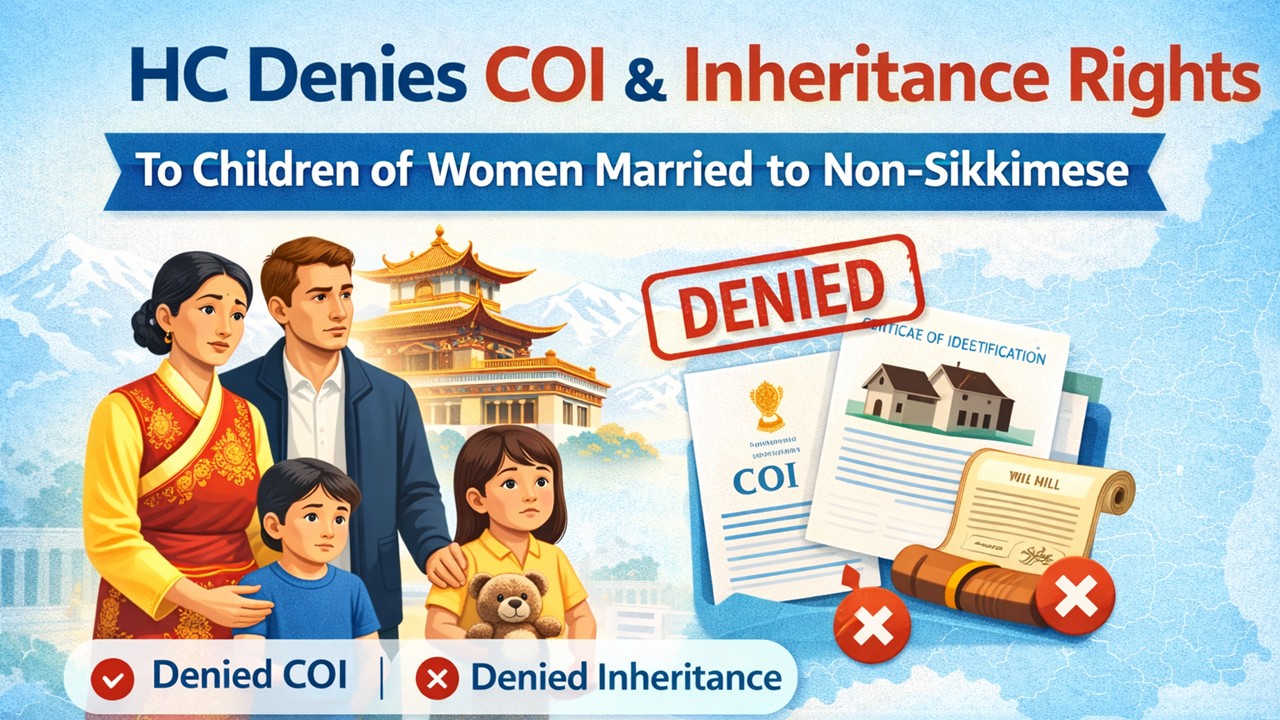
High Court rules that children of Sikkimese women married to non-Sikkimese are not entitled to COI or inheritance, citing Article 371F protections.
Court Upholds Article 371F Protections; Holds Sikkim Subject Status Follows Male Lineage
 Meetu Kumari
 Apr 9, 2026
A group of 101 Sikkimese women, married to non-Sikkimese Indian citizens, moved the High Court to challenge long-standing regulations that effectively stripped their children of property and identity rights. Under a 2018 Notification and a 1962 Regulation, while these women could register property, its ownership after their death was governed by "existing rules" which the petitioners argued meant their children could not inherit land in Sikkim. They also fought against the non-issuance of Certificates of Identification (COI) for their children, which barred the next generation from government jobs and other local benefits.
Central Issue: Is it discriminatory and unconstitutional to deny property inheritance and Certificates of Identification (COI) to the children of Sikkimese women married to non-Sikkimese men?

HC's Ruling: The High Court dismissed the petition, emphasizing that Sikkim’s merger with India came with unique constitutional protections. Under Article 371F, "existing laws" that were in place before 1975 including those defining who counts as a "Sikkim Subject" are protected by a non-obstante clause. This means they override other general parts of the Constitution to preserve the state’s demographics and social fabric.
The Court observed that the status of a "Sikkim Subject" (and by extension, a COI holder) traditionally follows the male lineage in Sikkim’s patriarchal society. Relying on Supreme Court precedents, the Judge noted that the distinction between "Sikkimese nationals" and others is a valid classification intended to protect locals. Since the children’s status is derived from their non-Sikkimese fathers under these old laws, the Court held it could not intervene in what is essentially a matter of legislative and executive policy. Consequently, the children remain ineligible for COIs and the accompanying inheritance rights as per the state's specific legal history

About Author


Meetu Kumari
Content Manager
 Studycafe
 Jodhpur, Rajasthan, India
 2264
2264My Recent Articles
- ITAT Condones 302-Day Delay, Restores Salary Assessment for Fresh VerificationPremium
- ITAT Condones Delay After Tax Consultant's Death, Restores Appeals for Fresh HearingPremium
- ITAT Remands Salary Addition, Says Taxability Depends on Salary Becoming Due, Not Mere ReceiptPremium
- ITAT Deletes TP Royalty Adjustment, Orders Fresh Review of Commission BenchmarkingPremium
- ITAT Quashes Reassessment Over Unsigned Section 148 Notice Issued to AssesseePremium
Loading suggestions…


Recent Posts

All Posts



Tags
Recent Posts
All Posts