HC Upholds Section 138 Conviction Despite “Account Blocked” Cheque Dishonour for CA Fees:
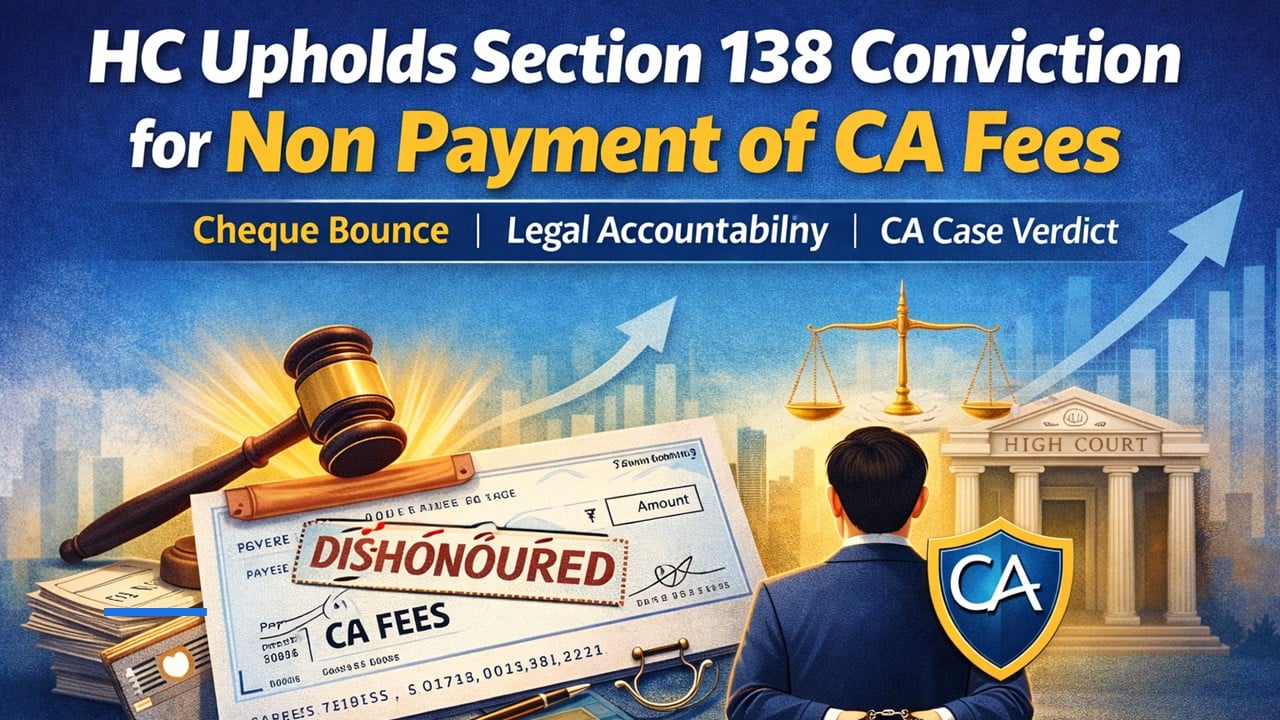
Court affirms conviction, rejects security cheque defence and treats account blocked as valid dishonour ground
Account blocked cheque dishonour still attracts liability under NI Act
 Meetu Kumari
 Apr 4, 2026
Premium
HC Upholds Section 138 Conviction Despite “Account Blocked” Cheque Dishonour for CA Fees
Court affirms conviction, rejects security cheque defence and treats account blocked as valid dishonour ground
Also Read
EPFO Extends September 2026 ECR Filing and PF Payment Deadline to October 31Big UPI Update: NPCI to Introduce Merchant Discount Rate Charges on Certain Person-to-Merchant Transactions After DiwaliGovt Fixes 7.1% Interest Rate on Special Deposit Scheme for Non-Government PF Funds From Oct to Dec 2026Government Keeps Small Savings Interest Rates Unchanged for October-December Quarter of FY 2026-27
About Author


Meetu Kumari
Content Manager
Meetu Kumari is an Experienced Advocate and Content Writer with 4+ years of demonstrated history of working in the law practice industry. Skilled in Developing Content, Researching, and Drafting. Strong professional with a Bachelor of Science (B.Sc.) focused on Law from Gujarat National Law University.
Meetu Kumari is an Experienced Advocate and Content Writer with 4+ years of demonstrated history of working in the law practice industry. Skilled in Developing Content, Researching, and Drafting. Strong professional with a Bachelor of Science (B.Sc.) focused on Law from Gujarat National Law University.
 Studycafe
 Jodhpur, Rajasthan, India
 2264
2264My Recent Articles
- ITAT Condones 302-Day Delay, Restores Salary Assessment for Fresh VerificationPremium
- ITAT Condones Delay After Tax Consultant's Death, Restores Appeals for Fresh HearingPremium
- ITAT Remands Salary Addition, Says Taxability Depends on Salary Becoming Due, Not Mere ReceiptPremium
- ITAT Deletes TP Royalty Adjustment, Orders Fresh Review of Commission BenchmarkingPremium
- ITAT Quashes Reassessment Over Unsigned Section 148 Notice Issued to AssesseePremium
Up Next
Loading suggestions…


Recent Posts
All Posts

Recent Posts
All Posts