High Court Declines Conversion of Section 74 Proceedings to Section 73 in Absence of Documentary Evidence:
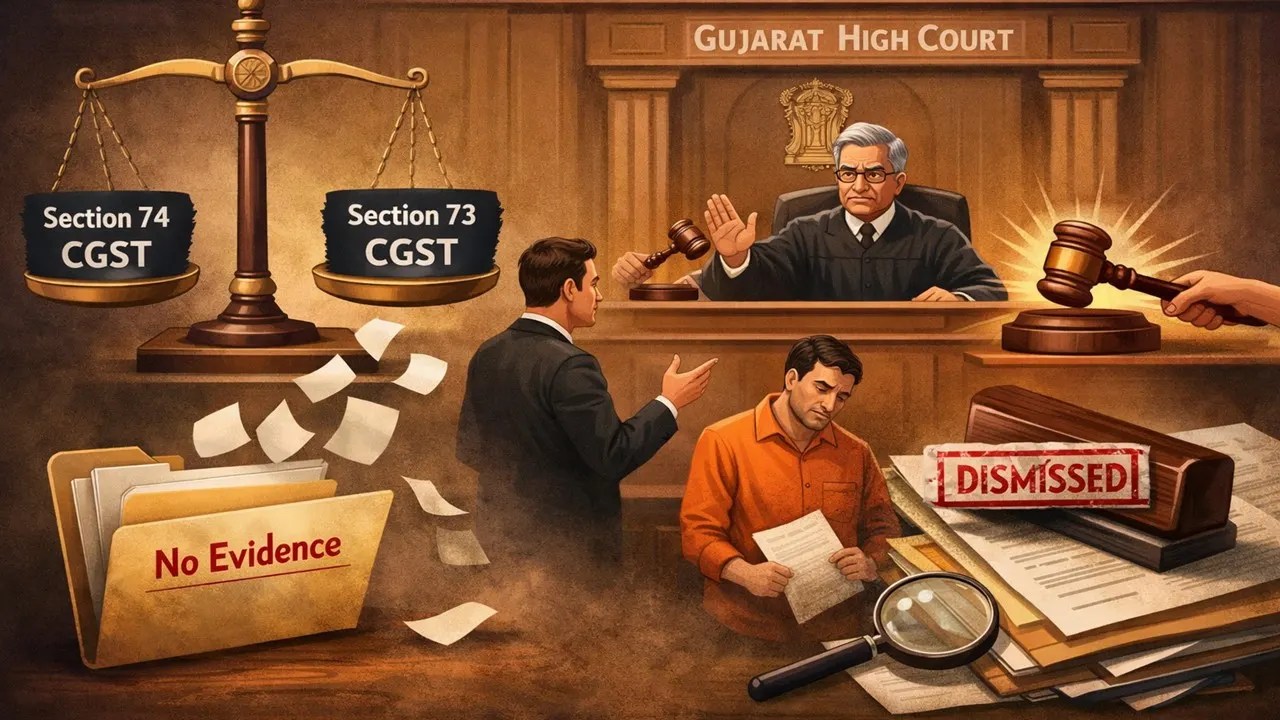
The Gujarat High Court dismissed the plea to convert a Section 74 CGST order into Section 73, holding that absence of documentary evidence bars such relief.
Court Dismisses Plea Seeking Section 74 to 73 Conversion
 Saloni Kumari
 Feb 25, 2026
High Court Declines Conversion of Section 74 Proceedings to Section 73 in Absence of Documentary Evidence
The Gujarat High Court rejects the petitioner's prayer to convert the order from Section 74 of the CGST Act, 2017, to Section 73 of the CGST Act in the absence of documentary evidence.
The High Court of Gujarat has delivered its judgement on a writ petition filed by the R B Pandey and Sons against the Assistant Commissioner, Central CGST and Central Excise, Division IX (Ankleshwar). The decision was announced on February 13, 2026, by the Honourable Justice A.S. Supehia and Justice Pranav Trivedi. The key issue concerns whether the petitioner is eligible to convert the order from Section 74 of the Central Goods and Services Tax Act, 2017, to Section 73 of the CGST Act.
Basically, in the present case, the petitioner had prayed the court to direct the tax authorities to treat the Order-in-Original No. 47/OIO/GST/Div-IX/AC/2022-23 passed under Section 74 of the CGST Act, 2017, for the financial year 2017-18, as an order passed under Section 73 of the Act. The impugned order has raised a demand amounting to Rs. 79.34 lakh on the petitioner. The petitioner had sought this conversion to claim benefits under Section 128A of the CGST Act, including a possible waiver of interest or penalty.
Previously, the court had asked the petitioner to produce a relevant document proving he is eligible for the conversion. However, the petitioner failed to submit any documentary evidence. The adjudicating authority had already recorded findings that the petitioner failed to produce mandatory evidence for claiming Input Tax Credit (ITC), such as debit notes, bills of entry, tax invoices of input service distributors, etc. Which concluded that ITC had been incorrectly and fraudulently claimed without any receipt of goods or services.
To support his case, the petitioner had cited a separate order dated July 24, 2023, where proceedings were initiated under Section 73 for the financial year 2018-19. However, when the court analysed the order, it found that the petitioner had furnished all the relevant documentary evidence in the said case, like GSTR-3B and GSTR-2A, unlike in the present case.
Considering the aforesaid findings, the Court refused to convert the order in the absence of documentary evidence and dismissed the petitioner's appeal.
About Author


Saloni Kumari
Content Writer
Saloni is a Content Writer with 2+ years of experience at studycafe.in. She writes legal, taxation, and finance related content including GST, Income Tax etc. Skilled in translating complex judicial pronouncements and regulatory developments into clear, and reader-friendly articles. Experienced in covering judgements of ITAT, High Court, GSTAT, and news related to Income Tax, GST, and corporate law. She can be reached at [email protected].
Saloni is a Content Writer with 2+ years of experience at studycafe.in. She writes legal, taxation, and finance related content including GST, Income Tax etc. Skilled in translating complex judicial pronouncements and regulatory developments into clear, and reader-friendly articles. Experienced in covering judgements of ITAT, High Court, GSTAT, and news related to Income Tax, GST, and corporate law. She can be reached at [email protected].
 StudyCafe
 Delhi, Delhi, India
 2948
2948My Recent Articles
- Maharashtra Govt Eases Registration of Jointly Owned Land Sales, ‘KA’ Copy Can Replace Co-Owners’ NOC
- No Separate Section 69C Unexplained Expenditure Addition Allowed After Accepting Section 44AD Income Without Supporting Evidence: ITAT
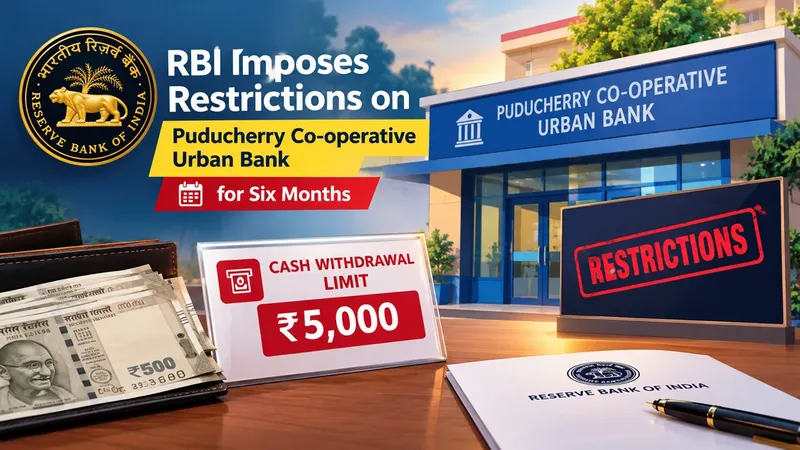
- RBI Imposes Restrictions on Puducherry Co-operative Urban Bank for Six Months, Caps Cash Withdrawals at Rs 5,000
- ICAI Opens Application Window for Empanelment of Members to Act as Observer at CA January 2027 Exams
- ICAI CA Inter Sept 2026 Result OUT at caresults.icai.org, Check Steps to Download
Up Next
Loading suggestions…


Recent Posts


All Posts


Recent Posts
All Posts