High Court Holds Parallel GST Proceedings Barred Only When They Concern the Same Subject Matter Under Section 6(2)(b):
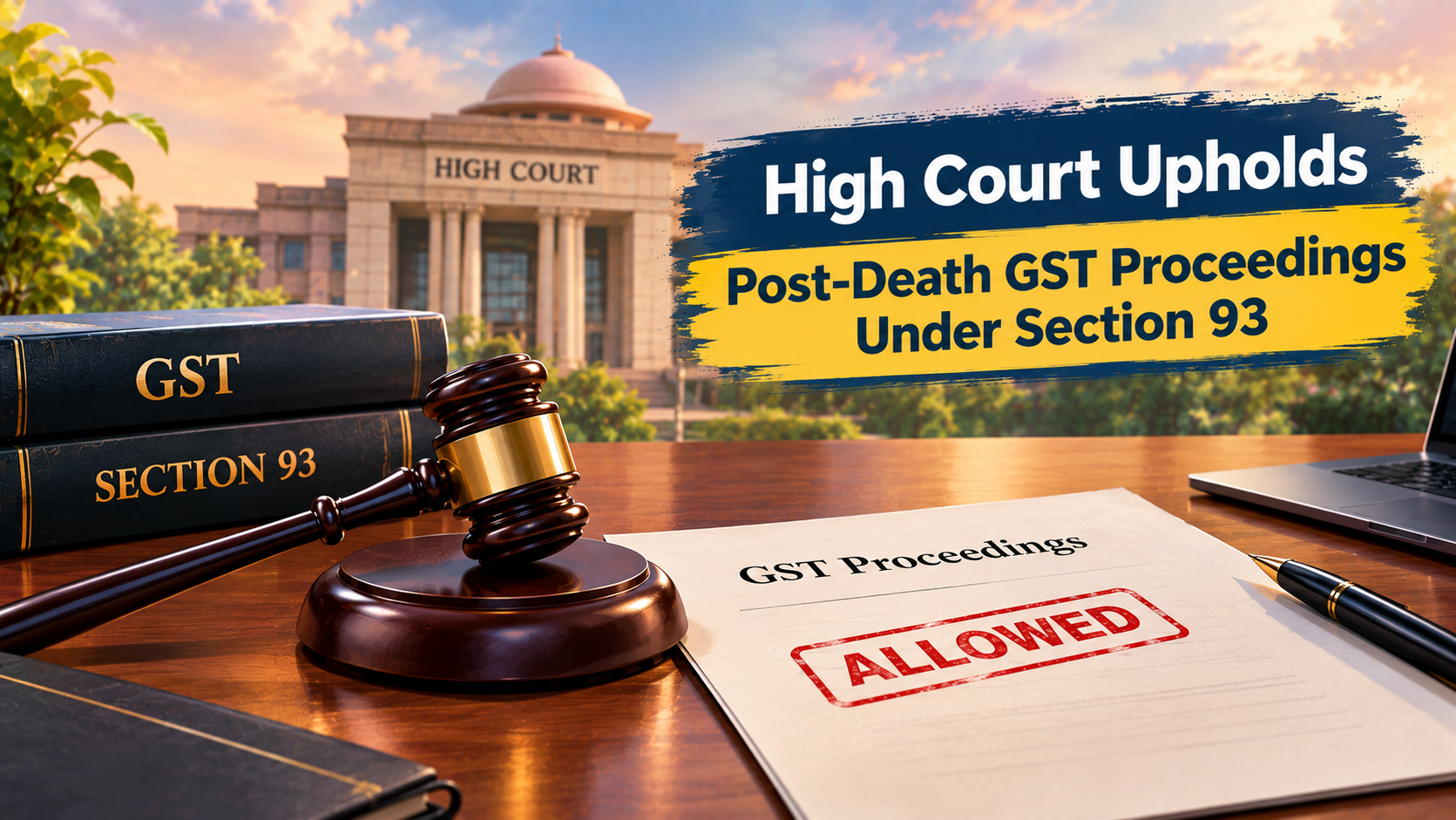
The Delhi High Court dismissed writ petition against Rs 10.57 crore GST Demand for alternative remedy, delay and nature of DGGI Proceedings.
High Court Dismissed Writ Petition
 Saima
Saima Oct 7, 2026
The petitioner is M/s Vertilink Media Solutions Private Limited which is a private limited company engaged in providing script services to Zee Entertainment Enterprises Ltd. and is registered with the Delhi GST authorities. A search was conducted at the petitioner's office and the residential premises of its director on 3 March 2021, following which the investigation was dealt with by the DGGI, Mumbai. On 31 March 2023, the DGGI issued a common Show Cause Notice to 45 noticees, including the petitioner and its former director. The proceedings under the CGST, MGST and IGST Acts about allegations of fraud availment of ITC and liability involving suppression, fraud or wilful misstatement.
While those proceedings were pending, the Sales Tax Officer issued another Show Cause Notice dated 29 May 2024 under Section 73 of the CGST Act, relating to April 2019 to March 2020. The notice alleged that the petitioner had not declared its correct tax liability. The petitioner objected, that the proceedings were barred by Section 6(2)(b) of the CGST Act, as the DGGI had already initiated proceedings concerning the same transactions. The adjudicating authority nevertheless passed an order dated 29 August 2024, and the ITC was denied with reference to Section 16(2)(c) of the CGST Act, resulting in a demand of Rs 10,57,75,250.

The petitioner did not pursue the statutory appeal against the order within the prescribed period. Instead, it filed a rectification application on 7 April 2025, again raising the objection under Section 6(2)(b). The High Court first noted that the petitioner had a statutory remedy of appeal against the order dated 29 August 2024 but had failed to avail it. Further, the writ petition was filed only in August 2026, nearly two years after the order, and the pending rectification application did not by itself explain the delay.
On the substantive objection, the Court examined Section 6(2)(b) of the CGST Act, which is intended to prevent parallel proceedings where proceedings concerning the same subject matter have already been initiated by another tax authority. The Court clarified that merely because proceedings concern the same assessee, overlapping periods or transactions having a common factual background, they cannot automatically be regarded as proceedings concerning the same subject matter. The nature and scope of the respective proceedings must be examined.

The Court therefore held that Section 6(2)(b) does not impose a blanket prohibition on every subsequent proceeding initiated by another GST authority. The prohibition is confined to proceedings concerning the same subject matter. The mere presence of common expressions such as “ITC” or “tax liability”, or common transactions, does not make the proceedings identical.
The Court further held that the pendency of the rectification application could neither confer a fresh or extended limitation period for challenging the original adjudication order nor constitute sufficient explanation for the prolonged delay. The High Court dismissed the writ petition as devoid of merit.
About Author


Saima
Content Writer
 StudyCafe
 Delhi, Delhi, India
 511
511My Recent Articles
- ITAT Holds Customer Referral Commission Not Taxable as FTS Under India-Netherlands DTAA
- ITAT Allows Full Section 87A Rebate on Short Term Capital Gain for AY 2025-26
- ITAT Quashes Section 271(1)(c) Penalty as Transfer Pricing Adjustment Was Remanded
- ITAT Deletes Section 68 Addition on Loans and Share Capital from Directors
- ITAT Quashes Section 148 Reassessment Based on Third-Party Search Material
Loading suggestions…


Recent Posts


All Posts
Recent Posts
All Posts