ITAT Quashes Section 148 Reassessment Based on Third-Party Search Material:
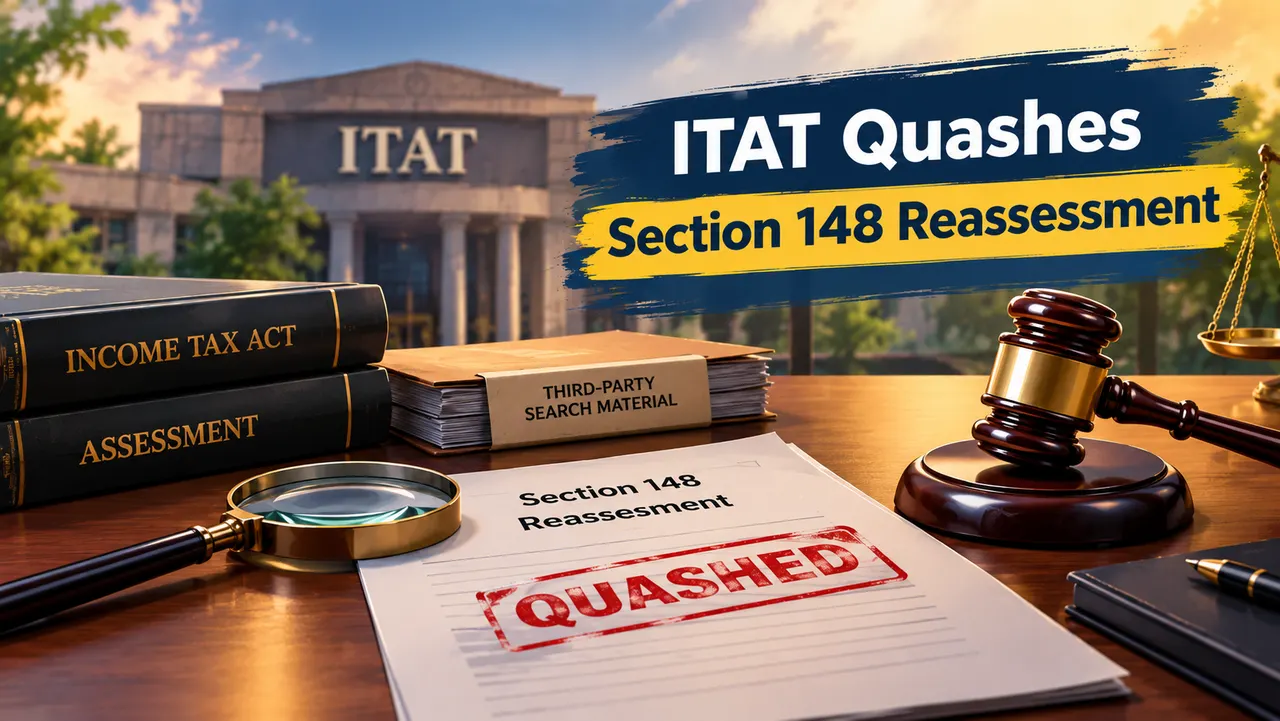
The ITAT Mumbai held that Reassessment cannot bypass Section 153C when its foundation is material seized during search of another person.
ITAT Holds Section 153C Procedure Applicable
 Saima
Saima Oct 6, 2026
The assessee is Alka Ajit Shah who had jointly purchased Flat No. 2001 in the Raj Splendour project from Rajesh Estate and Nirman Pvt. Ltd. for an agreement consideration of Rs 98.55 lakh. Her return for AY 2011-12 was processed under Section 143(1). Subsequently, following a search conducted on the Rajesh Lifespaces Group on 10/03/2016, the AO received information containing a flat-wise entry naming the assessee and Shri Ajit P. Shah as purchasers and alleging a cash component of Rs 16.20 lakh over and above the stated consideration.
Based on the search-derived information, the AO issued a notice under Section 148 dated 31/03/2018. The recorded reasons referred to statements made during the search and the flat-wise entry and concluded that income of Rs 16.20 lakh had escaped assessment. During reassessment, the assessee sought copies of the statements relied upon and cross-examination of the persons whose statements were being used against her. The AO nevertheless completed the assessment under Section 147 read with Section 143(3), treating the alleged cash payment as unaccounted income and making an addition of Rs 16.20 lakh. The CIT(A) upheld the reopening as well as the addition.

The Tribunal first observed that the mere fact that the information originated from the Central Circle did not, by itself, establish that the AO had acted on borrowed satisfaction. Since the recorded reasons specifically identified the assessee, the flat and the alleged cash component, the Tribunal found that the AO had at least identified assessee-specific material at the stage of recording reasons. It also noted that, as the original return had only been processed under Section 143(1), the reopening could not be challenged on the ground of change of opinion.
However, the Tribunal noted that Section 153C, as applicable to the search conducted on 10/03/2016, covered books, documents or information seized during a search which pertained or related to a person other than the person searched. The flat-wise entry relied upon by the Revenue was itself stated to have emerged from the search proceedings and was treated by the CIT(A) as material found at the searched premises.

The Tribunal found that the alleged escapement of Rs 16.20 lakh was founded on the flat-wise information and statements emanating from the search of the Rajesh Lifespaces Group, with no independent material forming a different foundation for the Section 148 notice. Therefore, the AO could not bypass the procedure prescribed under Section 153C by issuing a notice under Section 148.
Accordingly, the Tribunal allowed the assessee’s appeal and quashed the notice issued under Section 148 and the consequential assessment order dated 24/12/2018, holding both to be without jurisdiction.
About Author


Saima
Content Writer
 StudyCafe
 Delhi, Delhi, India
 582
582My Recent Articles
- GSTAT Upholds Rs 12.55 Lakh Penalty on Undeclared Goods
- GSTAT Upholds GST Demand After Rejecting Manual Invoices Produced Three Months After Inspection
- GSTAT Holds GST Portal Glitches Cannot Defeat Statutory Remedy
- GSTAT Allows ITC of Previous Financial Year to Be Claimed in April 2019
- GSTAT Quashes Rs 1.77 Lakh Penalty on Saraswati Motors for Missing E-Way Bill
Loading suggestions…


Recent Posts


All Posts



Recent Posts
All Posts